

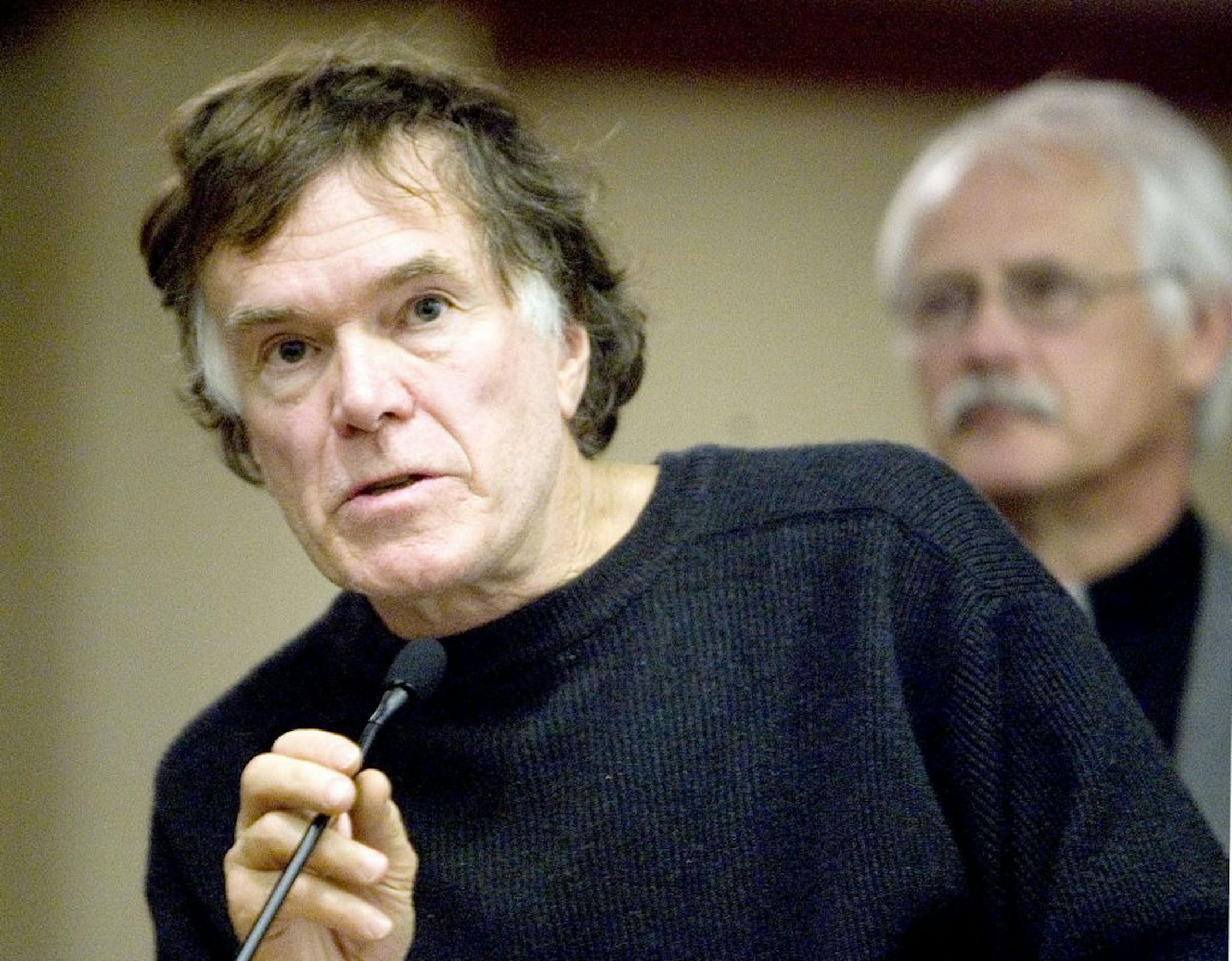
Even though I am most known as a polar explorer, my career and lifelong passion has been as an educator. As soon as I graduated from the University of St. Thomas in 1967, I taught middle-school science.
At the time, scientists thought global warming was something that we would start seeing far into the future. I had no idea I would become an eyewitness to so many changes in my own lifetime.
It wasn't until 2002, when the Larsen B ice shelf disintegrated from western Antarctica -- an ice shelf formed more than 12,000 years ago that my expedition team took a full month to ski across -- that the facts of global warming prompted me to take action.
In 2006, I decided to establish the Will Steger Foundation, where we support educators, students and the general public with science-based interdisciplinary resources on climate change, its implications and its solutions. Our goal is for educators and students to achieve climate literacy.
If the nation is to address climate change, it must begin with a public that is climate-literate. Starting with our educational system is critical.
Teaching and understanding climate change is a process involving scientific inquiry and educational pedagogy; it is not about politics or partisanship. There is virtually unanimous scientific agreement about climate change.
Yet due to both the inherent complexity of the topic and the social controversies surrounding it, confusion and doubt often persist. Climate change is now ultrapoliticized in the United States.
Just recently, the National Center for Science Education, an organization responsible for defending the teaching of evolution in schools, began addressing the backlash that school districts are facing when climate deniers threaten the ability of educators to teach climate in their classrooms.


