

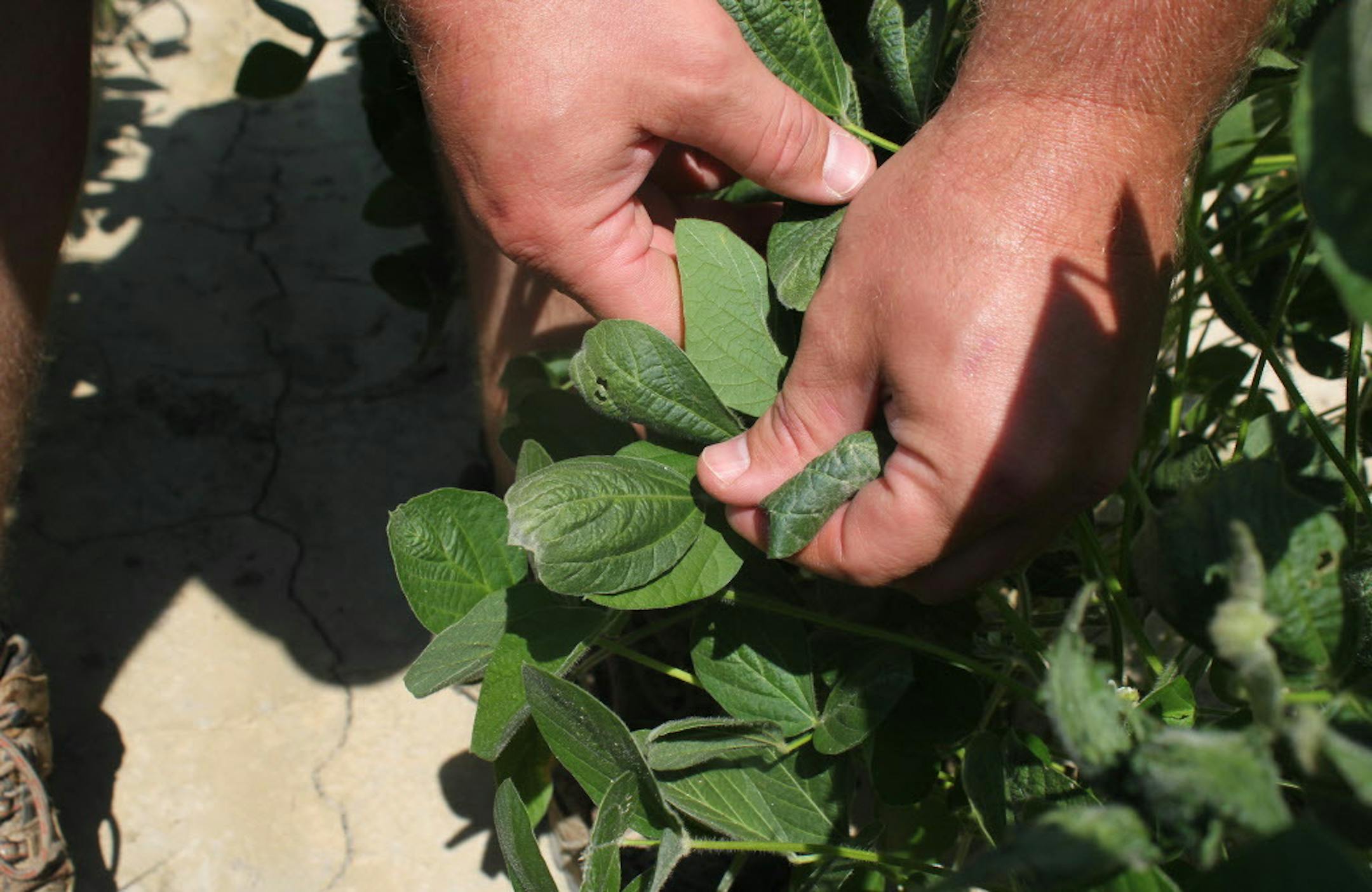
ST. LOUIS – With the 2018 growing season gearing up, eyes on wide swaths of the nation's farmland are sure to look out for continued damage from dicamba, a controversial weed killer blamed for damaging millions of acres of soybeans and other plants over the last couple of years.
But much attention will also be on a Missouri courtroom, where the Creve Coeur, Mo.-based biotech giant, Monsanto, is facing off in a proposed class-action lawsuit with farmers who allege they were harmed by the hard-to-control herbicide notorious for its tendency to evaporate — or volatize — and move to other nearby areas. A conference in Cape Girardeau Wednesday will set a schedule for the U.S. District Court's proceedings in the cases, where more than a dozen complaints are already in front of a federal judge.
The controversy surrounding the hot-selling technology adds to Monsanto's busy legal docket, with antitrust hurdles from the company's proposed acquisition by Bayer swirling in the background, along with a separate class-action suit over the carcinogenic potential glyphosate, the active ingredient in Roundup.
The dicamba cases echo various complaints that have circulated since Monsanto's 2015 release of its Xtend crop varieties genetically modified to tolerate the chemical. The trait enables farmers with Xtend cotton or soybeans to spray the crops with dicamba for weed control — leaving their plantings unharmed but threatening other, nontolerant crops and vegetation through either volatility or physical drift.
Until last growing season, Xtend seeds had been on the market without the corresponding type of less-volatile dicamba spray, which had not secured regulatory approval. Its absence created a situation where many farmers with dicamba-tolerant seeds chose to illegally use older versions of the chemical that are more prone to off-target movement. But even with the new, lower-volatility sprays available for the 2017 growing season, incidents of reported dicamba damage continued and actually increased — spanning 3.6 million acres of U.S. soybeans.
In its lawsuit, Senath, Mo.-based Cow-Mil Farms, Inc. alleges that reported dicamba damage has been both a predictable and profitable result of Monsanto's rollout of the Xtend product package.
"To Monsanto, it was foreseeable that farmers would spray dicamba on a seed designed to resist it, that old dicamba is volatile and would drift, that the Xtend seeds would eventually dominate the market, and that the farming communities in the affected states (including Plaintiffs and the Class) would suffer massive destruction to their crops," says the complaint filed in the case.
Citing both farmers and weed scientists, other arguments outlined in the complaint include allegations that Monsanto sales representatives privately condoned unauthorized use of the herbicide and suggestions that damage is expected to continue, even with the availability of new "allegedly lower-volatility" dicamba formulations made by Monsanto and other companies, such as BASF.



