

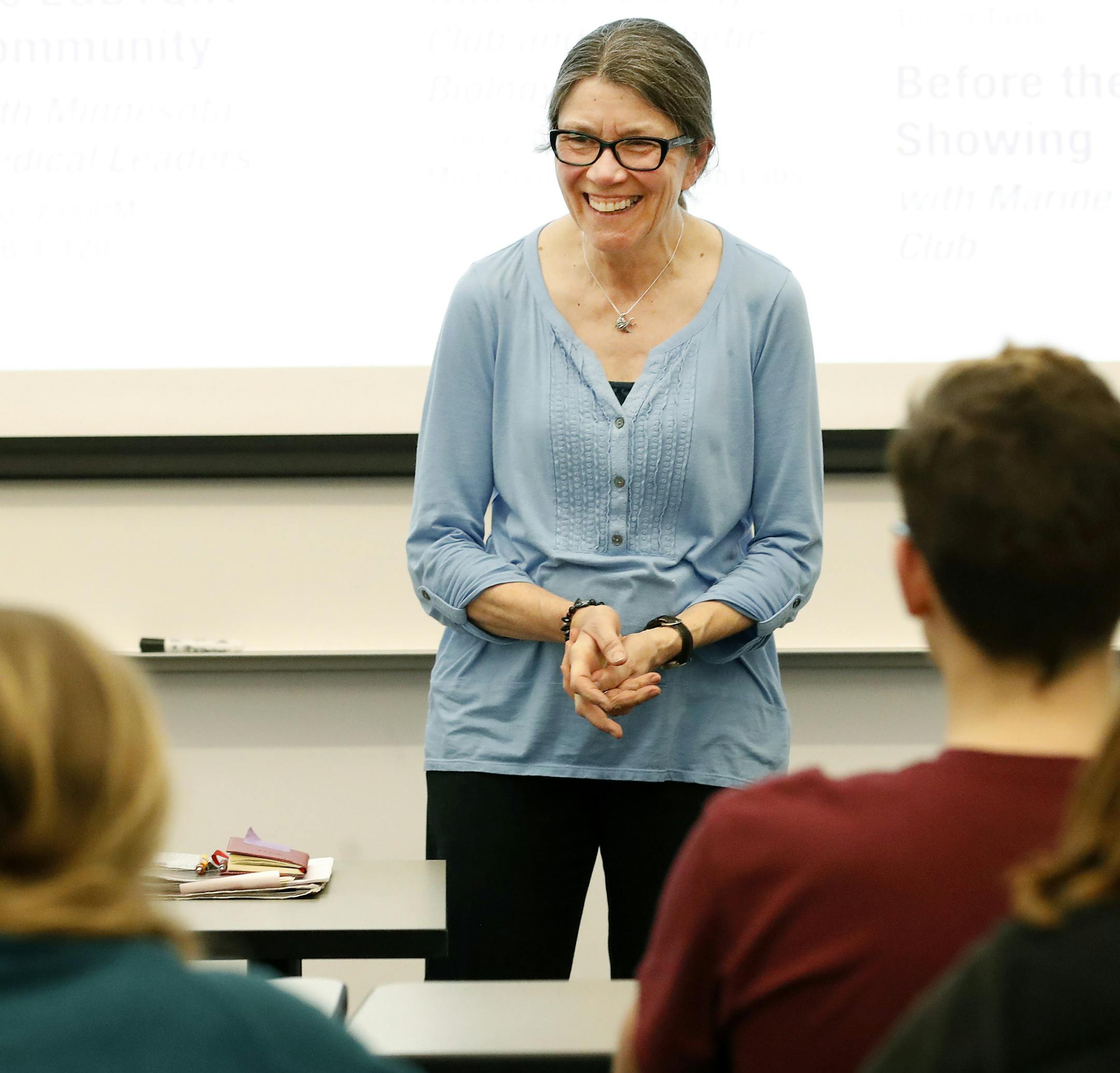
Biology professor Sue Wick likes to keep tabs on her students.
But she's not just worried about who's skipping class or daydreaming. She's also looking for signs of distress.
Have her students showered and brushed their hair? Are they constantly late or absent? Do they seem exhausted?
After learning about the increased demand for mental health services at the University of Minnesota, Wick started to think about what she could do as a teacher.
She said she's seen student stress levels and mental health-related issues become increasingly noticeable during her 31 years at the school. And as mental health becomes a larger topic at colleges nationwide, some faculty members like Wick say that being attentive to students' stress and mental state is a necessary part of their job.
"We're the ones who interact daily with students," Wick said. "We're the first contact."
Wick is now part of a university group charged with pinpointing ways faculty members can better address problems with student mental health. The group, called the Joint Taskforce on Student Mental Health, tentatively plans to introduce a report and recommendations for faculty to the school's University Senate in May.
Finding a balance
Instructors often have to balance being compassionate with keeping courses challenging and fair.


