Arriving in Trier in the dark was never part of the plan.
Ten days in Germany, in three Rhineland cities, train tickets, hotel reservations: I was organized, with a detailed, day-by-day itinerary. But after unexpectedly spending more than two hours in the Düsseldorf train station searching for misplaced luggage, I'd missed the early trains to Trier.
As I hurried down the town's main street at 10 p.m., coaxing my suitcase over cobblestones, the sight of a glowing pink hulk looming in the gloom stopped me in my tracks. The ghost of the Roman Empire, hovering in the night?
Yes, sort of. It was the Porta Nigra, Trier's best preserved Roman ruin, illuminated at night by spotlights. The second-century gate — made with massive sandstone blocks, 98 feet high and twice as wide — is a UNESCO World Heritage Site.
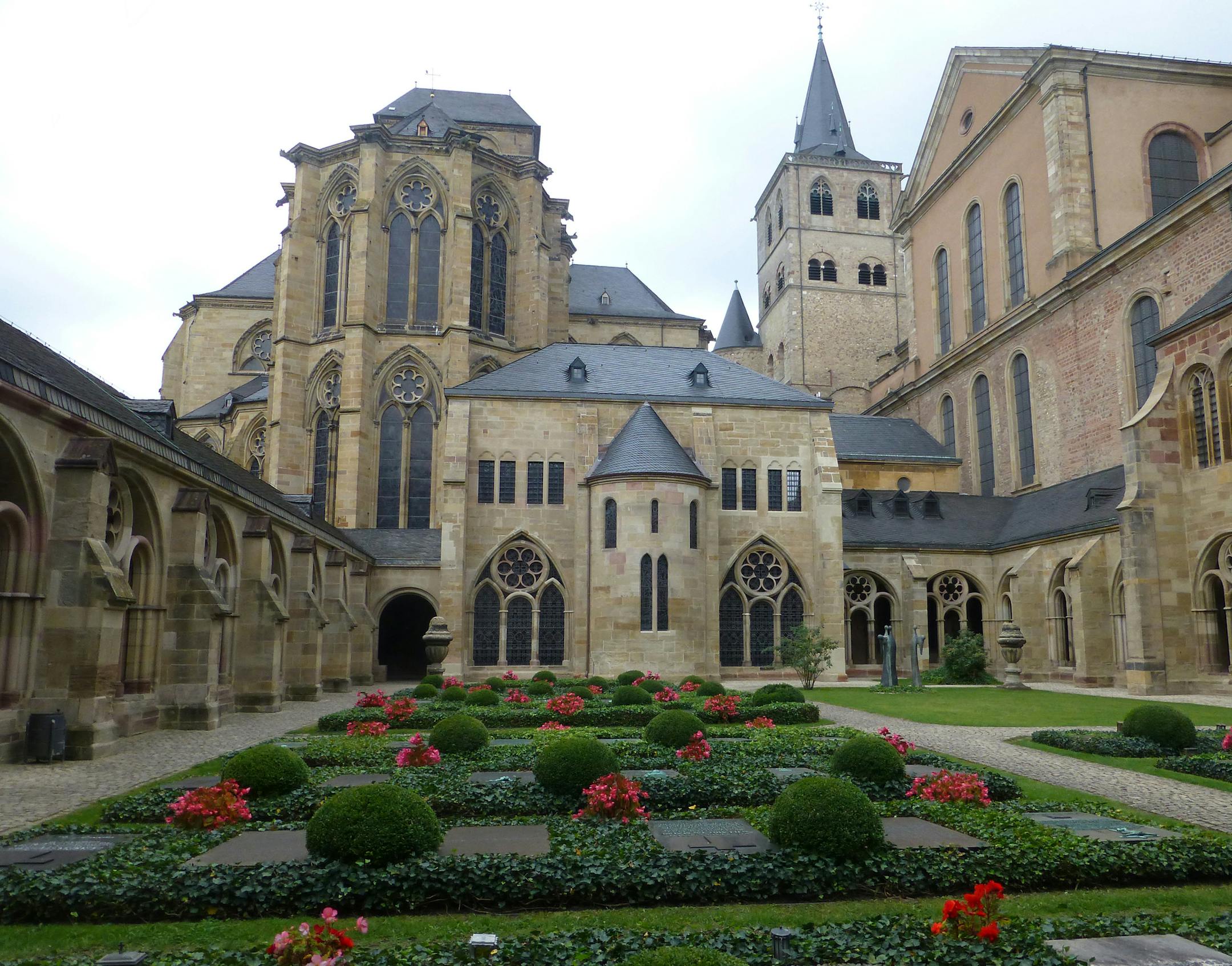
In daylight, the Porta Nigra is a dirty gray, mottled by 1,800 years of weather, which is why it's called the "black gate." But with that first shimmering apparition — the gate at night as it might have looked lit by Roman torches — I understood the appeal of Trier, an ancient city on the winding Moselle River filled with imposing wonders. The Porta Nigra is one of Trier's nine World Heritage Sites, historic monuments all.
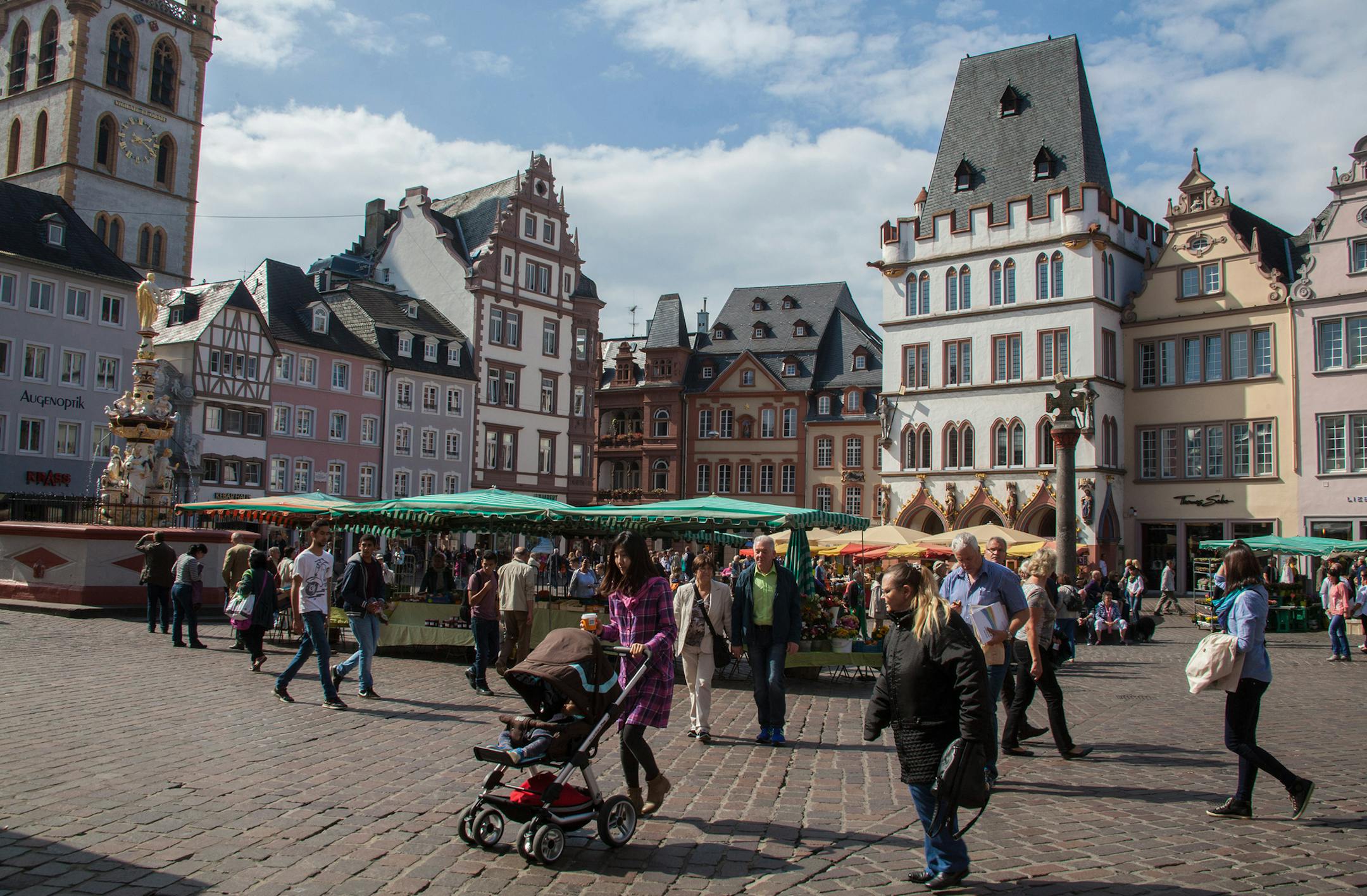
I returned early the next morning, and groups of tourists were already milling around in front of the Tourism Office, sipping coffee, perusing brochures and waiting for their guides. I went to the office to pick up a city map and ask about guided tours.
The most popular tours, the desk clerk said, were the afternoon bus or riverboat excursions to the wineries and vineyards along the Moselle River. In the meantime, I might want to try the Roman Ruins tour led by a centurion in a breastplate and helmet; or the Toga Tour of Roman Trier, with guide and visitors clad in what looked like ribbon-trimmed sheets. The gladiator-led adventure to the Amphitheater, complete with imagined battle scenes, seemed designed for kids with a taste for gore. The "Devil in Trier" promised a spooky immersion in the Middle Ages' darkest years. "Beware of witchcraft!" she advised, smiling.
The tour I picked, walking through the old town streets, sounded dry by comparison, but focused on history. Meanwhile, Chinese tourists made a beeline for a modest three-story pink house with a historic marker on the wall, and a "Euroshop" (a 99-cent store) on the ground floor.