

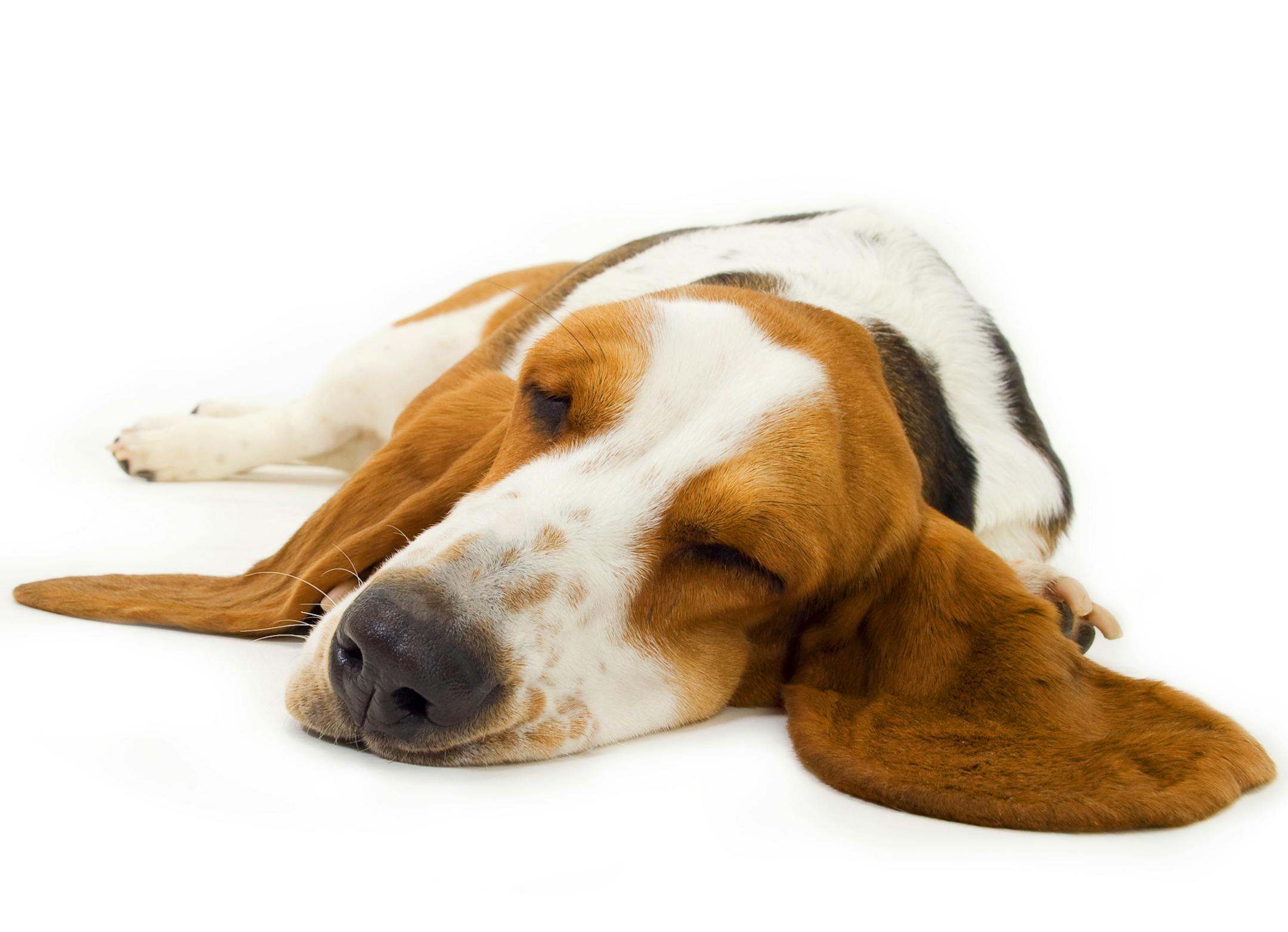
For millennia, dogs have shared our lives — and, often, our beds.
That may be in part because humans and dogs have similar sleep times and habits. Like us, dogs can have trouble falling asleep at times, their sleep habits change with age, and they snore.
It's no wonder that sleep researchers find dogs to be important models for studying human sleep-related cognition. Humans and dogs tend to sleep primarily at night. A dog's daily sleep duration is eight to 14 hours, compared with eight hours for humans and 12 to 15 hours for cats.
Working with family dogs and noninvasive polysomnography (sensors to monitor physiological signs like brain waves, eye movements, heart rate and breathing patterns), researchers are able to learn more about how sleep affects cognitive processes such as memory consolidation and emotion processing. Along the way, they've also learned more about canine sleep experiences.
If you are middle-aged or older, or live with a dog that is, you probably won't be surprised to learn that older dogs sleep more. Dogs that have had a physically or mentally active day because of competition or advanced training sleep soundly, too. Compared with dogs that have had a more typical (read: less active) day, they become drowsy earlier, moving quickly to the sleep stages called NREM (non-rapid eye movement) and REM (rapid eye movement).
The NREM stage is when the body repairs and regrows body tissues, builds bone and muscle, and strengthens the immune system. REM sleep stimulates areas of the brain that aid learning and are associated with increased protein production. We don't know, though, whether dogs experience the intense dreams that humans do during REM sleep.
"Dogs are not able to tell us what they experienced during their sleep, so we can't tell whether they dream or not," said Vivien Reicher at Eötvös Loránd University in Budapest, Hungary, lead author of a sleep study in family dogs published in the Journal of Sleep Research. "Intuitively, of course, we can claim that a dog is dreaming when he or she seems to run, or whines while sleeping."
The signs of dogs dreaming in REM sleep are similar to that of humans; rapid eye movements, irregular respiration and heart rate, limb and body movements and twitching.


