

When Candida Rifkind got the call on March 14 that her Aunt Cecilia had died, she realized she couldn't attend the funeral. The rapid spread of the coronavirus was making international travel more uncertain than ever. Just a day earlier, the United States had blocked most European visitors from entering its borders. Rifkind, an English professor who lives in Winnipeg, Manitoba, didn't want to risk it. (Canada and the United States closed their borders to each other the next week.)
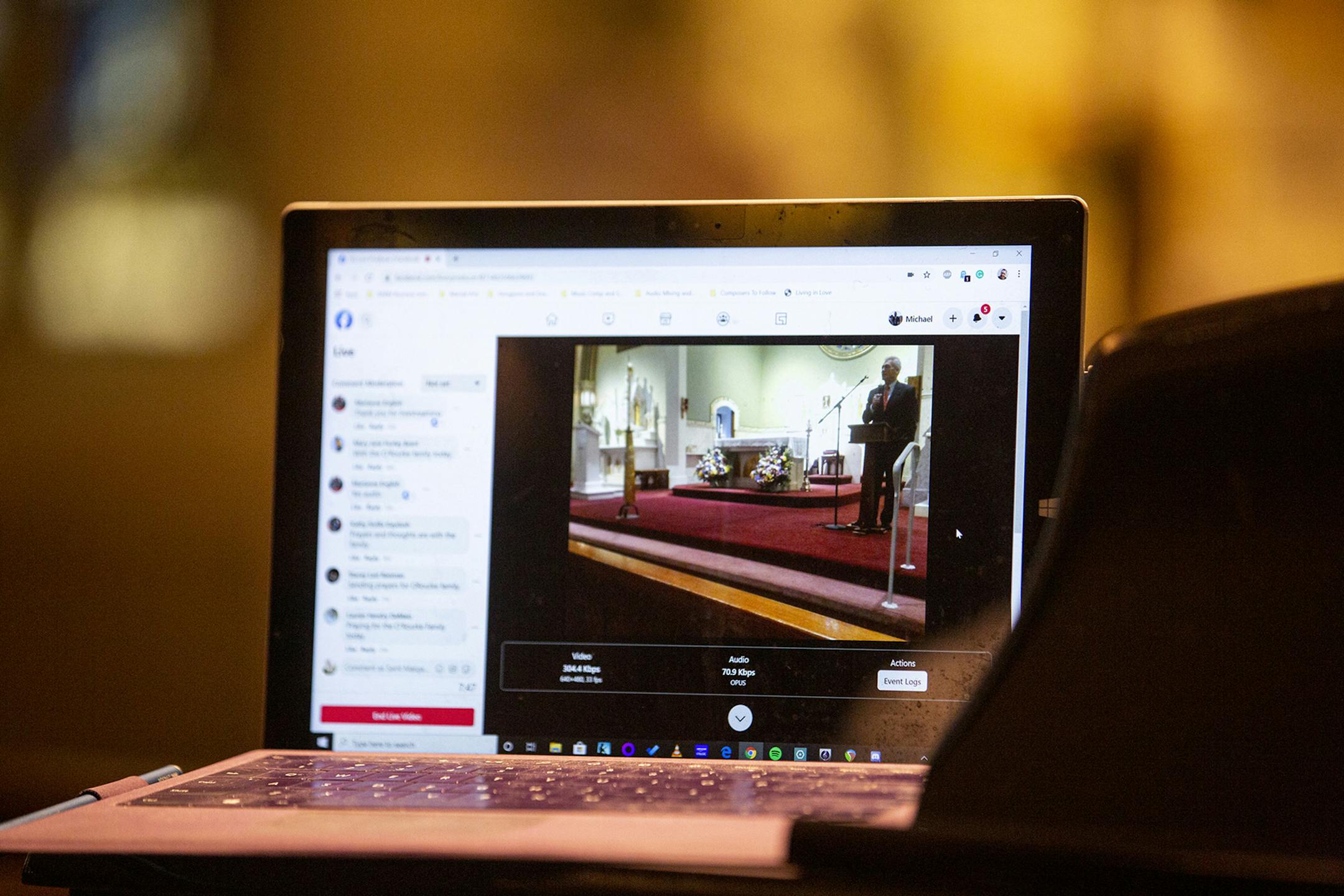
So the family devised a solution: Host a small funeral in Los Angeles, her aunt's home city, and post a livestream for everyone else. Late in the morning on March 18, Rifkind received a protected link and a password. She hooked up her laptop to the TV, sat with her husband on her living room couch and streamed her aunt's funeral from nearly 2,000 miles away.
As governments across the globe espouse self-isolation to stem the spread of the coronavirus, funeral homes are facing intense pressure. In Spain, local officials traced over 60 COVID-19 cases to a large funeral held in late February. On March 20, Washington state affirmed that funerals and memorial services were banned indefinitely. In Kentucky, as in much of the U.S., funerals are restricted to the "closest of family," and guidance from the White House to "avoid social gatherings in groups of more than 10 people" has placed firm caps on how many family members can attend.
Funeral homes racing for new ways to help people grieve at a remove have taken up a much-maligned technology: livestreaming. But in the age of social distancing, mourners are finding online funerals to be a surprisingly intimate way to honor loved ones. Even in self-isolation, collective grieving still matters.
"I thought it would be distant and cold, but it was the exact opposite," Rifkind said. At her aunt's funeral, attendance was restricted: her aunt's ex-husband, sister and three children, plus the rabbi and cantor from their synagogue. Several times during the ceremony, the rabbi turned to thank the livestreaming audience, which also included Rifkind's brother and mother. "At the end he commented on how difficult these times are for bereaved families but reassured us that 'all we can do is all we can do,' " Rifkind said.
Usually when Rifkind attends funerals, she said, she doesn't cry. It's too much pressure: She puts on a brave face for fear that her grief will become a burden. But in her home, as she watched her cousins say goodbye to Aunt Cecilia, "I didn't have to hold it together for anyone," she said.
Some form of funeral livestreaming has existed since FuneralOne began offering it in 2003, but the idea never reached the mainstream of the industry. Last year, the National Funeral Directors Association estimated that only about 20% of all funeral homes offered a livestreaming option. That's because of long-held assumptions that livestreaming is impersonal. For people reeling from a loss, the communal catharsis of a funeral seems to demand a physical presence.
"When you associate livestreaming and webcasting with funerals, you chase away the vast majority of people very quickly," said Bruce Likly, who has run the funeral livestreaming service TribuCast for over a year. Part of the problem is that most people's concept of a funeral stream — a rather ghoulish two hours of coffin footage — is wrong. "If all you've done is shot a camera on a casket, it leaves that remote attendee feeling anxious, uncomfortable, sometimes even voyeuristic," he said.


