

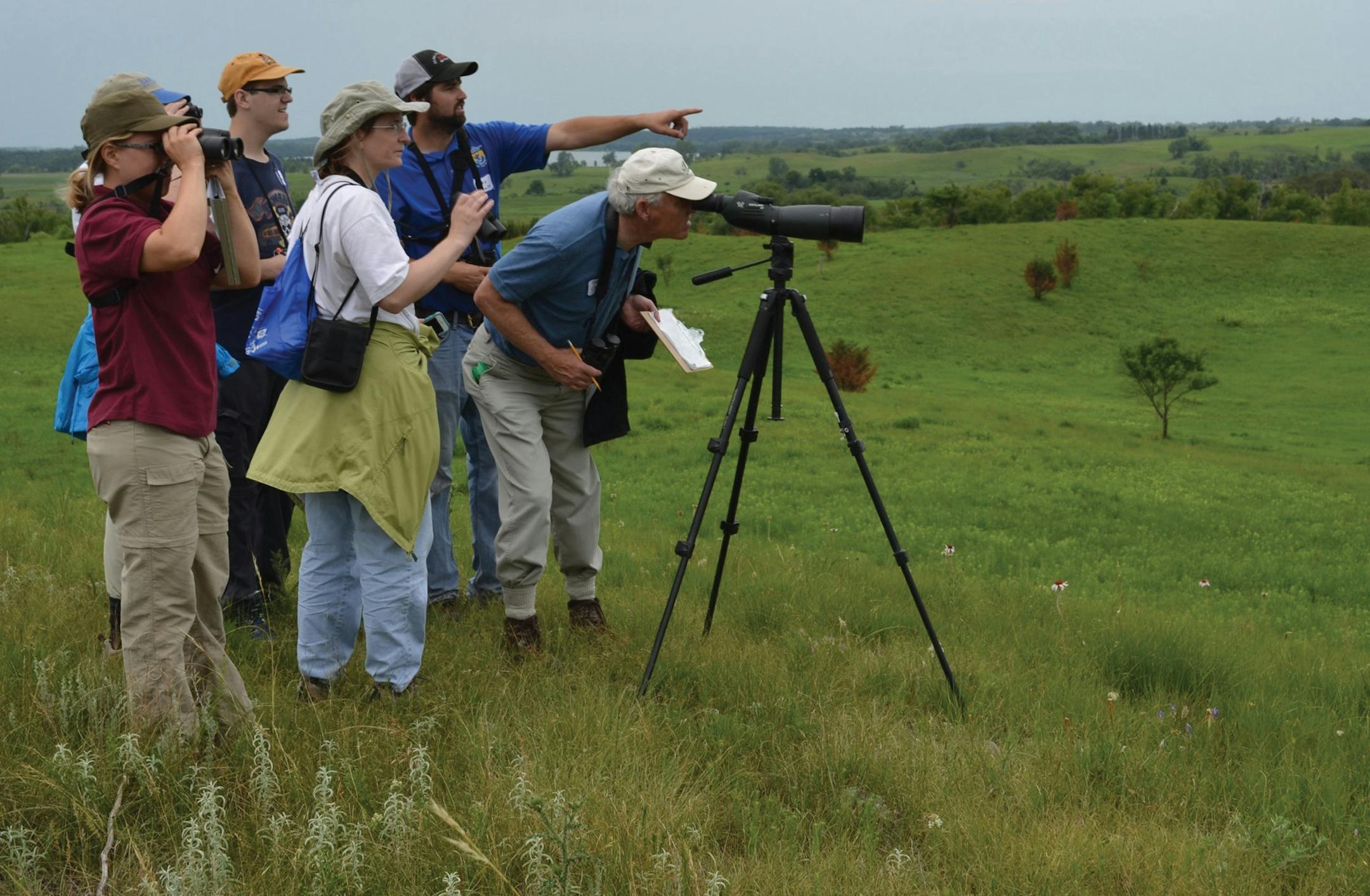
With knowledge comes power — as well as responsibility. On a recent overcast summer day, several dozen people were gaining more of the former with each step they took through rolling grassland in west-central Minnesota. And as they referred to field guides and smartphone nature apps while tallying a growing list of plant and animal names, they were also getting a sense of the role human-based land-use practices play in determining which species are present, and which aren't.
"The more you know the plants and birds and species around you, the more ready you are to take care of them," said Robin Moore, coordinator of the event, called the Simon Lake BioBlitz.
A "BioBlitz" consists of volunteers working with naturalists to record as many living plant and animal species as possible within a designated area and time — usually limited to a day or 24 hours. It's a bit of a biological scavenger hunt. Such surveys, which are done across the country by community groups, provide a rough snapshot of the number and types of species residing in an area and serve as baselines for future monitoring. They can be done in the wilderness, at a city park or — as in this case— in an area where natural lands and working farmland share space.
During the Simon Lake BioBlitz, farmers and other local residents spent a day hiking with scientists and natural-resource professionals across a natural area owned by the Nature Conservancy called Sheepberry Fen. The fen includes a mix of dry upland prairie and oak savanna and a large groundwater-fed wetland complex called a calcareous fen.
Sheepberry Fen is special, but it's just one parcel in an area of the state where several remnants of highly threatened native tallgrass prairie grow. These prairie areas are controlled by a hodgepodge of landowners in an area called Simon Lake. The U.S. Fish and Wildlife Service and the Minnesota Department of Natural Resources manage some of these natural lands, while the Nature Conservancy owns areas like Sheepberry Fen. Other private parties have bought real estate in the area to use for hunting and various recreational purposes. Finally, several farmers are producing cattle and other livestock, as well as hay, on grasslands they own and rent in the area.
That's a diverse group of landowners with an equally diverse set of goals. But one thing many of them agree on is that grasslands in this region are threatened by invasive species such as sumac and Siberian elm, as well as increased monocrops of corn and soybeans. For the past few years, the Land Stewardship Project and the Chippewa River Watershed Project have been working with landowners, government agencies, nonprofit groups and farmers in the area to develop a cooperative landscape management system that will help control invasives across public and private boundaries while providing healthy grass habitat for wildlife and livestock.
One way to make grasslands profitable is by raising cattle and other livestock using managed rotational grazing. Also called conservation grazing, this technique has shown great promise for controlling invasives and reviving natural grasslands while providing farmers a way to give their own pastures a rest.
A BioBlitz can provide a sense of what's present and a gauge for how practices such as conservation grazing influence the health of these plants and animals in the long-term. Such events also connect communities: human as well as natural.


