

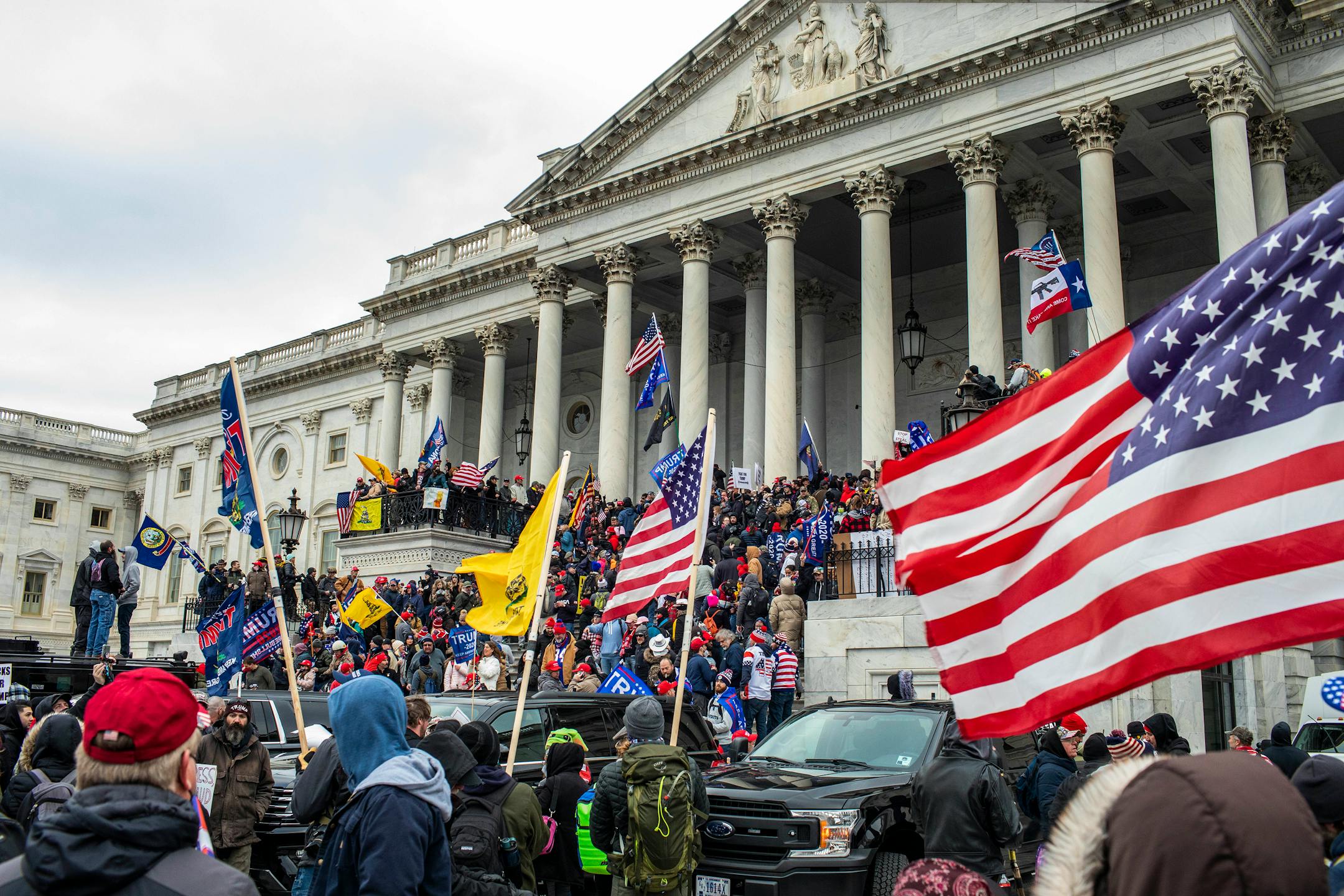
Earlier this week, ahead of the anniversary of the attack on the U.S. Capitol, a new Washington Post-University of Maryland poll offered some of the grimmest metrics yet about the state of public trust and extremism in the United States. "The percentage of Americans who say violent action against the government is justified at times stands at 34%," the poll found. It's the highest figure on record in over two decades and a double-digit jump from 2015 when a similar study was conducted.
This finding is less surprising than it should be — especially if you spend enough time online. As a coda to a year marred by enduring rage over the 2020 presidential election, the despair and endless slog of pandemic life, vaccines, inflation and political stasis, it resonates with sentiments that many of us surely witness, and possibly feel, in the virtual spaces we inhabit.
Whether you're wishing a harmless "happy birthday" to a distant relative on Facebook or searching for a dentist on Nextdoor, it seems nearly impossible to avoid the toxic fury that has been prioritized in social media feeds.
By now, we know what study after study says about how moral outrage is a key feature of social media, regardless of whether we're exposed to content we agree with or not. We also know that platforms like Facebook, YouTube and Twitter profit most from what polarizes best. It's practically conventional wisdom that hashing out all our politics online, and in relative anonymity, erodes discourse, weaponizes opinion, spreads lies and artificially makes enemies out of strangers.
You don't have to be plotting an insurrection to be familiar with this dynamic: Toxicity is so essential to our modern digital lives that there is no disentangling it from the ways we use the internet — and the ways tech companies make use of us — today. There are not enough cute Corgi videos in the world to leave us refreshed when our social feed refreshes.
For most of us, logging off altogether isn't an option — too many relationships tied up in Facebook, maybe, or too many professional responsibilities tied up with Twitter. But what we can do is take a break. And this week offers us an ideal occasion to do so.
Last year's attack on the Capitol showed just how thoroughly the internet's ugliness has transformed us. Though initially dismissed as fringe militia members, unwashed loners and basement dwellers, the cast of characters that tried to subvert the confirmation of President Joe Biden's electoral win included teachers, public officials, religious leaders, members of law enforcement and the military, CEOs, and small-business owners.
Even if the scene on Jan. 6 had the visuals of a low-rent "Les Misérables," the composition of the crowd had undeniable elements of Mayberry. And that alone speaks to the depth of the problems fueled by digital bubbles, misinformation and online anger.


