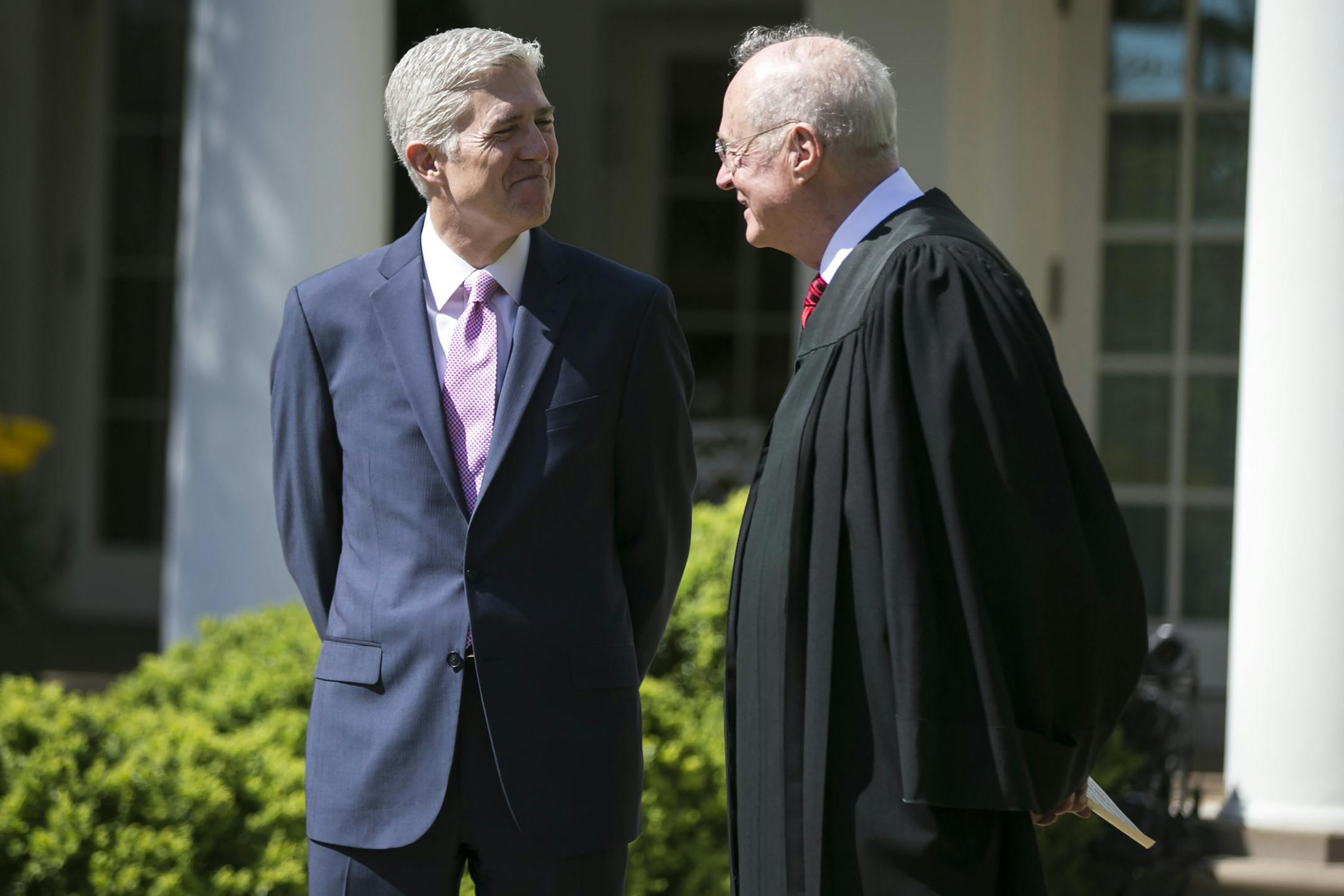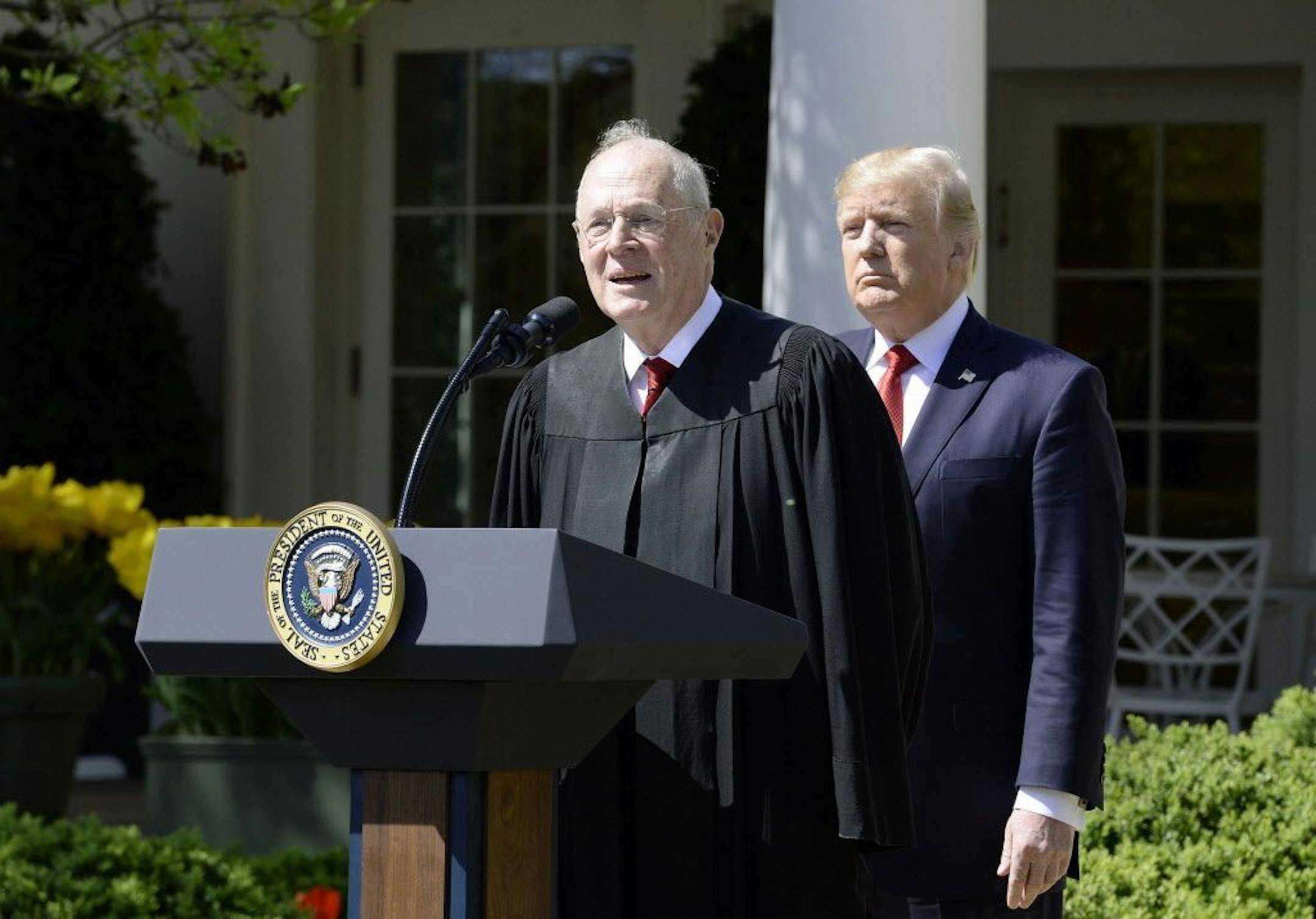
WASHINGTON – Justice Anthony Kennedy reclaimed his position as the man in the middle of the U.S. Supreme Court when he swore in Neil Gorsuch, his former law clerk, as the newest justice.
The question is whether Kennedy wants to keep that pivotal role in close decisions for longer than a few more months.
Long before Gorsuch took his oath of office Monday, speculation was swirling that Kennedy might retire at the end of the term. President Donald Trump's aides are preparing for the prospect of a new nomination while liberals brace for what could be a seismic shift on the court.
Kennedy, 80, has been the court's primary pivot point since 2006, generally aligning with the four conservatives on campaign finance and voting rights and with the four liberals on gay rights. By selecting Kennedy's successor, Trump could finally create the five-member majority that legal conservatives have envisioned for decades — one that might overturn long-standing precedents including the 1973 Roe vs. Wade abortion rights ruling.
"Kennedy leaving and being replaced by a Trump pick will almost certainly move the court to the right and perhaps make the court the most conservative court we have had since the 1930s," said Neal Devins, a William & Mary Law School professor who is co-writing a book on the court.
Kennedy has given no public indication of his plans, but he has drawn attention with semiprivate scheduling decisions. Perhaps most significantly, his next law clerk reunion will take place during the last weekend of June, offering the possibility that he will spring a piece of news on the gathering.
The timing is noteworthy because previous Kennedy reunions took place every five years, and this one comes four years after the 2013 event. In addition, it's taking place at the end of June, just as the term concludes, rather than in mid-June like previous reunions.
Supreme Court spokeswoman Kathy Arberg said the late-June weekend was chosen "because it works best with the Justice's schedule."