
Secondhand stores step it up

Thrift stores are tightening quality control and adding services to keep the middle-class shoppers who discovered them during the recession.

August 21, 2012 at 1:42PM
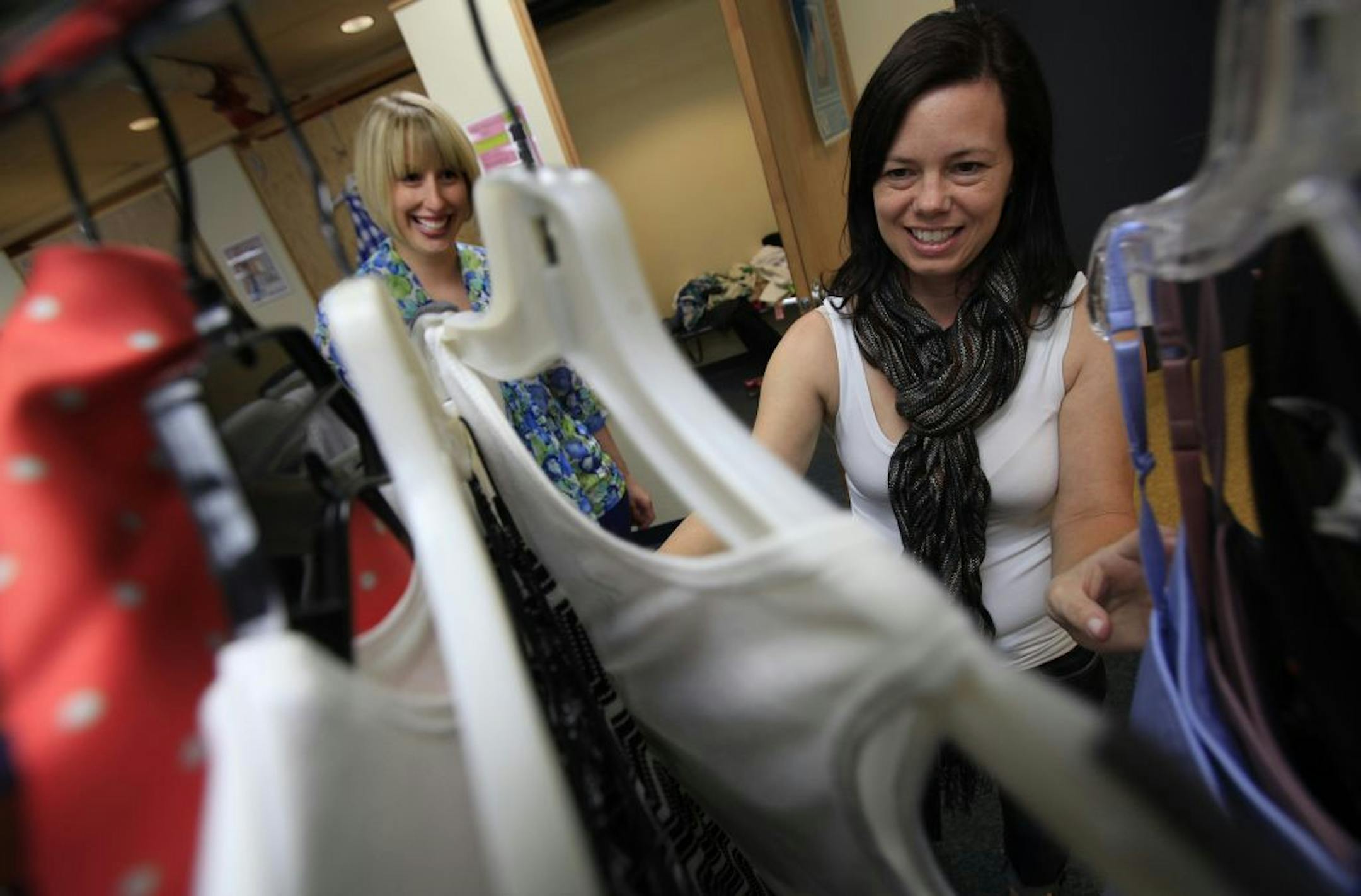
Michelle Dustin (left), is a personal shopper for Arc's Value Village picked out appoximately 50 outfits for her client Heather Lewis of Champlin, MN, at the Richfield store. August 14, 2012.
Heather Lewis of Champlin, right, looked at the 40-plus outfits personal shopper Michelle Dustin selected for her to try on at Arc's Value Village. (Star Tribune/The Minnesota Star Tribune)

Margo O'Dell decided it was time to treat herself to a fashion perk -- a personal shopper.

She had a 75-minute, in-store appointment with Michelle Dustin, who asked O'Dell about her lifestyle, personal style and favorite colors. Then Dunn picked out ensembles for O'Dell to wear to work, a formal dress for a wedding and a couple of casual outfits, plus accessories.

Not so surprising, until you consider two things: O'Dell, who lives in Edina, wasn't at Macy's or Nordstrom. She was in a thrift store, Arc's Value Village, and her bill for the 25 pieces she bought came to $110.

When the recession started, middle-class shoppers such as O'Dell flocked to thrift stores, many for the first time. Now Value Village, Salvation Army, Goodwill and others are getting creative to keep those customers coming back.

In addition to offering personal shoppers, some secondhand stores are bringing in new merchandise, stepping up their advertising and adding loyalty programs. And all of them have literally cleaned up their acts, by remodeling their stores and raising the bar on the used merchandise they sell.

"We still need the customer who won't pay more than $2 for a shirt," said Tom Canfield, district manager of the Twin Cities area Salvation Army stores. "But we also want to attract the middle-class person who can find a Polo shirt here for $5."

The change comes at a time when donations to secondhand stores are dropping.

The Salvation Army has kept shoppers from walking away empty-handed by aggressively trolling for more donations. They added more drop boxes in the metro area and tripled the number of trucks collecting merchandise. Value Village extended hours at its donation centers. Goodwill streamlined the dropoff process to make donations faster and more efficient.

While the bulk of their business is still selling used goods, most local thrift stores also are offering new wares, sometimes by forming relationships with national retail chains.

Goodwill recently sent out a back-to-school glossy newspaper insert advertising Playskool workbooks for 99 cents and backpacks for $9.99, all of which were purchased new from manufacturers, said Lisa Ritter, director of marketing at Goodwill/Easter Seals of Minnesota.

Salvation Army is buying overstocked items and returns from Target, Wal-Mart, Costco and others. Recently, area Salvation Army stores sold flat-panel TVs (returns from an electronics retailer) for about half the retail price.

"Our customers like to see some higher-buck items, too," said Canfield. "We're going after more new product."

Because Arc gets too few donated socks that meet their quality standards, it regularly buys new socks, selling them at a slight markup. They've proven to be a popular items, said Laurel Hansen, Arc's business director.

Freshening the brand

To keep their customer base happy, thrift stores are trying to find out who their shoppers are. Increasingly, that answer is the middle class.

At Arc, which saw its sales rise 11 percent last year, the average shopper is a 30- to 60-year-old woman with an income of $50,000 to $75,000.

Goodwill has identified its average shopper as a 44-year-old woman with an income of $53,000 and a concern for the environment. So Goodwill, which had a 20 percent bump in sales, is adding parking spaces for electric cars at its new stores, using native plants in landscaping and turning to energy-efficient lighting, said Ritter.

In addition, all of Goodwill's stores have been converted to the same footprint, look and feel. Some have added coffee bars to their book sections, though none yet in the Twin Cities.

All Value Village stores have received a fresh coat of paint and new carpet, but its newest store in St. Paul sports a clearly contemporary look, with polished concrete floors, open ceilings and blond wood checkout counters. Business director Laurel Hansen calls it "a freshening of the brand."

That includes the clothes, too.

You're unlikely to see a dress with a tear or a shirt with a collar stain on the sales floor of any of the secondhand stores. Most are increasing staff training and changing store displays more often to advertise the constantly changing merchandise. Value Village has even added a loyalty rewards program.

"We try to give customers VIP treatment without the spending hangover," said Hansen.

John Ewoldt • 612-673-7633 or jewoldt@startribune.com

about the writer

about the writer

John Ewoldt

Reporter

John Ewoldt is a business reporter for the Star Tribune. He writes about small and large retailers including supermarkets, restaurants, consumer issues and trends, and personal finance.  

See Moreicon

More from No Section

See More
FILE -- A rent deposit slot at an apartment complex in Tucker, Ga., on July 21, 2020. As an eviction crisis has seemed increasingly likely this summer, everyone in the housing market has made the same plea to Washington: Send money — lots of it — that would keep renters in their homes and landlords afloat. (Melissa Golden/The New York Times) ORG XMIT: XNYT58
Melissa Golden/The New York Times

It’s too soon to tell how much the immigration crackdown is to blame.