

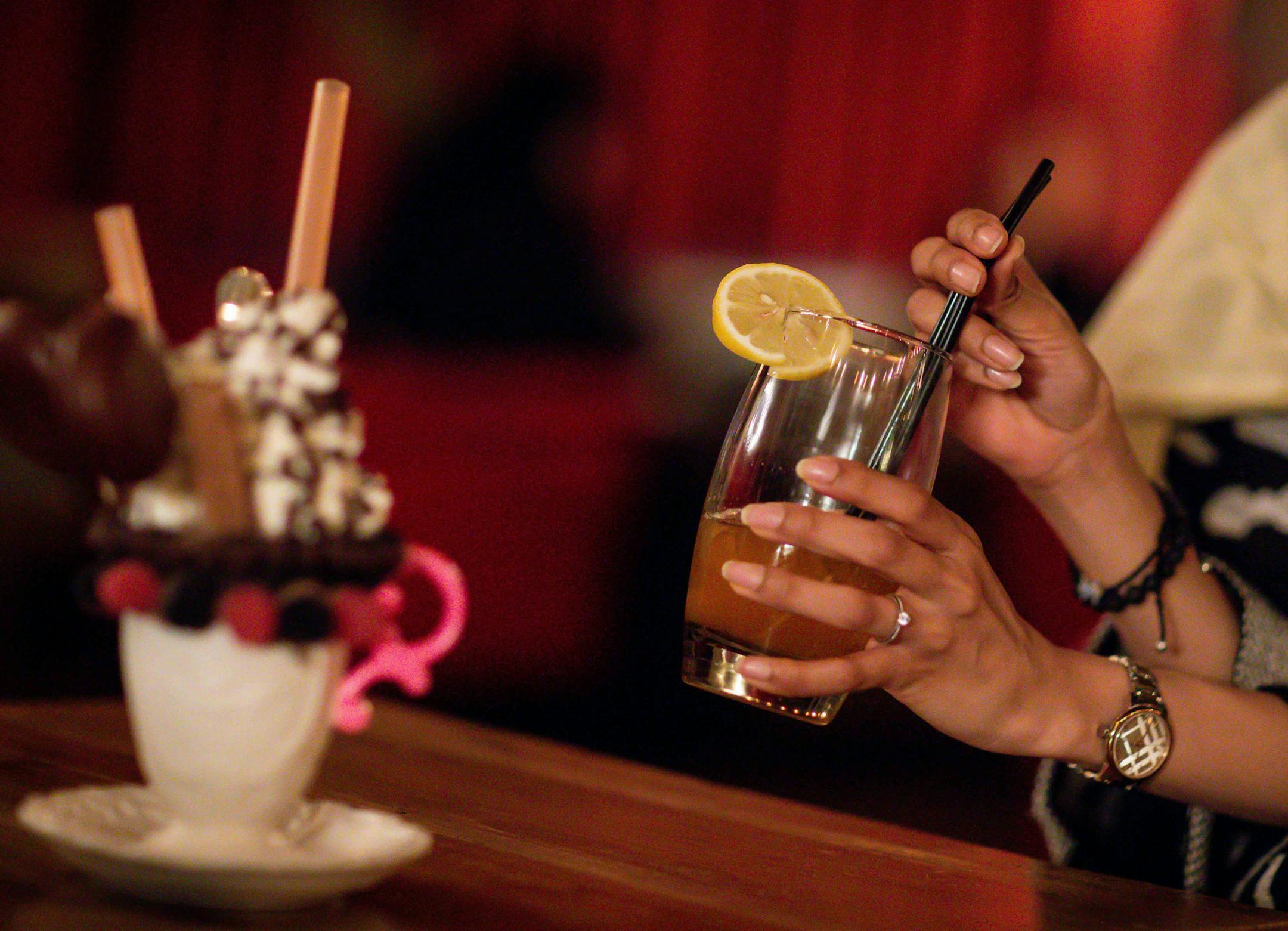
The lights are dim and the game is on loud at a sports bar in downtown Riyadh. Women perched on bar stools sip blueberry mojitos in front of wall-to-wall screens, erupting in cheers when their soccer team scores.
This being Saudi Arabia, of course there's one thing missing: alcohol. The drinks are virgin because the country bans booze.
But as the kingdom goes through an intoxicating social transformation, Saudis are starting to wonder — some with excitement, many with concern — whether another hallmark of their country's strict interpretation of Islam might start to disappear.
Under de facto ruler Crown Prince Mohammed bin Salman, the kingdom has drawn international castigation with the murder of a U.S.-based newspaper columnist and the jailing of activists and dissident clerics. Yet there's also been a loosening of things that help foster the leadership's narrative of an economic and social revolution.
A few years ago it would have been unthinkable that women would be able to mix freely in public with men, let alone drive. While the government has said nothing about legal drinking or indeed whether it would apply only to foreigners, even the fact that Saudis are talking about the possibility is remarkable.
"We're in a totally different era," said Saleh, 39. As is typical in the kingdom, he asked not to be identified by his full name so he could speak freely. "We thought there won't be movie theaters in the country, that women won't enter sports stadiums or drive — now it's all reality and very natural."
Executives have told some foreign visitors to expect restrictions on booze to loosen in Saudi Arabia next year. Foreigners working closely with government entities are hearing the government is working on import licenses.
Prince Mohammed's grand goal is to plug Saudi Arabia into the global marketplace and create a destination that's attractive to international talent, as Dubai has done. The prince wants businesses to flourish and tourists to flock to grand Red Sea resorts he plans to build.


