

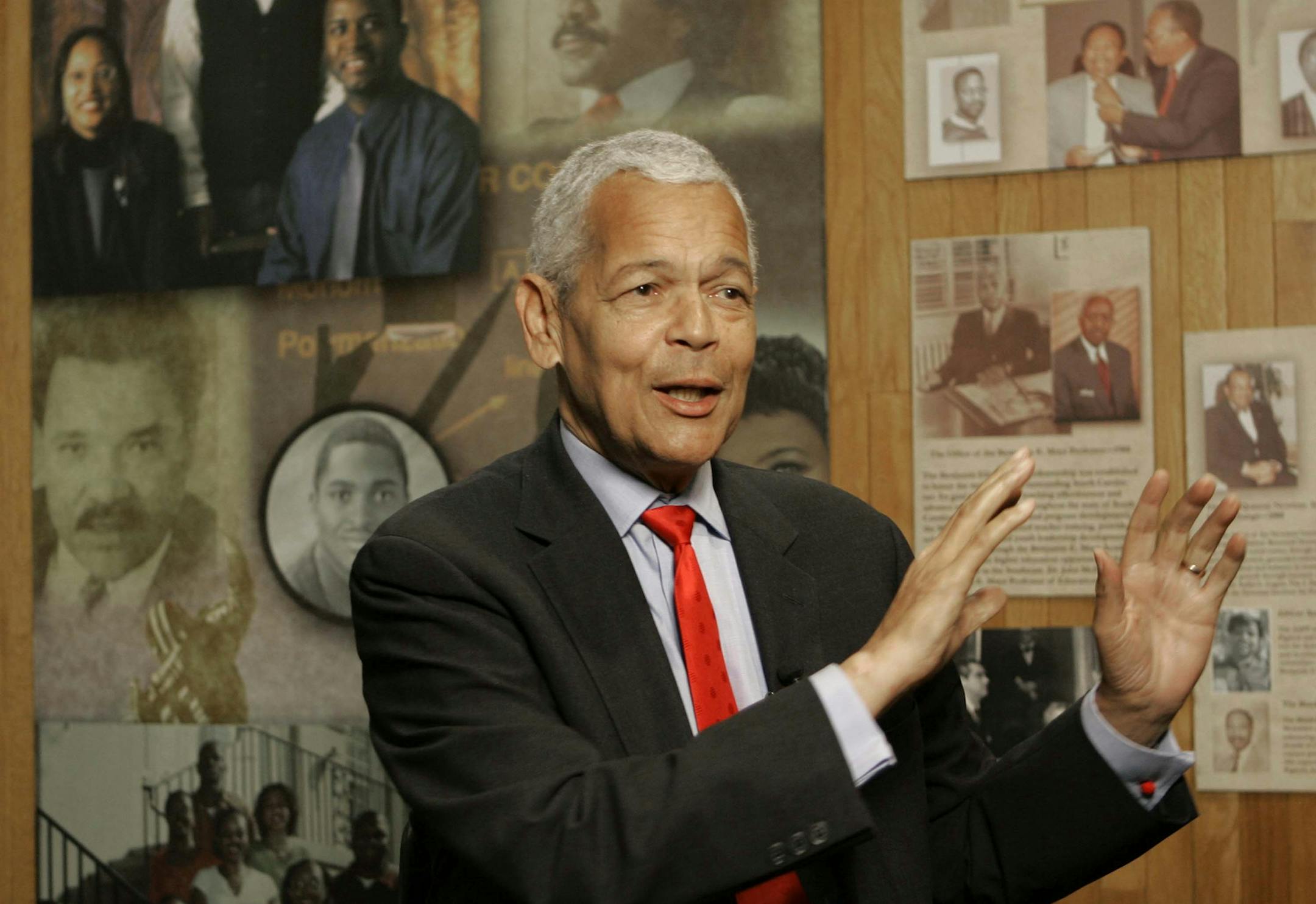
Julian Bond's death this past weekend coincided with the date of his 1970 commencement address to young people of color who had just completed training to become rookie news reporters around the country. They were enrolled in Columbia University's Summer Program in Broadcast Journalism for members of racial minorities.
The students — average age 26, all college graduates, but hardly any who were previously motivated to enter a field in which they saw no one who looked like them — all had guaranteed jobs awaiting them, which is what made the competition to get into the program so intense.
The program sprang from the mind of the former president of CBS News, Fred W. Friendly, who by then — right after the assassination of the Rev. Martin Luther King Jr. — was serving as media adviser to the head of the Ford Foundation and, at the same time, as Edward R. Murrow Professor of Journalism at Columbia. He appointed me director of the faculty. I hired the finest broadcast journalists we could find, including network correspondents and producers.
Most of the students were black; a few were Puerto Rican, Mexican-American, Asian-American or American Indian. Standing before them in the auditorium at the Ford Foundation — which along with NBC and CBS had paid for the expensive program — Julian Bond had a simple message for them:
"Go out … and slay the dragon!"
By that he meant not that they should become propagandists for the civil-rights movement, but that they should dig out and report the truth, as best they could determine it, and report that to their audiences. They could bring to the discipline of reporting the experiences they had had or had witnessed that were missing from the white perspective that set the agenda for news.
In the early days of the Summer Program's 11-week boot camp, for the several years it ran at Columbia, incoming students expressed skepticism about the faculty's goal. Many students thought we were trying to make them white. It usually took about three weeks for them to understand that all we were trying to do was to tell them everything we knew, so that they could survive and thrive.
Many of them have thrived, not only as reporters and anchor people in front of the camera, but also as decisionmakers who exert power behind the scenes.


