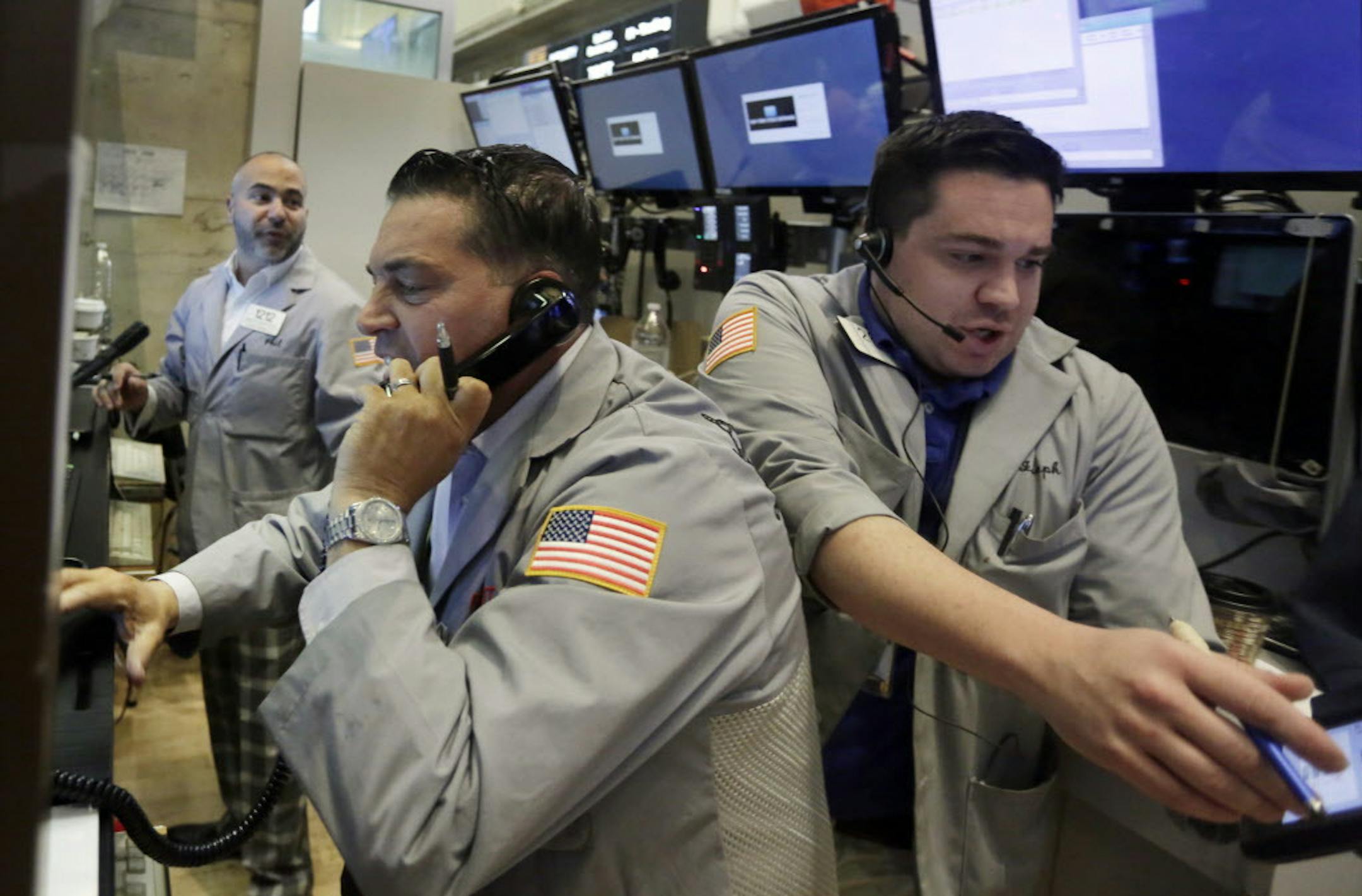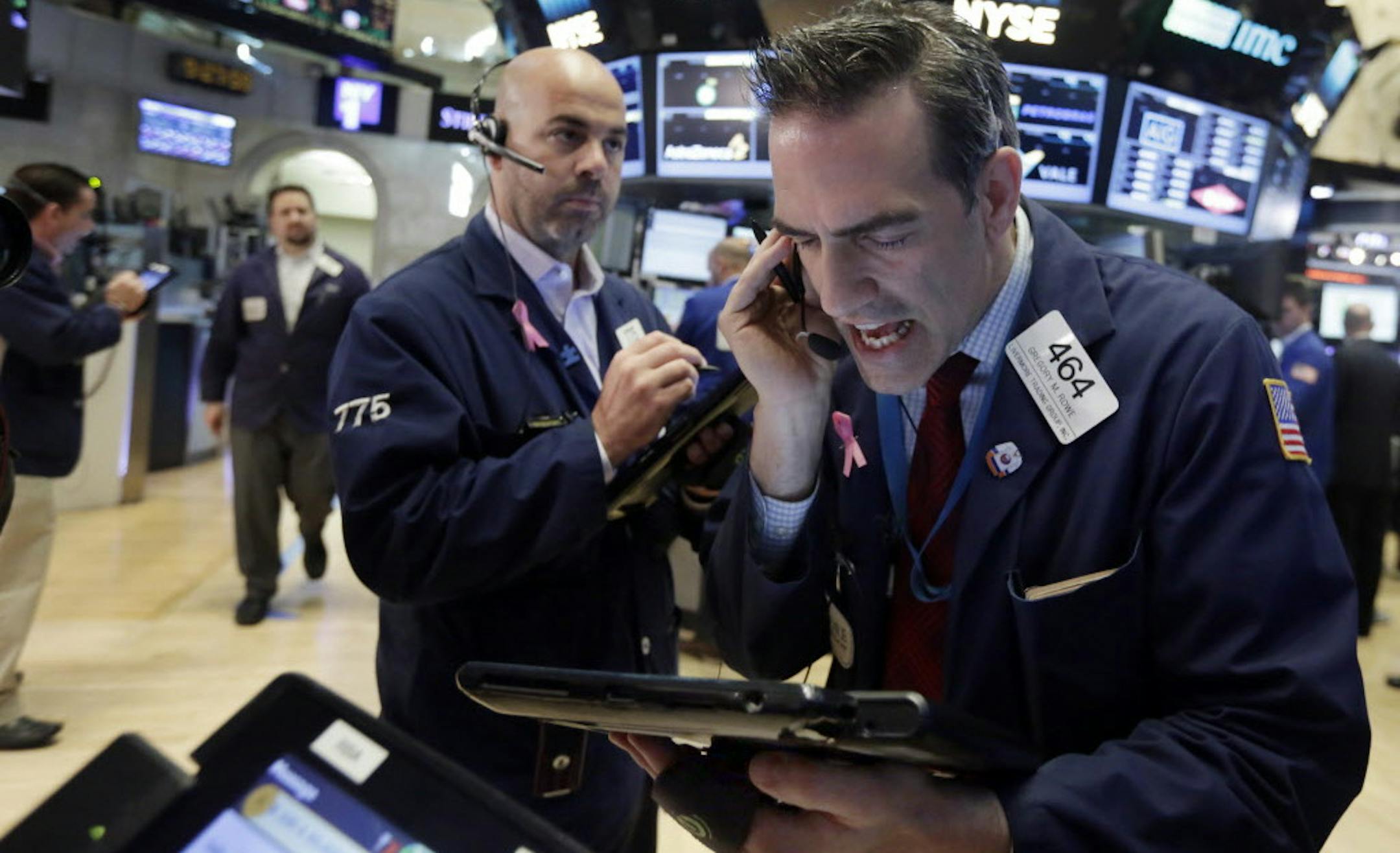
The risk of another global recession escalated Friday after Britain's stunning decision to leave the European Union plunged financial markets into free fall and tested the strength of the safeguards put in place since the last downturn seven years ago.
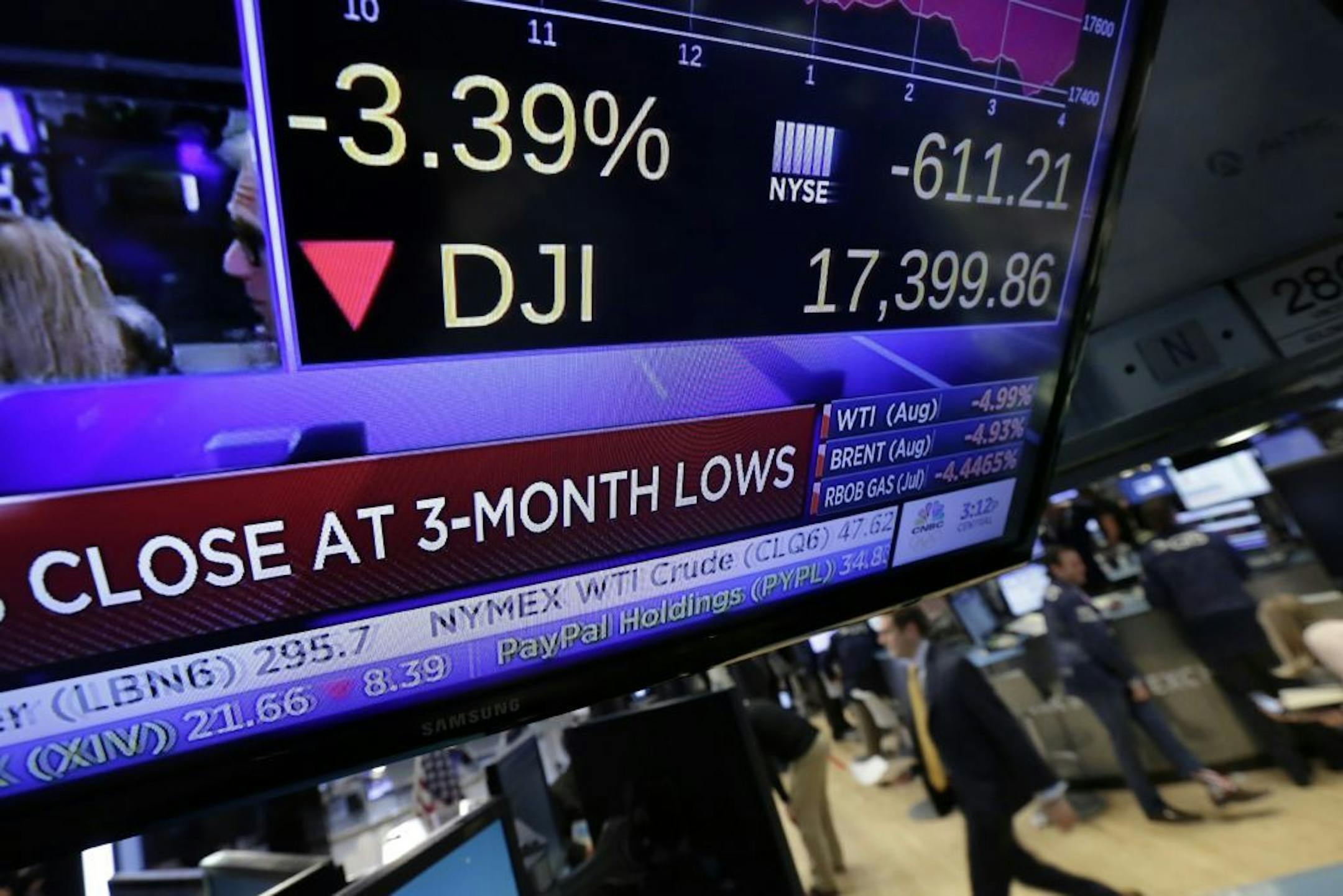
Wall Street was slammed from the moment trading opened, with the Dow Jones industrial average dropping more than 500 points within minutes. Though it pared those losses over the morning, it was back down 610.32 points, or nearly 3.4 percent, by the close of regular trading. The broader Standard & Poor's 500-stock index fell more than 3.5 percent and the tech-heavy Nasdaq suffered a decline of more than 4 percent.
The Dow closed at 17,400.75, while the Nasdaq finished at 4,707.98 and the S&P 500 at 2,037.41.
The gut-wrenching moves were the latest sign of panic that began when the results of Britain's Thursday referendum began to trickle in overnight. Japan's Nikkei index temporarily halted futures trading amid the sweeping global sell-off and closed down 8 percent. The turmoil then hit European stock markets, with France's major index also dropping 8 percent while Germany's fell nearly 7 percent. The London-based FTSE 100 initially plummeted nearly 9 percent but ended the day with a 3 percent decline.
International policymakers have long warned that the sluggish recovery from the Great Recession has left the world economy more vulnerable to another downturn. Recurring crisis over government debt in Europe, the bumpy slowdown in China and the collapse in oil prices have already battered prospects for global growth. Britain's exit from the E.U. — popularly known as "Brexit" — could prove to be the final straw, experts said.
"We think the time has come to consider that a financial market crash today may push a world economy teetering on the verge of a contraction over the edge," said Carl Weinberg, chief economist at High Frequency Economics.
Investors around the world appeared to be caught off-guard by the outcome of Britain's referendum. As late as Thursday afternoon, public opinion polls gave a slight edge to the campaign to "remain." But as the vote tallies rolled in overnight, it became clear the polls had been wrong — and traders started scrambling for the exits.
Alongside the sweeping sell-off in global stock markets was a rush into safehaven investments such as gold and U.S. government bonds. Gold prices hit a two-year high, while the yield on 10-year Treasury notes dropped to 1.57 percent, a level not seen since 2012. Yields move in the opposite direction of prices.