

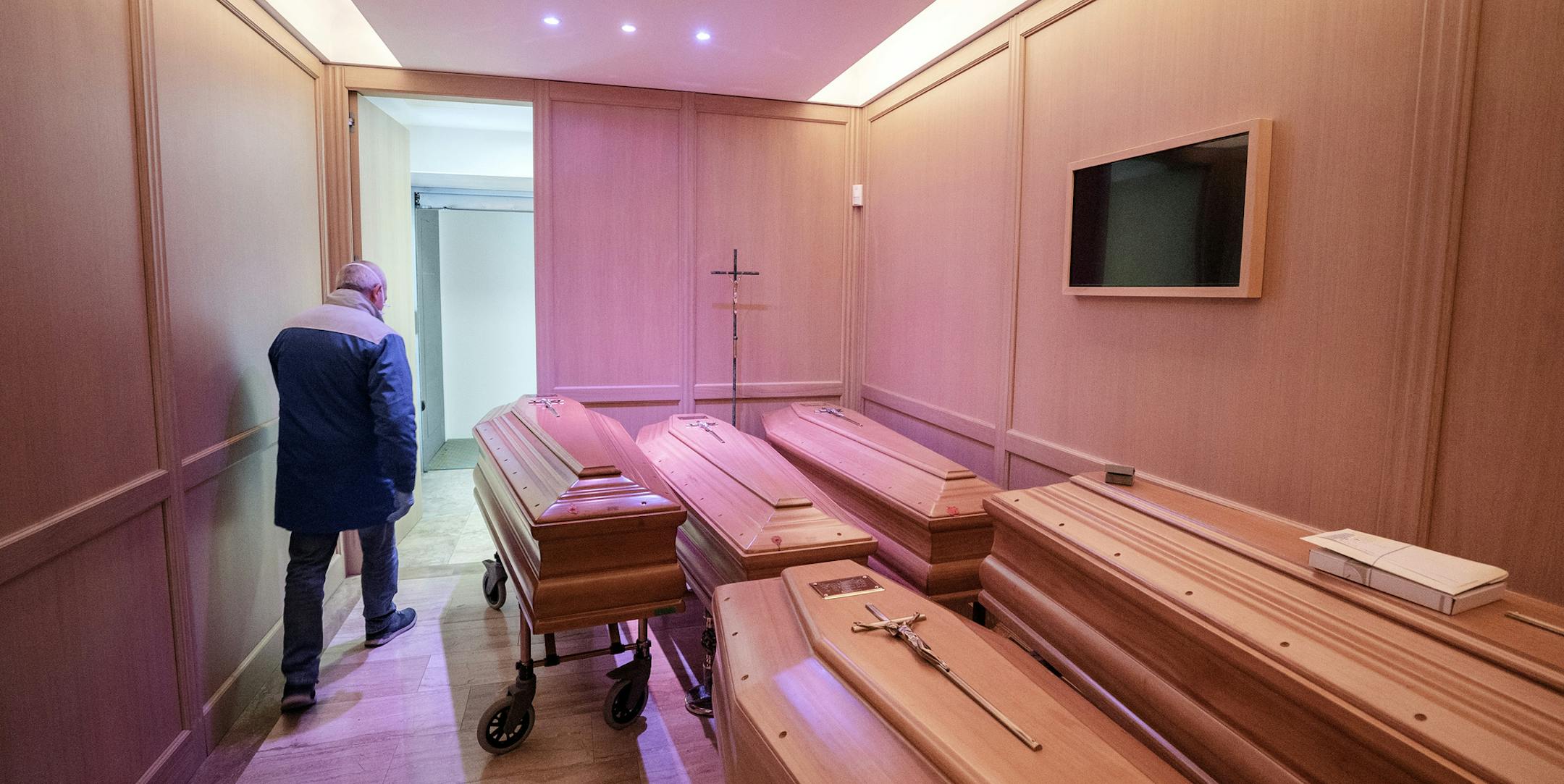
The official news came this past Wednesday that 19 more Minnesotans had died after contracting COVID-19, and I finally saw it in my mind's eye — 19 funerals. I pictured city blocks of churches, synagogues, mosques and funeral homes — blocks of places where gentle words could be spoken and prayers could be said. I pictured 19 simultaneous services, attended by 50-100 people inside each building. That's potentially 1,900 people gathered within a few blocks. Before the pandemic, that's where we'd all be, mourning together, telling stories and supporting each other, recalling and cherishing each life. Each one of those Minnesotans, now gone ...
These are not numbers. These are our neighbors. They're not merely "the dead." They're our dads. These are not statistics. These are our sisters and brothers; our favorite uncles and — God help us — our beloved grandparents. Each was a person, a fellow human being with all the honor that brings. They were laughers and laborers, listeners and lovers, dear friends, the nicest of neighbors and, above all, family. There are 19 more families grieving in their homes right here. Walk down your street and count 19 houses, and picture the sadness that 19 families are now experiencing. There are 19 more communities feeling the absence of one of their own, neighbors grieving and at a loss for how to help. We have a reason to feel heartbroken about this virus. Hold each person in your heart, Minnesota, then do it again and again and again. In Minnesota, each life counts.
Lisa Q. Steinberg, Champlin
EMERGENCY INSULIN
Now, help fund our normal supply
On April 14, the Minnesota Legislature passed a long-awaited insulin affordability bill that will establish a safety net for insulin-dependent diabetics. This provides some security by having a plan in place to make sure individuals can access this lifesaving medicine in times of need. However, efforts to improve the pharmaceutical industry cannot stop here.
Almost 1 in 10 Minnesotans haven't filled a prescription in the last year due to prohibitive cost. It is clear that such outrageous prices are unjust and a hindrance to Minnesotans getting the medical care they need and deserve. Why don't we tackle the root of the problem instead of putting a Band-Aid on a broken system?
As a 20-year-old and a diabetic of 12 years, it is frightening to imagine what my future may look like when the cost of the medicine that I need to function on a daily basis has gone up more than 1,100% in my lifetime. Not only that, I fear for those in my community, state and nation who are at far higher risk of not having access to insulin and other prescriptions due to racial disparities and other factors. If we are to live up to our title of "Minnesota Nice," especially in times of trial, we must recognize that people are worth more than profit. Advocate for the Legislature to pass additional bills like HF 4, which would prohibit charging unconscionable prices for prescription drugs. Nice is not enough; we must be persistent and courageous in protecting our neighbors.
Jackie Resh, St. Paul
CARE FACILITIES
Shift your thinking on what they do
The Star Tribune needs to be careful in these stressful times to not cast blame on senior care providers who are doing incredibly loyal and challenging work. Acute health care providers around the world are being lauded as heroes, while nursing home providers are being shamed ("New Hope nursing home has one of state's worst outbreaks," April 23). As heart-wrenching as it is to have this disease take the lives of our beloved elderly, we still have no business chastising senior care providers, as someone quoted in the story said, that "they were not prepared to deal with patients who are unable, for whatever reason, to practice social distancing." I ask, who was prepared to deal with this deadly COVID-19 pandemic?
Let it be known that it's dangerous to take any health department inspection report out of context, but to use these reports in the same breath when speaking of COVID-19 deaths is irresponsible and cruel. It's common knowledge that senior care facility residents are at higher risk. This is a time when we need to show respect and care to senior care providers, not blame and shame. Keep in mind, if anyone thinks they can do a better job caring for our elderly during this pandemic, than have at it. I am sure many care providers would gladly let you take the reins.
Susan Thompson, Roseville
• • •
Yesterday was my appointed day to have a blood draw at the VA. I have to do this every six weeks because I'm on a blood thinner medication. Been doing this for over 20 years. Needless to say, I was concerned about having to go into a medical clinic and sit around in a waiting room full of old guys waiting for their appointments.


