

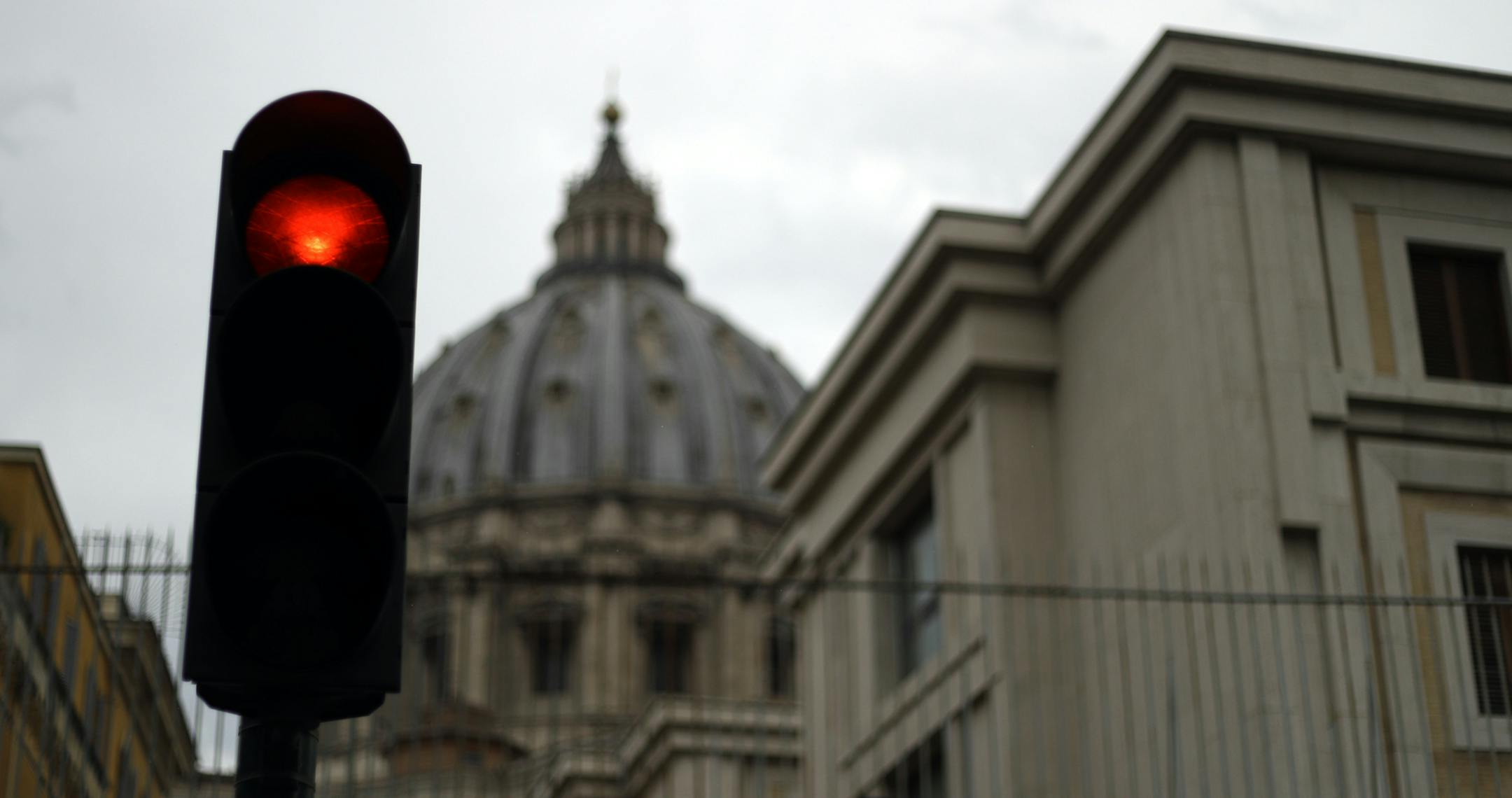
I don't remember a time in my lifetime as a Catholic when the question of leaving the church has been more justifiable. Pedophilia by clergy and the subsequent coverup by those we have been taught to respect is a betrayal of all that we hold sacred.
"Why do I stay?" I ask myself. The inner search is even more poignant when I try to articulate my own changing spirituality, one that is far more embracing of questions than of answers.
Science has given us a totally different perspective of the universe, of which we are a speck. Scientists are telling us that everything is made of energy. At this point in my spiritual journey, I am holding on to a belief in a creator who is the totality of that energy. I believe that all of creation is a manifestation of the godhead. That's why meditation is such a strong part of my religious practice at this point in my life. I am trying to become quiet, mindful and conscious of the God-presence within. I believe that time spent in that awareness will help me see the God spirit in everyone and everything that surrounds me.
I see my life as a path. The church has been a major player in my development and identity. But if I am the God energy, I am so much more than a member of the Catholic Church.
I will continue to go to church, to pray, to meditate and to remind myself that I am an intrinsic part of the body of Christ. There are other options I could viably choose, but, for the time being, I will continue on this path. I believe salvation is not dependent upon being part of the right organization, practicing the right sacraments or believing the right dogmas. I have come to the conclusion that we are already participants in "the kingdom." It is here, within us and around us. Death will only be an entrance into a fuller participation in and awareness of God.
Raymond Spack, Woodbury
SKEPTICISM ON HURRICANE DEATHS
Toll in Puerto Rico is based on estimation and simulation
I'm not as quick to dismiss as an absurdity President Donald Trump's tweet that the death toll in Puerto Rico following Hurricane Maria is lower than the 3,000 reported (various coverage, Sept. 14).
As the president noted, the death toll was reported at 64 immediately after the storm. A Harvard University study later estimated the toll at 4,000; then eventually George Washington University released the now widely accepted figure of nearly 3,000. Those are incredible swings.
Vital statistics in Puerto Rico, an underdeveloped U.S. island territory, are not kept with the same accuracy as on the mainland. The death estimate was compiled by researchers who compared reported deaths during several months after the hurricane to deaths in other years during the same period. The study relies almost entirely on estimation and simulation, not an actual body count with assigned causes of death. Just because a respected educational institution releases information doesn't guarantee it's entirely true.


