

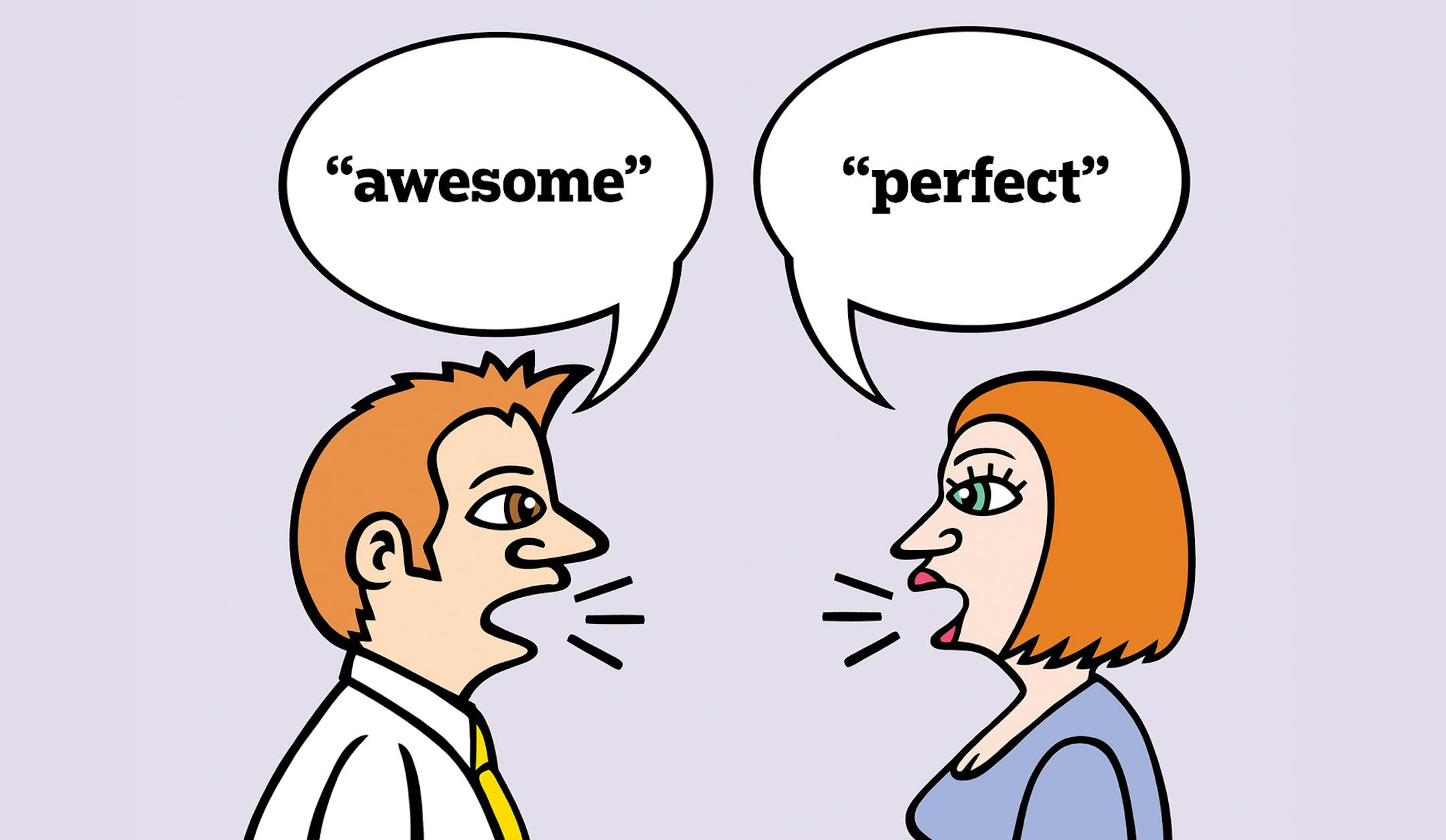
Our interactions and our language are suffering from hyperinflation. Every encounter with a clerical or service person elicits replies of "awesome" or "perfect" if you simply come up with the correct change or manage to give a waitress your order. These are not incredible feats, and are neither awesome nor perfect. We used to get along without these over-the-top inaccuracies.
In a bad mood, I have indulged in a guerrilla strategy of answering "Awesome" with "Really? Awesome?" And I love correcting the pronouncer of "perfect" with, "No, it's far from perfect." They may give me a look of fear or pity, but I'm usually feeling rather self-satisfied and smug. Then I smile.
The point is, wake up, people! Those words have meanings, and we know what they are. We should save them for truly exceptional achievements.
And now, let's revert to "thanks," "that'll work" or "OK" for everyday transactions. I think that'll work.
Mary McLeod, St. Paul
TEACHER-TENURE LAWSUIT
Step back and remember that it's not just some ridiculous perk
I read the recent story about the teacher-tenure lawsuit. About an hour later, I met a woman who by chance mentioned an excellent public school teacher from several decades ago who was fired because he was gay.
Tenure ensures due process, so that teachers won't be fired for irrelevant reasons. I'm all for firing ineffective teachers, and I've seen it done. But let's not remove the protections that make it a fair and transparent process.
Mark Brandt, Minneapolis
• • •
"Innocent until proven guilty" is a long-standing principle. Teacher-tenure laws support that principle (even though the process to fire someone doesn't necessarily involve criminal charges). Tenure laws can slow the process of dismissal, but that is definitely on purpose. Removing someone from a career is an extremely serious decision. Removal requires careful deliberation, and almost always takes time. Removal can actually be shown to be unjustified. Granted, if it is justified, some harm can happen during the interim. But due process, part of the "rule of law" that we all depend on, must have priority. Breaking that standard at any time can have long-term ramifications that eventually would endanger all our freedoms.


