

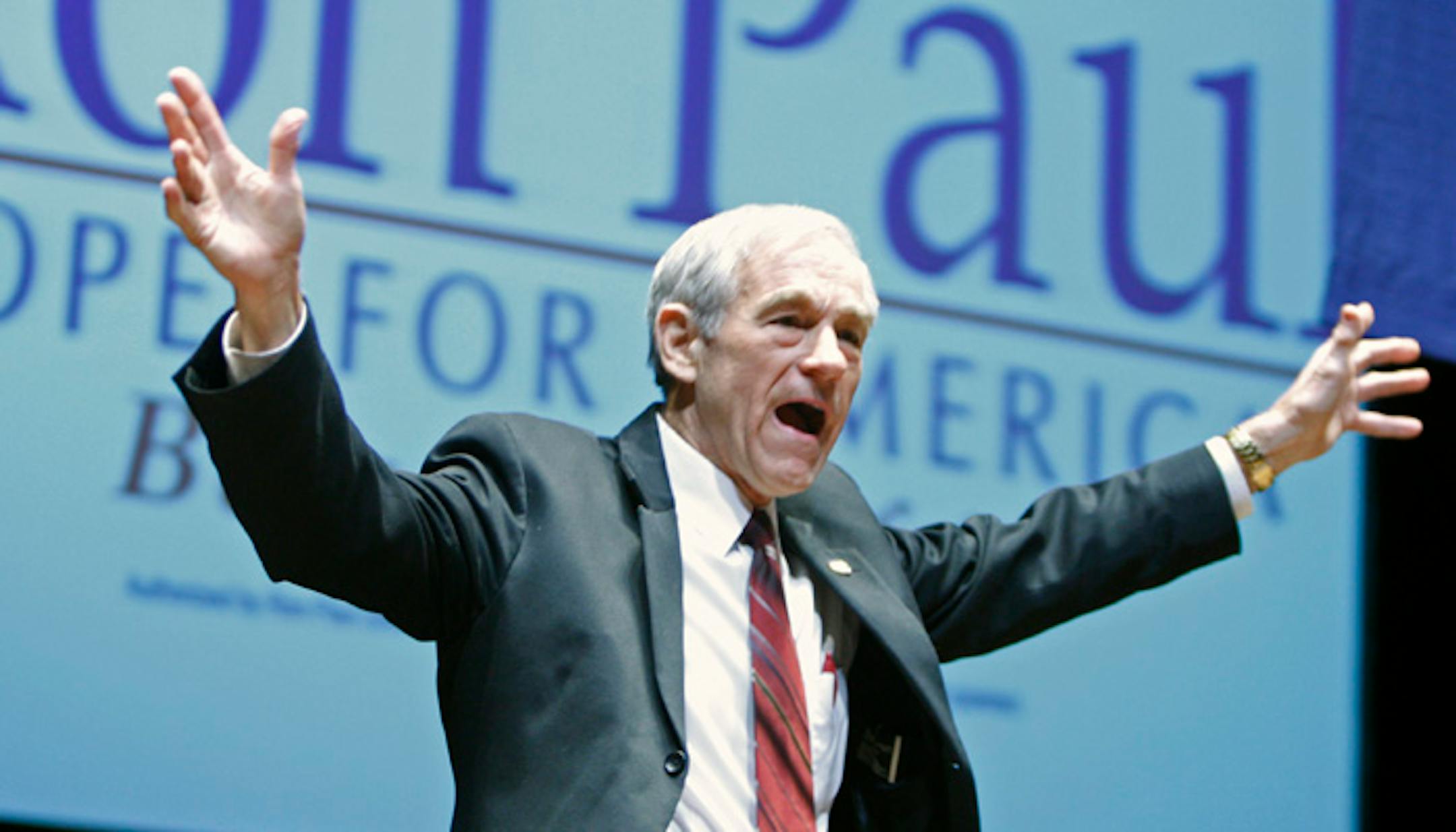
On a freezing day in February 2008, just before the Republican presidential caucuses, those doing the "Minnesota hunch" between buildings at the University of Minnesota saw the question scrawled in sidewalk chalk:
"Who is Ron Paul?"
The rhetorical political question evoked "Who is John Galt?" -- the opening sentence of "Atlas Shrugged," the Ayn Rand novel that's an ideological and cultural compass point for many Republicans sharing Tea Party disdain for big government.
Compared to campaign commercials, viral videos, social media and even lawn signs, sidewalk chalk seemed quixotic. But then, so did Paul's calls to cut spending, draw down troops and draw up alternatives to the Federal Reserve Bank.
What was fringe then is mainstream today for many of Paul's rivals for the 2012 GOP presidential nomination. With the Texas Republican representative framing the debate, surely no one needs to ask "Who is Ron Paul?" today.
Well, actually, they do -- in part because Paul is the No. 10 newsmaker in the 2012 presidential race, despite losing the Iowa straw poll by only 152 votes, according to the Pew Research Center's Project for Excellence in Journalism (PEJ).
Paul was a "dominant newsmaker" (defined as being featured in at least half of a story) just 27 times from January through mid-August, according to Pew. Meanwhile, Mitt Romney and Michele Bachmann were the focus of 120 and 108 stories, respectively.
It's probably to be expected that Paul has received only about a quarter of the attention Romney and Bachmann have. Romney has led in polls and fundraising, and Bachmann, the Minnesota congresswoman, represents the transcendent 2012 story line -- the ascension of the Tea Party.


