

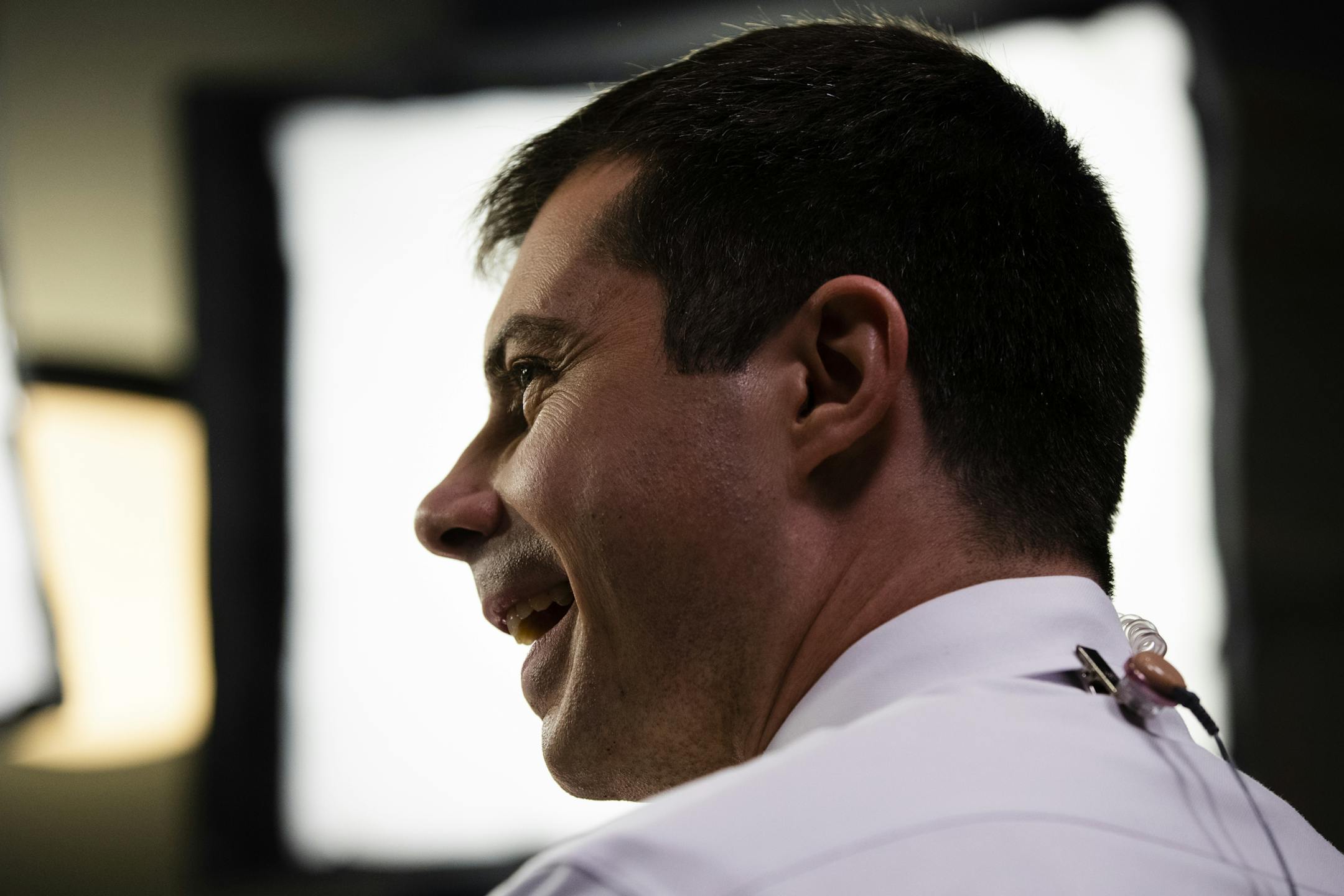
Government insurance advocates who are skeptical of Medicare for All's prospects are placing their hopes on the "public option" as an easier-to-enact step in the same direction. All of the leading competitors to Bernie Sanders, who remains unyielding in his commitment to single-payer health care, have embraced some version of what Pete Buttigieg calls "Medicare for all who want it."
In general terms, with a public option, the federal government would run its own health plan in competition with private insurance. But for political and practical reasons, starting up a new public insurance plan is easier said than done. Recent efforts to establish public-option plans on a small scale — in Washington state and Colorado — demonstrate some of the challenges of trying to create a nationwide public offering.
In both states, officials were forced to scale back their ambitions because of financial concerns and industry opposition. They retreated from creating genuine public option plans — administered by the government — and chose instead to contract with existing private insurers to run "state-directed" offerings. Leveraging existing private plans avoids the expense and financial risk of replicating the functions of commercial insurance within a state bureaucracy.
Buttigieg and other candidates associate their public option proposals with Medicare, but those plans would likely have little to do with the actual program — with good reason.
The Medicare benefit falls short of what the candidates want to offer to voters. For instance, Medicare beneficiaries are not protected against catastrophic costs. They are not automatically covered for prescription drugs. And Medicare requires beneficiaries to pay substantial sums out of pocket for hospital admissions and other care.
A public option would operate alongside existing private plans, with consumers deciding which offering is best for them. That requires fair competition, with the public option subject to the same rules as private insurance. Politicians will be tempted to bend the rules for the public plan with special subsidies or other favors, but that runs the risk of taking choice away from the voters — and alienating powerful insurance companies.
Medicare is heavily subsidized, giving it an unfair advantage. Beneficiary premiums cover only one-fourth of the cost of physician services and do not include the cost of hospital care. Private plans have no choice but to charge premiums sufficient to cover all of their expenses. A public option that is an extension of Medicare could drive out private plans, but only because taxpayers would shoulder huge new costs.
Buttigieg tried to address these problems by requiring the public plan to cover benefits stipulated in the Affordable Care Act and limiting enrollment to a rather narrow slice of the market. The public plan would be available to anyone buying coverage on the insurance exchanges. In addition, lower-income households in states that did not expand Medicaid eligibility under the ACA would be enrolled in the public plan, and workers who cannot afford their employer's plan could opt in as well. The ACA's credits toward premiums would be made more generous to help enrollees offset the cost of public-option premiums.


