
Propeller signed by Orville Wright creates controversy

Congressman moves to block any attempt to sell it.

February 18, 2017 at 1:37AM
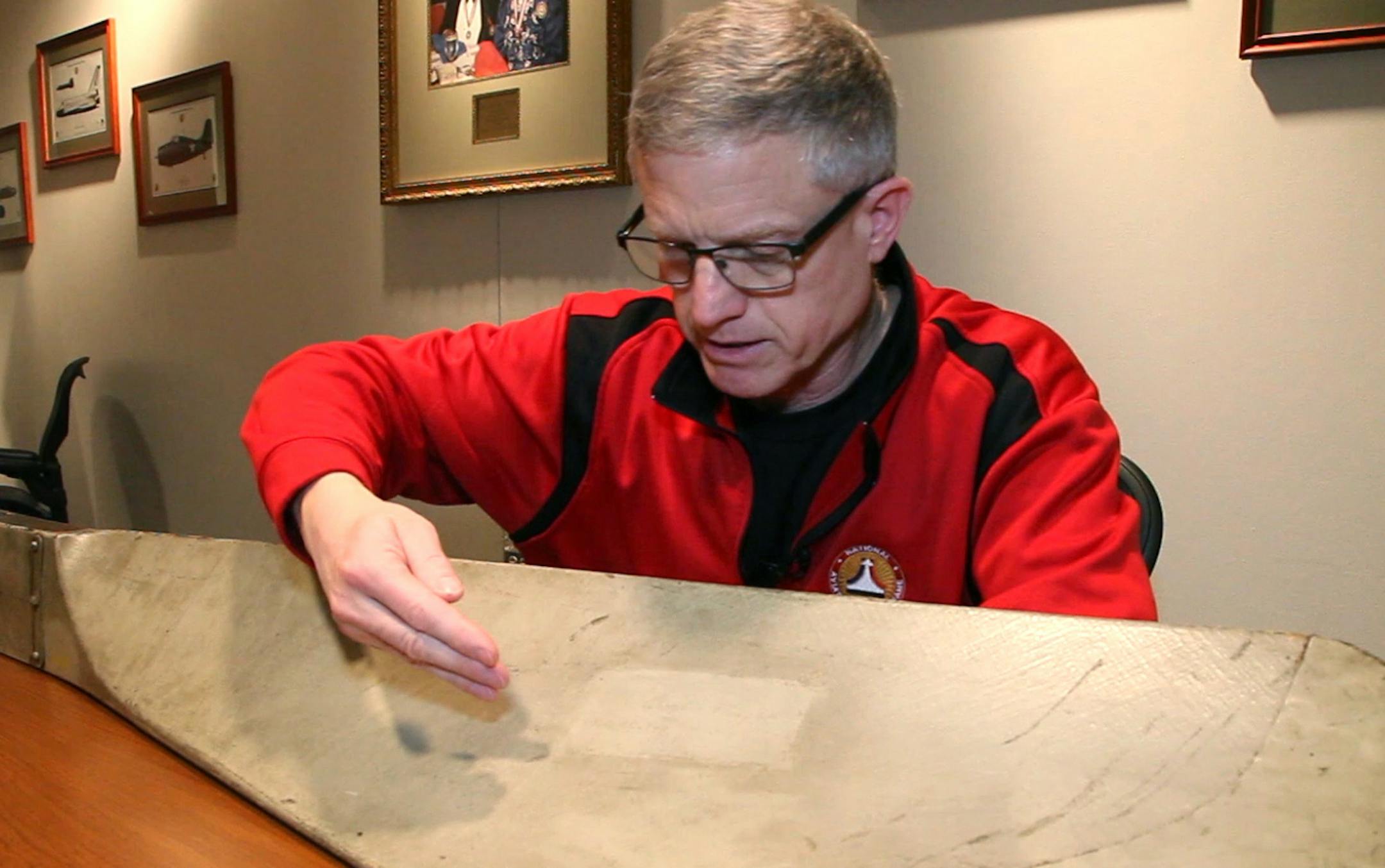
Ron Kaplan, Enshrinement and Outreach Director of the National Aviation Hall of Fame in Dayton, Ohio points out the signature of Orville Wright on an original Wright propeller. Officials with the National Aviation Hall of Fame in Ohio considered selling the century-old wooden propeller signed by one of the Wright brothers but decided against it, at least for now, the hall’s president said. (Ty Greenlees/Dayton Daily News via AP)
Ron Kaplan of the National Aviation Hall of Fame in Dayton, Ohio, pointed at Orville Wright’s signature on the propeller. (The Minnesota Star Tribune)

WRIGHT-PATTERSON AIR FORCE BASE, Ohio – Tucked away at the National Aviation Hall of Fame, a century-old rare artifact out of public view is at the center of a fight between the organization and a local congressman.

The 8-foot-long wooden propeller has something that Hall of Fame officials say no other airplane artifact is known to have: The signature of Orville Wright, who with his brother Wilbur invented the first practical airplane.

In 2013, a Texas aviation history authority appraised the propeller, believed to have flown on a Wright brothers-built floatplane, at $275,000.

But because it is the only one of its kind, Hall of Fame officials say it could actually be worth $1 million or more.

"People are saying this is worth seven figures, easy," said NAHF President and Vice Chairman Michael J. Quiello.

The long-hidden propeller was thrust into the spotlight this month when U.S. Rep. Mike Turner, R-Ohio, called on the Hall of Fame board of trustees to "cease and desist" any talk of selling artifacts.

Quiello said that any talk of selling the artifact was set aside more than two years ago. He added that Turner's call to "cease and desist" has had no impact on the Hall of Fame.

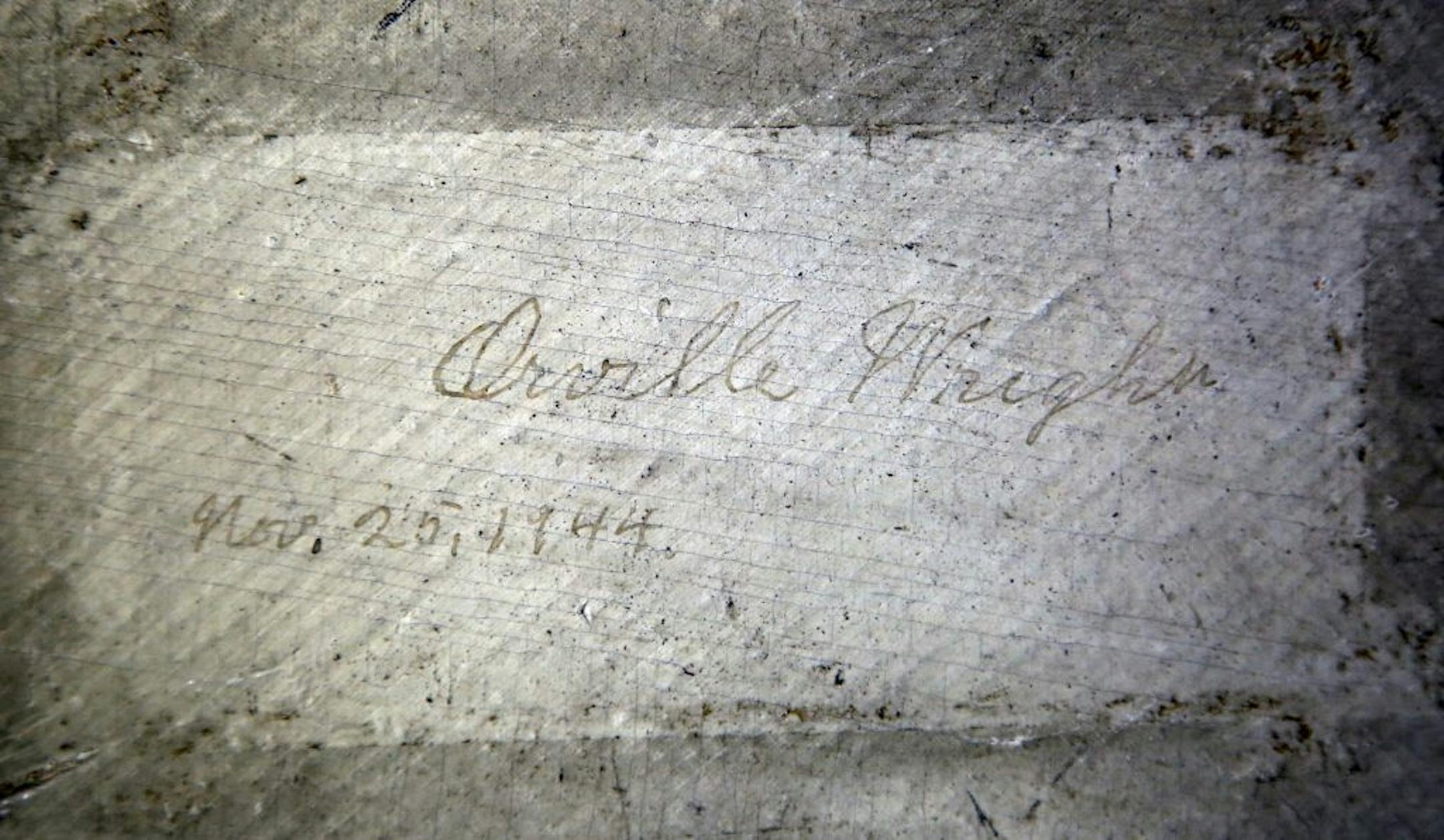
Orville Wright signed the vintage 1915 spruce propeller in November 1944. As the story goes, the Rev. Richard Willhelm Jr. and his brother, Joe, received the propeller from their father and took it to Orville Wright at his Oakwood mansion to be signed.
In 2004, the propeller was donated to the Hall of Fame after a former trustee purchased it for $37,000.

When in recent years NAHF trustees discovered the historic propeller in the nonprofit's collection, the board had its value appraised.

"The board now realizes we have something that is not only an artifact, it's a national treasure and this should not be sold to a highest bidder to be placed in somebody's office, or placed in somebody's bar, or sold to a foreign businessman so he can put it on his wall someplace," Quiello said."

It would have cost tens of thousands of dollars to conserve the artifact for public display, which didn't fit with a strategy targeting a $5 million fundraising goal and adding more interactive exhibits for younger visitors. The Hall of Fame is inside the National Museum of the U.S. Air Force at Wright-Patterson.

Quiello said trustees had pondered selling the artifact for display at the Wright brothers airplane factory or to a place like the Smithsonian's National Air and Space Museum in Washington.

The signature of Orville Wright on an original Wright propeller at the National Aviation Hall of Fame in Dayton, Ohio. Officials with the National Aviation Hall of Fame in Ohio considered selling the century-old wooden propeller signed by one of the Wright brothers but decided against it, at least for now, the hall�s president said.
The signature of Orville Wright on an original Wright propeller at the National Aviation Hall of Fame in Dayton, Ohio. Officials with the National Aviation Hall of Fame in Ohio considered selling the century-old wooden propeller signed by one of the Wright brothers but decided against it, at least for now, the hall�s president said. (Associated Press/The Minnesota Star Tribune)
about the writer

about the writer

Barrie Barber, Cox Newspapers

More from No Section

See More
FILE -- A rent deposit slot at an apartment complex in Tucker, Ga., on July 21, 2020. As an eviction crisis has seemed increasingly likely this summer, everyone in the housing market has made the same plea to Washington: Send money — lots of it — that would keep renters in their homes and landlords afloat. (Melissa Golden/The New York Times) ORG XMIT: XNYT58
Melissa Golden/The New York Times

It’s too soon to tell how much the immigration crackdown is to blame.