
Pellet gun felled Isabelle, the wolf that escaped Isle Royale

The 5-year-old lone wolf left Isle Royale for the mainland on an ice bridge that formed on Lake Superior this winter.

March 15, 2014 at 3:37PM
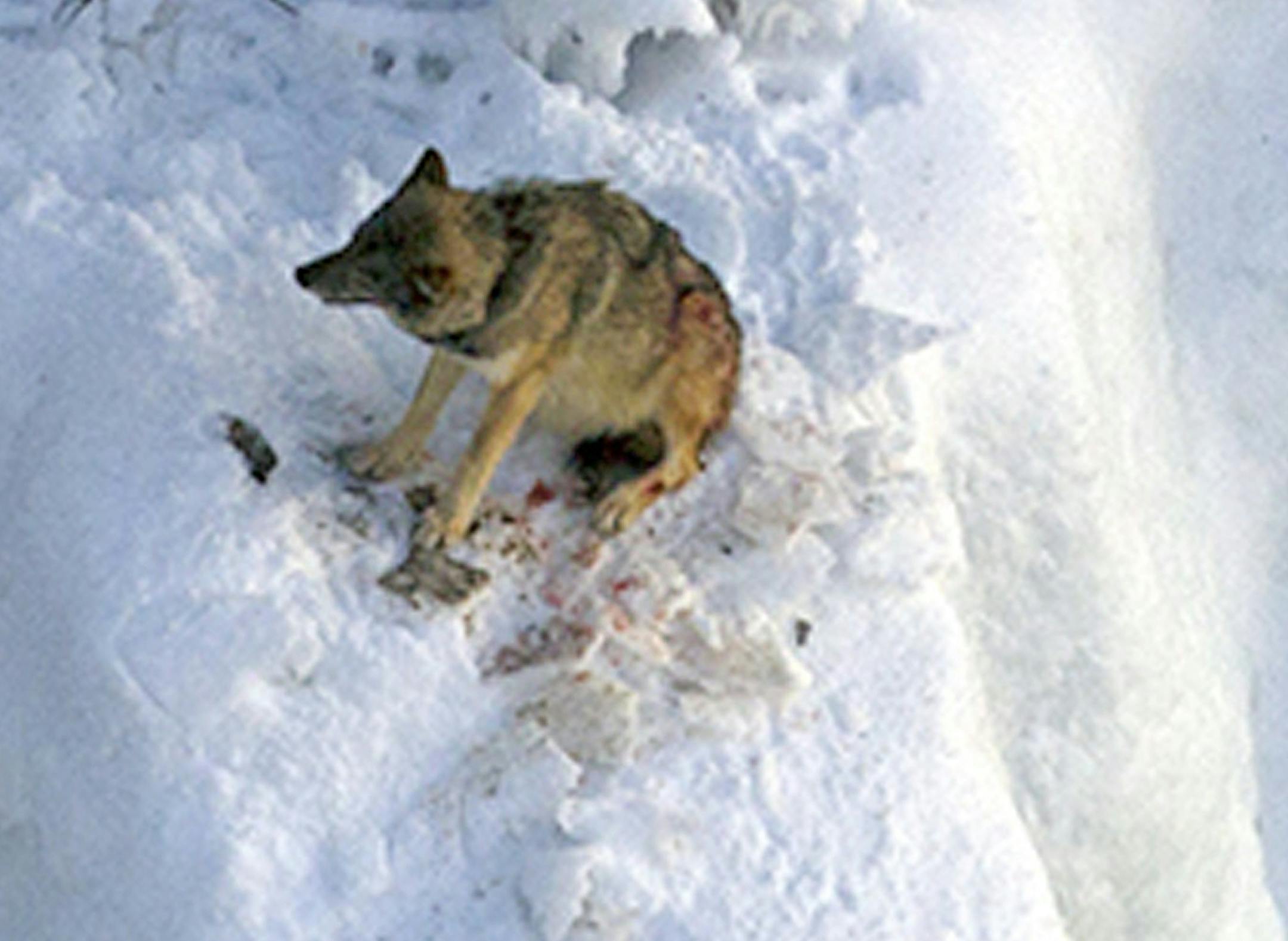
In this 2013 photo provided by Rolf Peterson one of the few remaining gray wolves on Isle Royale, Isabelle, talkes refuge on an icy bluff over Lake Superior to lick her wounds after being attacked by other wolves. During this winter's prolonged deep freeze, Isabelle escaped from the island to the mainland across the frozen surface of of Lake Superior. Scientists said Tuesday, Feb. 25, 2014 that the five-year-old female gray wolf was found dead earlier this month along the shoreline on the Grand
Isabelle, one of the few gray wolves on Isle Royale, was photographed in 2013, taking refuge on an icy bluff over Lake Superior after being attacked by other wolves. During this winter’s prolonged deep freeze, Isabelle escaped from the island to the mainland across the frozen surface of Lake Superior. (The Minnesota Star Tribune)

Isabelle, the wolf that last month crossed a perilous ice bridge between Isle Royale and the mainland, was as unlucky in death as she was in love.

National Park officials on Friday said that an investigation found she was killed with a tiny, low-velocity air gun pellet more suitable for squirrels than wolves that slipped between her ribs and hit an artery. After finding her way across 20 miles of ice, she bled to death on the Grand Portage Indian Reservation at the edge of Lake Superior in the northeast corner of Minnesota.

Rolf Peterson, the researcher from Michigan Technological University who has followed Isabelle and other wolves on Isle Royale for decades, said that biology drove her off the island that had been her home for all of her five years. Two years ago she'd left her pack in order to find a mate, but among the dwindling population of inbred wolves on the island that now number less than a dozen, she was unsuccessful.

In February, for the first time since 2008 — and the first time in her life — an ice bridge formed between the island and the mainland and she was gone.

"The most important thing to be learned from this case is that on the first day in her life when this 5-year-old female in prime breeding condition could possibly leave Isle Royale, she did," Peterson said in an e-mail. "There was no other way for her to reproduce. No one should be surprised."

The wolf's journey and death in February complicates a precedent-setting decision that faces the National Park Service: whether to intervene in nature's course and bring new wolves onto the island in an effort to preserve them and the critical balance between the predators and their primary prey, moose. Conservationists say the decision could establish new policy on managing critical species in national parks everywhere and even change the definition of wilderness as a place where only nature is allowed to rule.

The wolves, which once numbered as many as 50, are at their lowest ebb since researchers first began tracking them in the 1950s and are closely followed by naturalists all over the world. Though other wolf experts disagree, Peterson and his research partner, John Vucetich, say they fear that the wolves could die out, largely as a result of inbreeding. This year two — and perhaps three — pups were born on the island, but they say that's not enough to maintain a healthy population.

The wolves found their way to the Michigan island decades ago over an ice bridge, which was once a near-seasonal event. But warming winter temperatures now make it a rarity. The last one formed in 2008, when two wolves collared with tracking devices disappeared, perhaps to the mainland. The last bridge before that was in 1997, when a wolf named "Old Gray Guy" appeared on the island and went on to sire dozens of puppies, providing an infusion of new genes that researchers credit with saving the population from demise.
She was a likely refugee

But Peterson predicted Isabelle would be a prime candidate to leave the same way wolves arrived. She was a loner looking for a mate, and, like all lone wolves, was subject to repeated attacks by other wolves on the island.

She likely would have found a mate in the wilderness in northeastern Minnesota and southern Ontario, but she ran into a human first.

"Her demise wasn't that unusual for a wolf on the mainland," Peterson said.

Phyllis Green, superintendent of Isle Royale National Park, said that it's unlikely the person who shot her was trying to kill her. The Grand Portage tribe is among those that outlaw killing wolves on their land, but tribal members are allowed to protect their pets and property from wolf predation. Though a frequent problem, only two wolves have been killed there in the past 10 years, she said. Tribal conservation officials went to great lengths to find the researchers who had put the tracking collar on her, Green said.

Most likely, she said, someone was trying to scare the wolf off. And had the pellet struck her a half-inch in either direction, she would have probably survived, Green said.

Josephine Marcotty • 612-673-7394

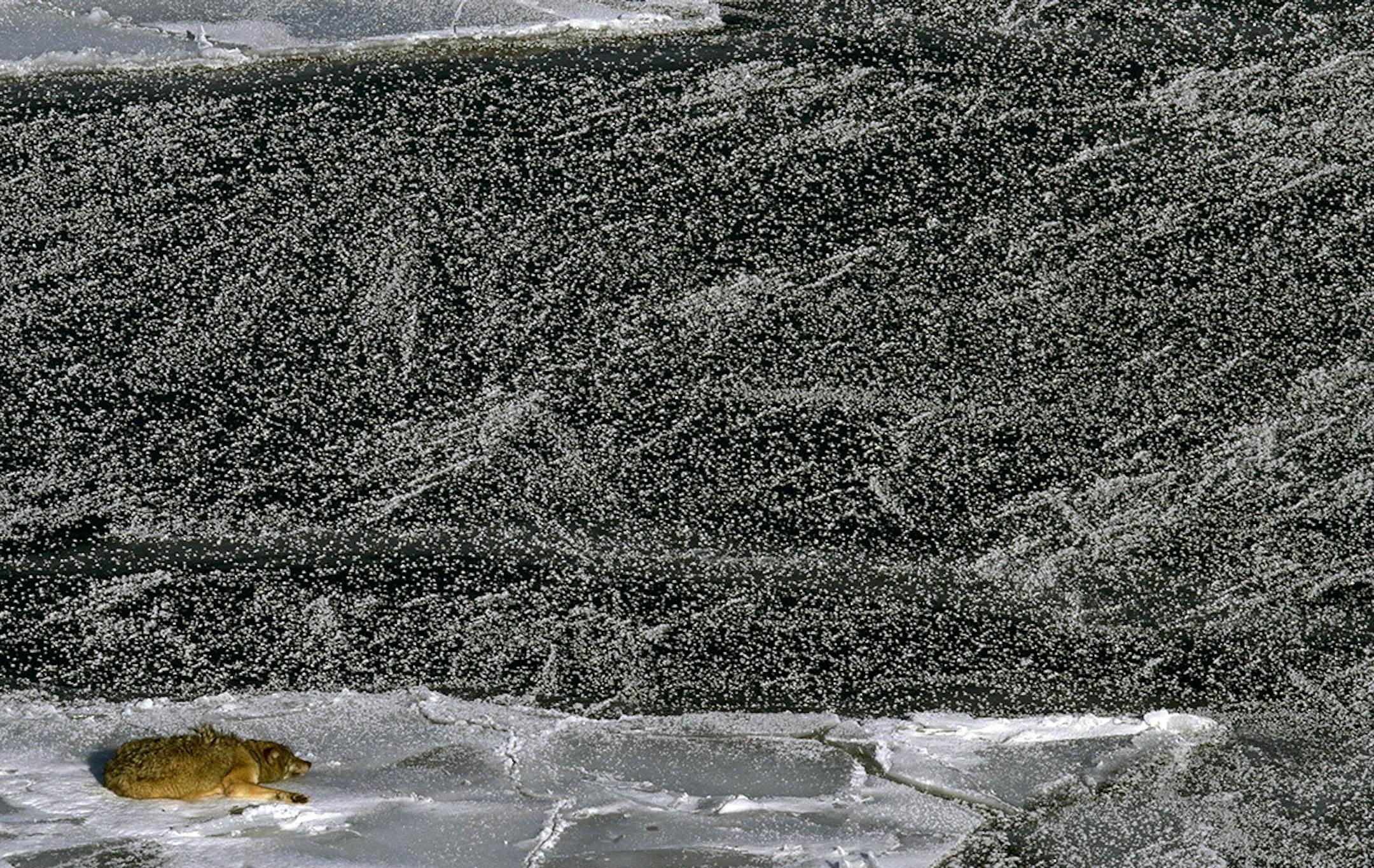
COURTESY OF ROLF PETERSON. Isabelle, a five-year-old female, is a floater not attached to either of the two packs on Isle Royale. That makes her vulnerable to attacks by the other packs. Last winter she took refuge on an icy bluff over Lake Superior to lick her wounds. Another time she was forced out onto the ice. This winter she §was seen only on one day in January, patrolling the shoreline. Researchers say she is one of the wolves that could §leave the island if another ice bridge fo
Isabelle, a 5-year-old female shown in this 2013 photo, was not attached to either of the two packs on Isle Royale and thus vulnerable to attacks. This winter she was seen only one day in January, patrolling the shoreline. (The Minnesota Star Tribune)
about the writer

about the writer

Josephine Marcotty

Reporter

Josephine Marcotty has covered the environment in Minnesota for eight years, with expertise in water quality, agriculture, critters and mining. Prior to that she was a medical reporter, with an emphasis on mental illness, transplant medicine and reproductive health care.

See Moreicon

More from No Section

See More
FILE -- A rent deposit slot at an apartment complex in Tucker, Ga., on July 21, 2020. As an eviction crisis has seemed increasingly likely this summer, everyone in the housing market has made the same plea to Washington: Send money — lots of it — that would keep renters in their homes and landlords afloat. (Melissa Golden/The New York Times) ORG XMIT: XNYT58
Melissa Golden/The New York Times

It’s too soon to tell how much the immigration crackdown is to blame.