

Some legislators find it good sport to come to St. Paul each session intent on further messing up Minnesota's already messed-up waters. In parts of the state, some lakes and rivers are too toxic for swimming. And fishing thereabouts is for fun only, not eating. Yet some of our best and brightest at the Capitol favor, as just one example, axing the state's nascent stream buffer law, content, apparently, to hand down to their kids and grandkids waters that are opaque and noxious, not sky blue.
They could learn a lesson or two about water and water management from the folks in Nobles County, in the southwest part of the state, ground zero of which is the city of Worthington. You think you have water challenges? Worthington depends for the bulk of its water on a series of wells that lie not within its city limits, but 7 miles distant. Moreover, for its continued operation, the city's largest employer, a meat packing plant, uses about a third of the water Worthington receives from its wells and from a site some 90 miles away.
What's more, the aquifer beneath the city's wells is fragile; so much so that water that gathers on land above it after heavy rains filters to the aquifer quickly, raising its level. Which can be good. But not if the same rainwaters carry farm chemicals.
Enter now in Nobles County good will and cooperation, both of which at times can be sorely lacking at the Capitol, but absolutely will be necessary if this state is going to solve its complex water challenges.
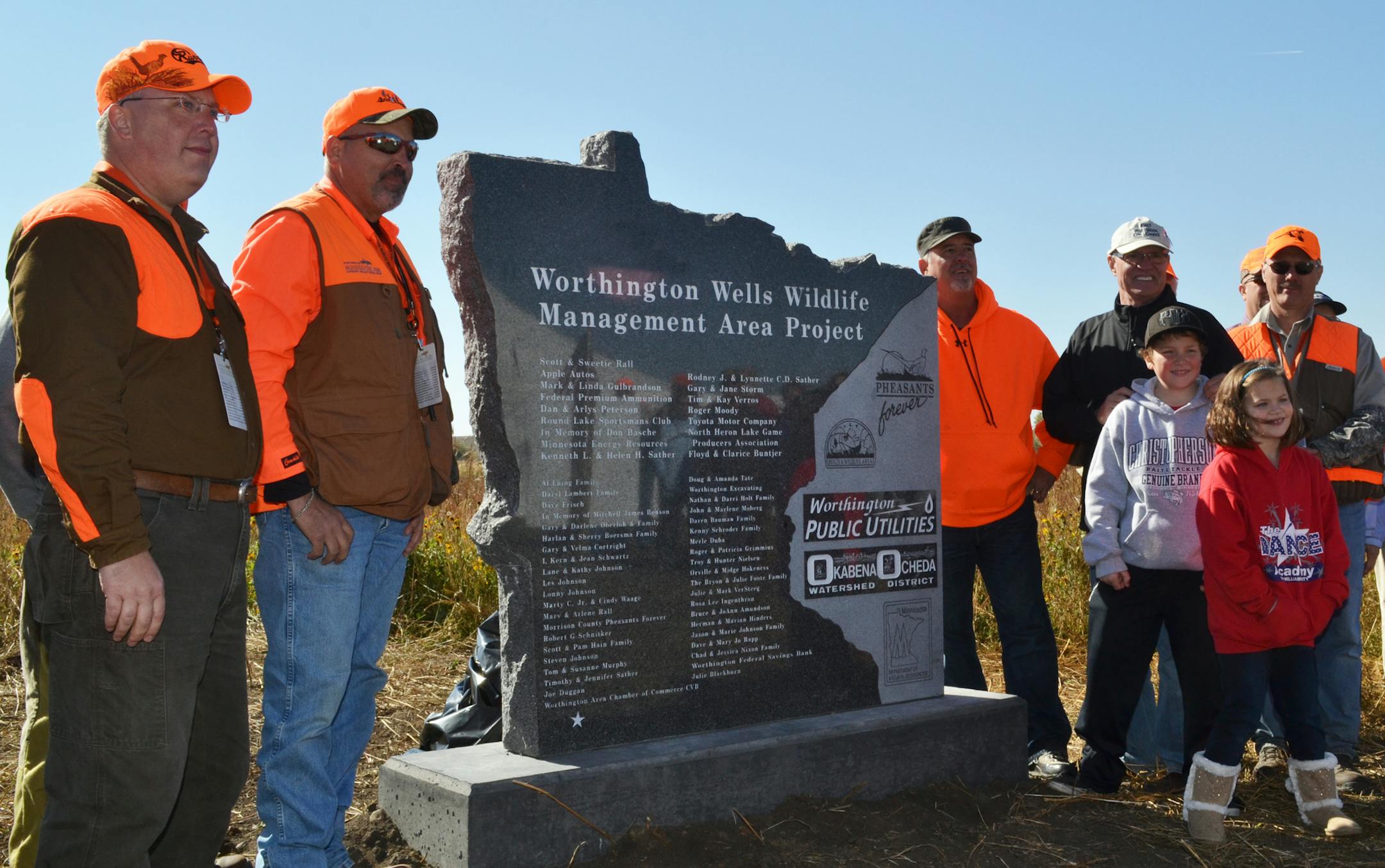
"Our Pheasants Forever chapter in Nobles County came up with the original idea of incorporating different entities to develop one solution to address multiple problems, including Worthington's water problems," said Scott Rall of Worthington, the longtime president of the Nobles County Pheasants Forever (PF) chapter.
Rall's chapter is one of hundreds from around the country attending the group's annual Pheasant Fest and Quail Classic today through Sunday at the Minneapolis Convention Center. (More information online at pheasantsforever.org.)
Among the multiple Nobles County problems that Rall referenced — in addition to water — was a shortage of good wildlife habitat on public ground. Transformed long ago from a landscape pockmarked with watery depressions to one defined by nearly endless high-yield croplands, southwest Minnesota in many ways by the last quarter of the last century had become a wildlife desert.
Which is OK if you're not given to enjoy the sight of ducks migrating in spring or fall, or songbirds nesting in grass or deer silhouetted on a bank of a clean-flowing river. All of which a lot of people in Nobles County and throughout the region do enjoy. The challenge was how to acquire it. Or, more accurately, reacquire it.


