
MPD report: Blacks significantly more likely to be arrested

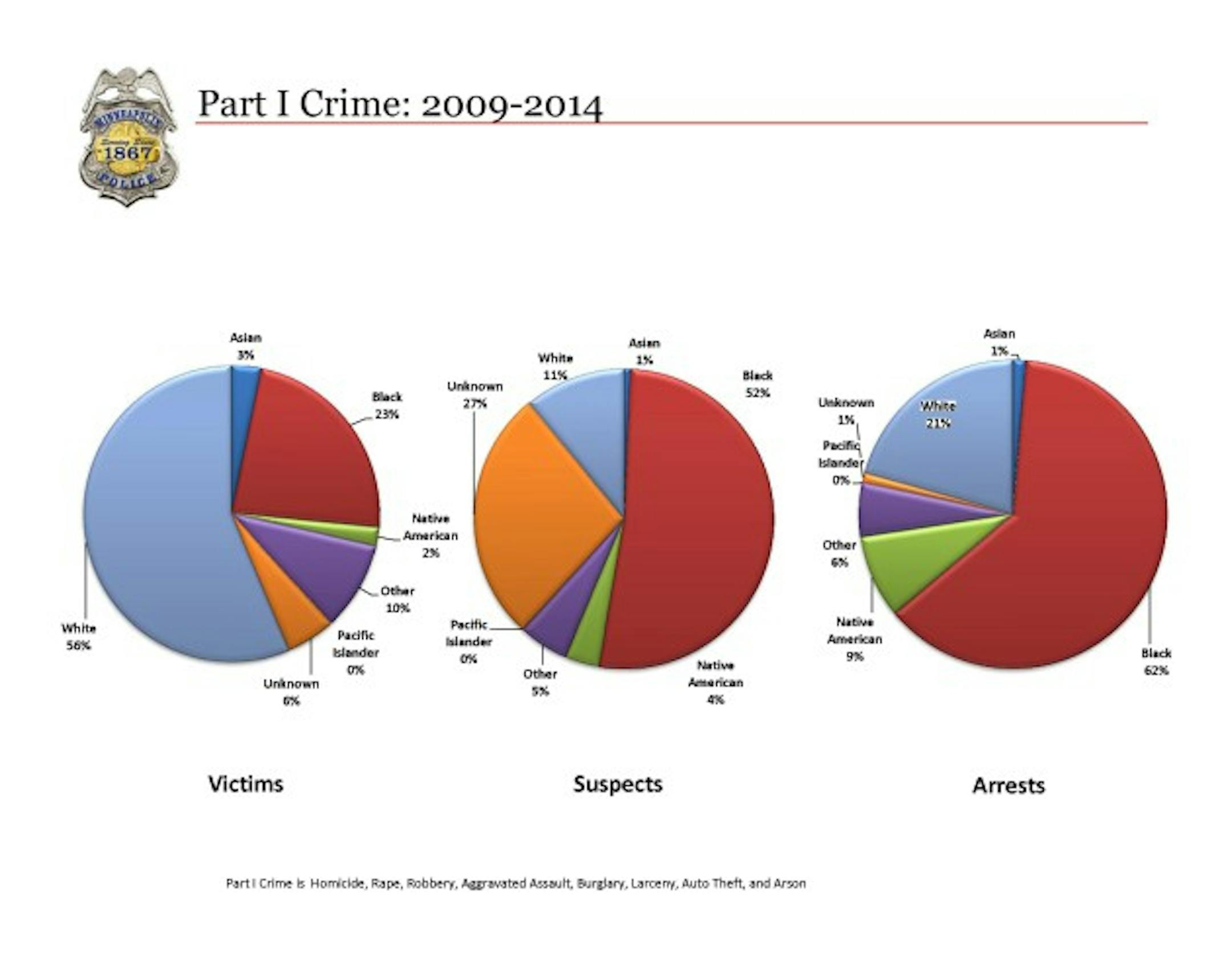
A preliminary report released last week by the Minneapolis Police Department found that nearly two-thirds of those arrested by police over the past six years were blacks, who make up less than 20 percent of the city's population.

March 16, 2015 at 11:19PM
(The Minnesota Star Tribune)

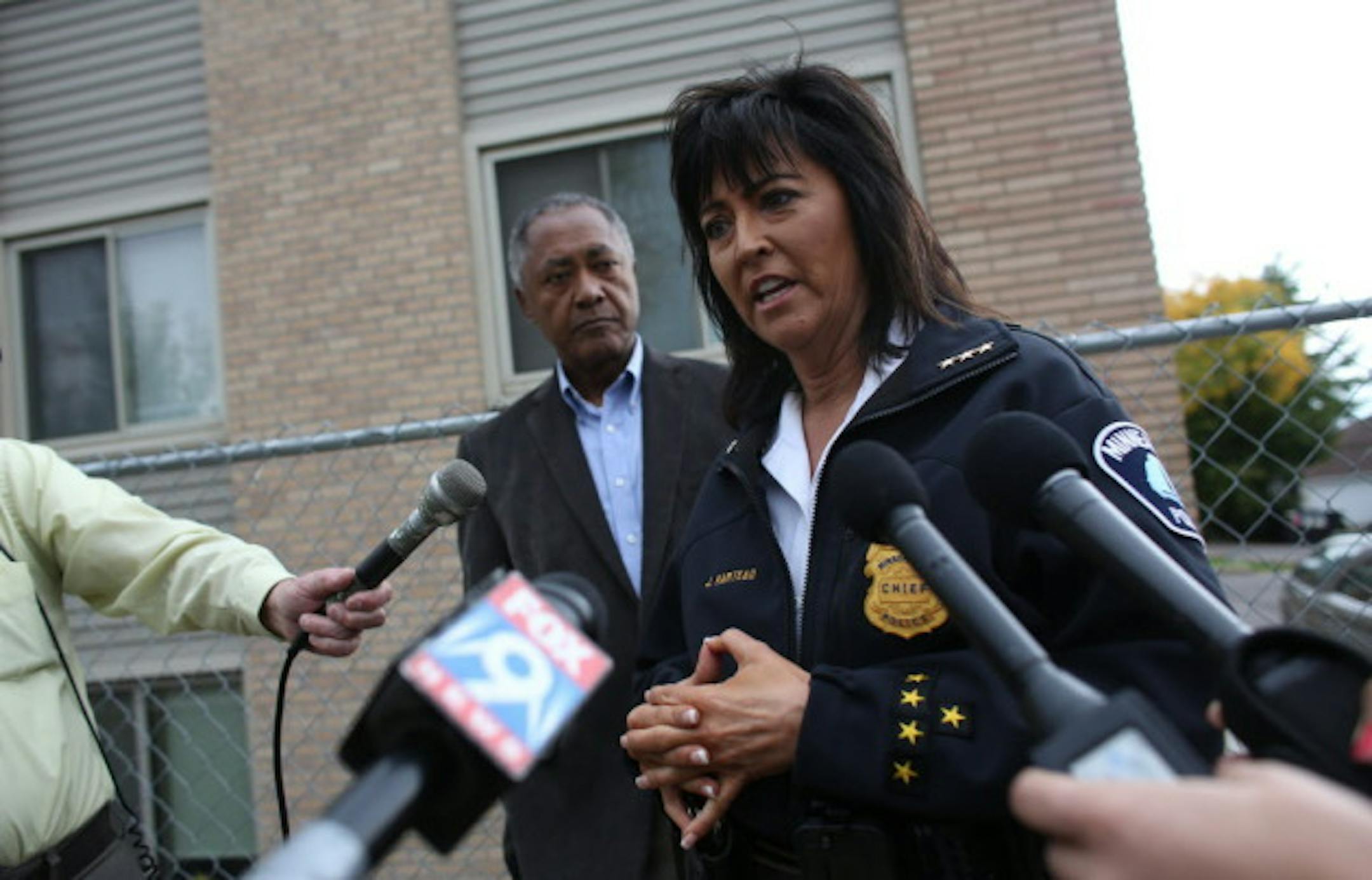
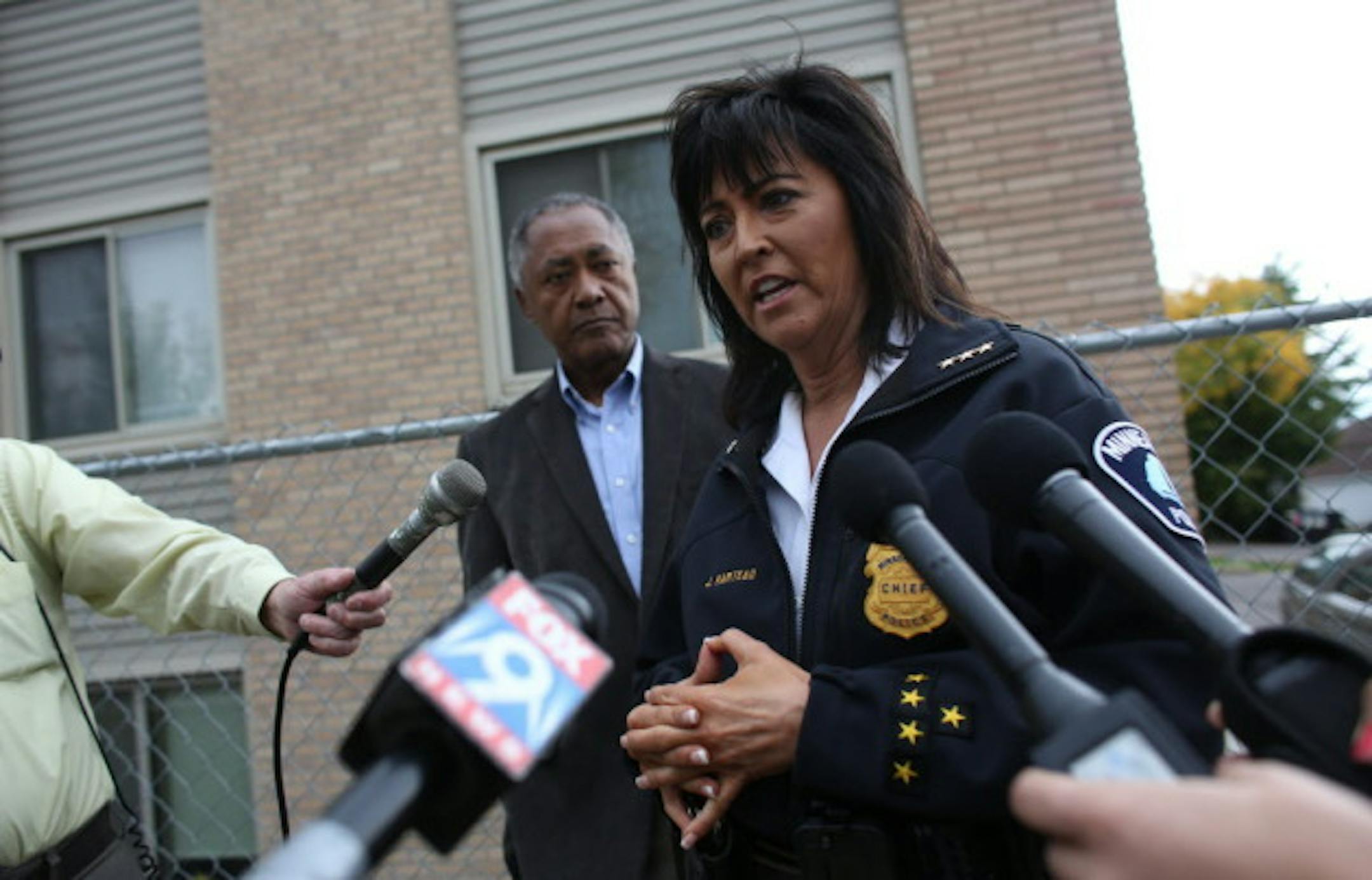
Police Chief Janeé Harteau talked to reporters about recent crimes. (KYNDELL HARKNESS/Star Tribune)

A preliminary report released last week by the Minneapolis Police Department found that nearly two-thirds of those arrested by police over the past six years were blacks, who make up less than 20 percent of the city's population.

The report – which emerged from a study of arrest data from the MPD, Park Police, Metro Transit police and, "in certain events" the University of Minnesota campus police – found blacks were disproportionately arrested for so-called Part I crimes like homicide, rape, robbery and assault between 2009 and 2014 .

Minneapolis police Chief Janeé Harteau ordered the report last fall following the release of an American Civil Liberties Union of Minnesota study that concluded that blacks were significantly more likely than whites to be arrested in Minneapolis for low-level crimes. At the time Harteau said that she wanted her department to further analyze the study's findings "before making an assessment on the effectiveness of improving public safety and public trust."

"What this shows us is that we, as a community, and as a city, need to address the issue of inequity and disparity," Harteau said in a statement posted on the department's Facebook page late Friday. "We, as a department, need to enhance our relationships with the residents we serve while we continue to provide exceptional public safety."

She continued: "Our focus continues to be centered on preventing crime by enhancing our outreach to the communities we serve."
(The Minnesota Star Tribune)

Source: Minneapolis Police Department

Blacks, according to the MPD study, were significantly more likely than their white peers to be arrested for marijuana possession or disorderly conduct, echoing the findings of the earlier ACLU report.

One of the starkest disparities emerged in arrests for loitering. The study found that blacks made up 76 percent of all those detained on loitering charges last year, which critics say points to a pattern of racial profiling in some of the city's long-troubled neighborhoods.

Teresa Nelson, legal director for the ACLU's local chapter, said she was troubled by the report's findings, which seemed to suggest "that low-level arrests seem to have some sort of impact on violent crimes."

"It's hard to see that connection," she said on Monday. "We're hoping that we can provide more context with the data that we have."

Still, she added, the report's existence showed the department was heading in the right direction.

The department says it has taken several steps to address the disparities and regain public confidence, including better "implicit bias training" and the overhaul of its "Early Intervention System" for identifying and weeding out problem officers, incorporating recommendations made earlier this year by the U.S. Department of Justice's Office of Justice Programs.

Minneapolis was recently chosen as one of U.S. six cities to take part in a federal pilot program aimed at reducing racial bias and improving relationships between police and communities.

"I think most people recognize that these disparities are unsustainable and it's not just something that can be addressed by the police department," Nelson said. "I think it takes the community (and) it takes the City Council.

Below is the report in full:

about the writer

about the writer

liborjany112

More from No Section

See More
FILE -- A rent deposit slot at an apartment complex in Tucker, Ga., on July 21, 2020. As an eviction crisis has seemed increasingly likely this summer, everyone in the housing market has made the same plea to Washington: Send money — lots of it — that would keep renters in their homes and landlords afloat. (Melissa Golden/The New York Times) ORG XMIT: XNYT58
Melissa Golden/The New York Times

It’s too soon to tell how much the immigration crackdown is to blame.