

One of the masterpieces in the Detroit Institute of Arts (DIA) is James Whistler's "Nocturne in Black and Gold."
Ominous dark shadows are punctuated with the light of fireworks falling to Earth. It is an "urban, ephemeral, indescribable spectacle," says the blurb. It is "a pot of paint [flung] in the public's face," harrumphed John Ruskin, a Victorian critic.
It could also be a metaphor for the rise and fall of Motown, not least since it is one of many works the bankrupt city may sell to pay off its debts.
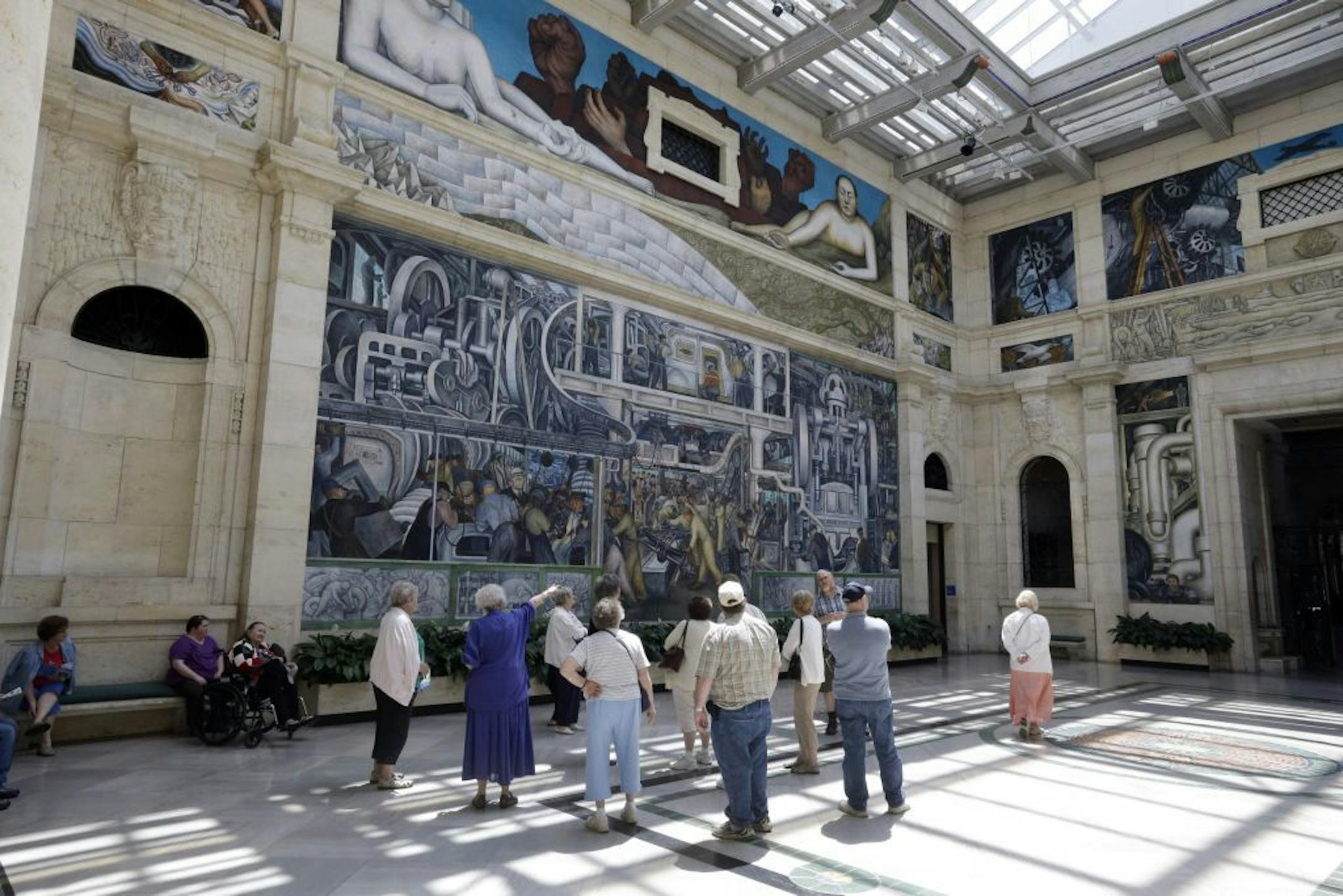
Detroit has one of the finest art collections in America, including works by Van Gogh, Degas, Matisse and Bruegel the Elder. Murals by Diego Rivera, commissioned in the 1930s, show muscular workers cranking out cars in a Ford factory.
Many of those factory jobs have now left. (Some have gone to Rivera's native Mexico.) Detroit's population has collapsed. With a shrunken tax base, the city cannot service its debts of more than $17 billion, or $25,000 for every resident.
Desperate times call for harsh measures. Kevyn Orr, the city's emergency manager, who was appointed this year with almost dictatorial powers to turn the city's finances around, has ordered an inventory of the treasures in the DIA. These were valued at $1 billion in 2004; they may be worth more now. If Detroit formally declares bankruptcy, they may be sold. That would be controversial.
Many affluent suburbanites hate the idea. The suburbs that encircle Detroit are politically separate: Suburbanites neither pay city taxes nor send their kids to crumbling city schools. But they do like to visit the art museum from time to time. Only last year, they voted to pay a special tax to subsidize it.
Even more appalling, for many suburbanites, is the prospect that the proceeds would bail out what they see as a corrupt and incompetent city government. In March a former mayor, Kwame Kilpatrick, was convicted on two dozen charges, including racketeering and bribery. The City Council is in chaos: Its president has gone missing, amid allegations of an inappropriate relationship with a high-school boy. A third of the council seats are empty. Race aggravates matters. The city is 83 percent black. Adjacent Oakland County is 77 percent white, and more than twice as rich.



