

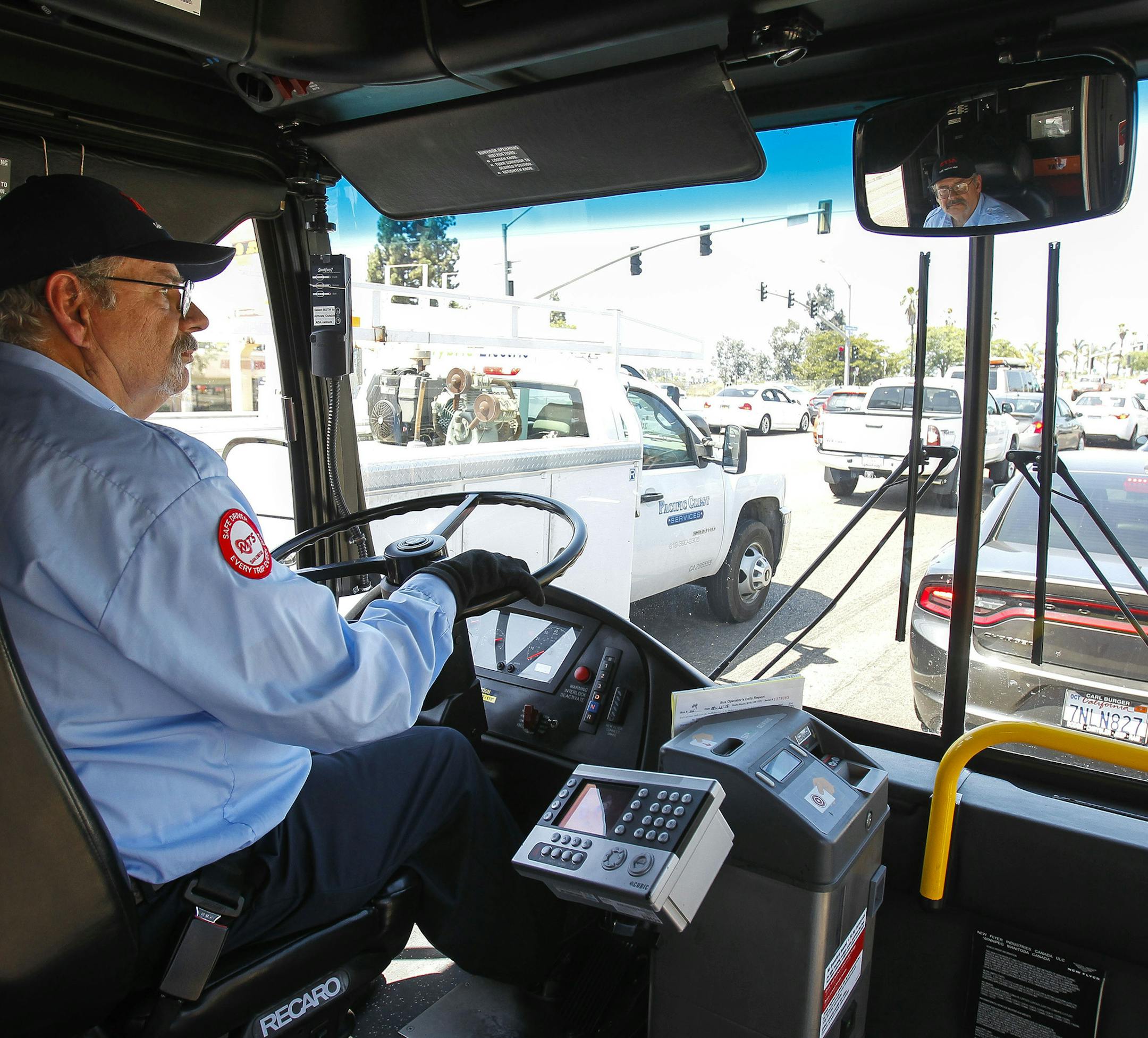
With a master's degree in computer science and 30 years of experience working for technology companies, Tom Middleton had little doubt he would soon find new employment after losing his job a decade ago as a software engineering manager at Kyocera in San Diego.
How wrong he was. After two years of submitting more than 300 applications for tech jobs and scoring only an occasional face-to-face interview, the then-59-year-old Middleton became convinced his age was a hindrance. He would hear feedback such as "You're overqualified."
Finally, on a whim, he applied for a job as a bus driver — and was hired, now earning less than half his former six-figure salary.
A growing number of baby boomers are opting to work well into what traditionally would be their retirement years, but the challenges of re-entering the workforce at an older age, even in today's tight labor market, haven't eased.
And even as Labor Department data show more people 55 and older are employed than ever before and have a lower jobless rate — 3.1 percent, compared with 3.9 percent for all workers — they remain out of work longer than their younger peers when they lose a job. On average, they're jobless for about 37 weeks, compared with 25 weeks for workers ages 35 to 44, according to 2017 data from the Bureau of Labor Statistics. Their hourly pay also starts to decline as they enter their 60s, regardless of how much education they have.
Changing demographics and compensation for older Americans have been upending the retirement landscape since the mid-1990s.
In a reversal of a decades-long trend toward earlier retirement, workers 55 and older made up 22.4 percent of the workforce in 2016, up from just 12 percent two decades earlier, according to the U.S. Bureau of Labor Statistics. By 2026, when baby boomers will be 62 to 80 years old, that share is expected to rise to 25 percent. Workforce participation also has risen sharply, with about 40 percent of people ages 55 and older either working or actively looking for work today, compared with 30 percent in 1996.
Workers 55 and older have been the fastest-growing segment of the U.S. labor force since 1996, and that trend is expected to continue through 2026, according to the Bureau of Labor Statistics.


