![Eden Valley farmer Tom Haag emptied corn into a holding wagon used to shuttle the grain to a nearby semi-trailer for transport back to the farmstead and a storage container. ] JIM GEHRZ•jgehrz@startribune.com (JIM GEHRZ/STAR TRIBUNE) / Oct. 3, 2012 / 1:15 PM, Eden Valley, MN**BACKGROUND INFO- The soybean and corn harvests are underway and well ahead of schedule in Minnesota. Despite severe drought in some parts of the nation and dry conditions here, Minnesota farmers are doing](https://arc.stimg.co/startribunemedia/UH5KRFBUEMETS5U5BGVQEOEVP4.jpg?&w=1080)
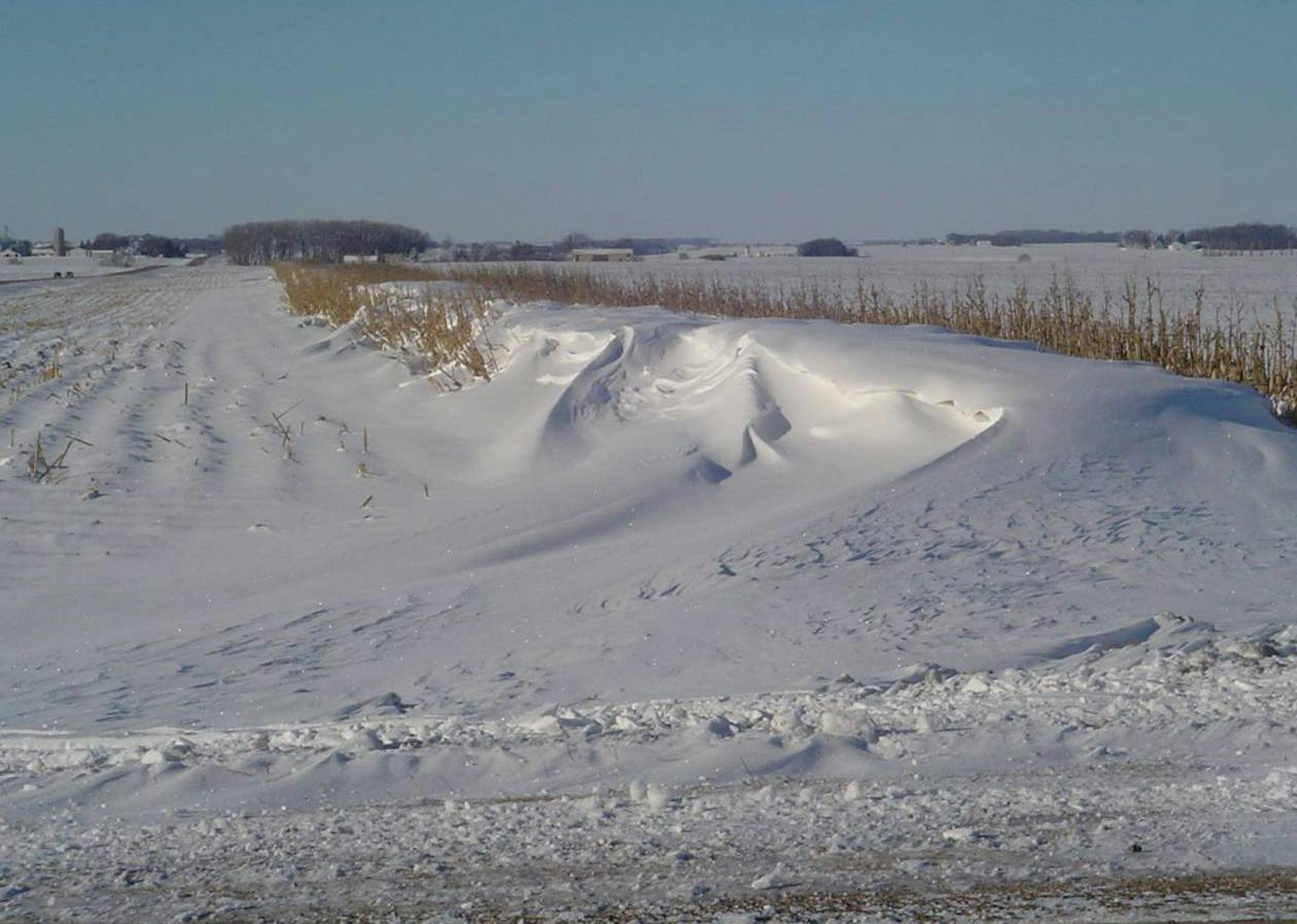
Cornstalks may be the best defense in the Minnesota Department of Transportation's battle to keep rural roads open when the snow flies.
As the harvest begins, this week the agency is asking farmers with fields bordering state highways to leave several rows of corn standing until spring.
The stalks become a snow fence, catching snow that would otherwise drift onto the roads, said Dan Gullickson, a forester with the transportation department (MnDOT) and coordinator of the program. That reduces the cost for MnDOT. In return, farmers get a stipend.
This is the 15th year for the Living Snow Fence program, but it has not gotten a lot of traction. Last year only 20 farmers protected a total of 7 miles of state roads, even though MnDOT has identified 3,700 drift-prone areas.
Farmers have been slow to warm up to the program for a couple of reasons, Gullickson said: They haven't wanted to bring out their combines in the spring to take down the stalks, and they were not interested in handpicking the corn or losing that portion of their crop.
To boost participation, MnDOT last year teamed with the University of Minnesota Extension Service on a pilot project in Nicollet, LeSueur and Renville counties that pairs farmers with groups such as 4-H and Future Farmers of America chapters. Volunteers handpick the corn for the farmer, who then can make a donation to the organization.
"It's a good benefit for MnDOT in that it creates a windbreak, and it's good for the kids to get exposure in community service projects," said Jeff Jensen, adviser for the Gibbon Fairfax Winthrop FFA chapter. He took 10 students to pick corn on Louise Kiecker's farm near Fairfax last year.
The pilot project is being taken statewide this year, said Gary Wyatt of the U's extension service.