

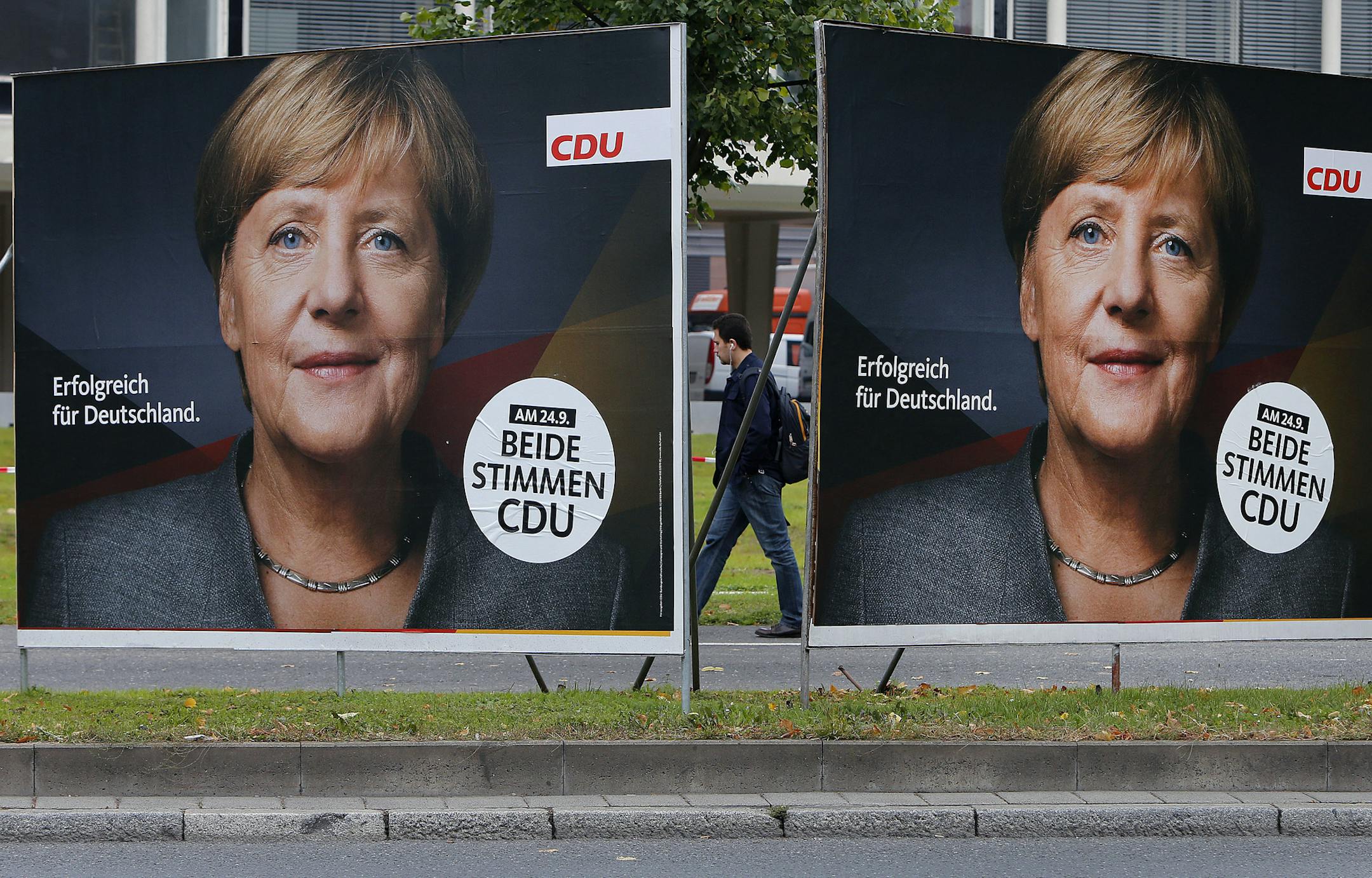
"Wir schaffen das."
Or, in the most frequent translation of German Chancellor Angela Merkel's famous phrase at the height of the Mediterranean migration crisis in 2015, "We can do this."
"Basically," said Céline-Agathe Caro, a senior policy analyst at the Konrad-Adenauer-Stiftung Foundation, "it means: Don't worry, we will get the situation under control."
"We can do this" isn't the campaign slogan for Merkel's political party, the center-right Christian Democratic Union (CDU), heading into Sunday's federal election. Rather, some posters promise "A Germany where we live well and gladly."
Germans — and the world — seem to agree with the sunny assessment of success since reunification, according to opinion polls.
For instance, the BBC's global Country Ratings Poll puts Germany just behind placid Canada in a worldwide favorability rating, which is extraordinary considering Germany's decidedly nonplacid past.
And within Germany, there's generally an admiration of achievements, too, especially regarding the economy, which merits the approval of 86 percent of its citizens, according to a new Pew Research Center poll.
Pleasing economic conditions contribute to high approval ratings for the parties in the "grand coalition" currently governing Germany. But it's the junior partner, the center-left Social Democratic Party, that comes out on top, with a 68 percent "favorable"to 25 percent "unfavorable" rating. (Merkel's CDU is close, but lower, at 58/37.) Both poll strikingly higher than Democrats and Republicans in America, and nearly any other Western party in this politically, socially and economically turbulent era.


