

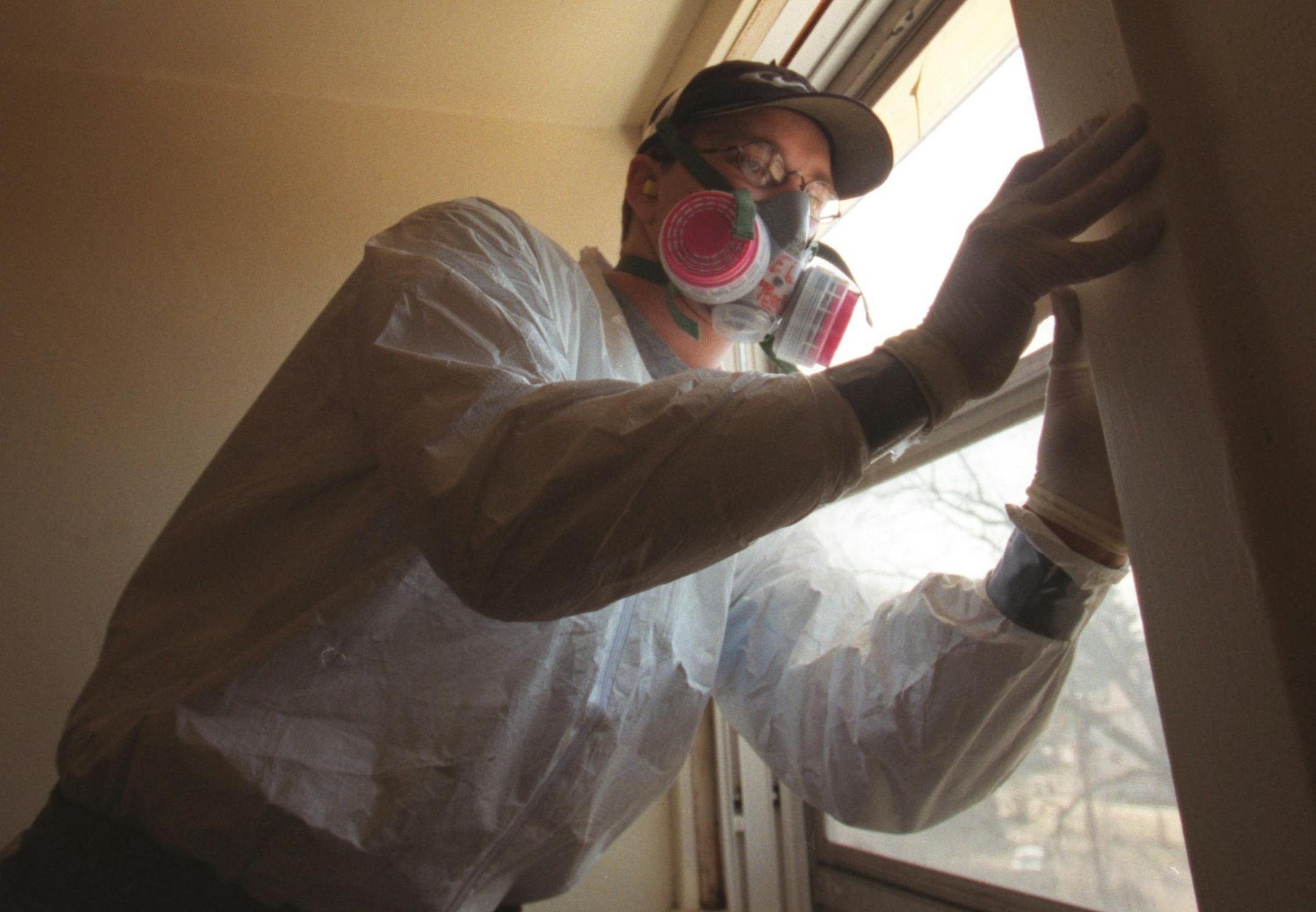
In 1978, the federal government banned the use of lead-based paint in homes after long-term studies showed that lead causes severe health problems, especially in children younger than 6, damaging their nervous systems even before birth. Although it's off the market, millions of homes still contain this potential danger on the walls. As long as it's in good condition, lead-based paint probably isn't a hazard; but scraping and sanding changes that. It's clear that the dust produced by renovation work can be very harmful.
Because of these dangers, in 2008 the Environmental Protection Agency required contractors working in pre-1978 homes to be lead-safe certified and use special work practices to contain and clean up dust. Companies can achieve certification by applying to the EPA (or an authorized state) and having their workers or supervisors take a course on work practices to minimize exposure to lead during renovation, repair, and painting projects. Even small projects are covered by the law, which kicks in when more than 6 square feet of painted surface inside or 20 square feet outside are disturbed. The law also applies to landlords who renovate rental properties, but it doesn't apply to DIYers.
Most homeowners are unaware of the law, but all contractors should be aware of their obligations. Unfortunately, many companies still aren't doing what they should. Checkbook strongly urges anyone who lives in a pre-1978 home to hire only lead-safe certified contractors and demand that workers follow the law when performing work in areas where lead-based paint could be disturbed.
A good place to start looking for information about lead is www.epa.gov/lead. The ratings available at Checkbook.org/StarTribune/Lead will also help you find responsible contractors.
To evaluate the risks of lead-based paint in your home, do the following:
• Have your children tested. According to the American Academy of Pediatrics, "there is simply no safe level of lead exposure for children." All children should be screened for lead at ages 1 and 2. For more information, check the Centers for Disease Control and Prevention pamphlet "What Do Parents Need to Know to Protect Their Children?" and other information available at www.cdc.gov/nceh/lead.
• If a blood test indicates that your child has been exposed to lead, get a lead-certified professional to check your home for lead. A lead-paint inspection performed by a certified contractor tells you only about the lead content of painted surfaces — not whether they are a hazard or how to deal with them. The risk assessment is thorough and expensive — about $500 plus around $10 to $15 per lab sample — but if your child has been exposed, you need to eliminate additional exposure.
• If your home was built before 1978, ask prospective contractors to show proof of their lead-safe certification. In any contracts you sign, include a statement saying that the contractor "will follow EPA regulations for containing the work area and minimizing the generation of lead-paint dust."


