

Thanks to a pair of major changes enacted by the NCAA last year, college athletes now have a transfer portal that looks a lot like free agency, and an opportunity to profit from their names, images and likenesses that marks a sharp break from lingering notions of amateurism.
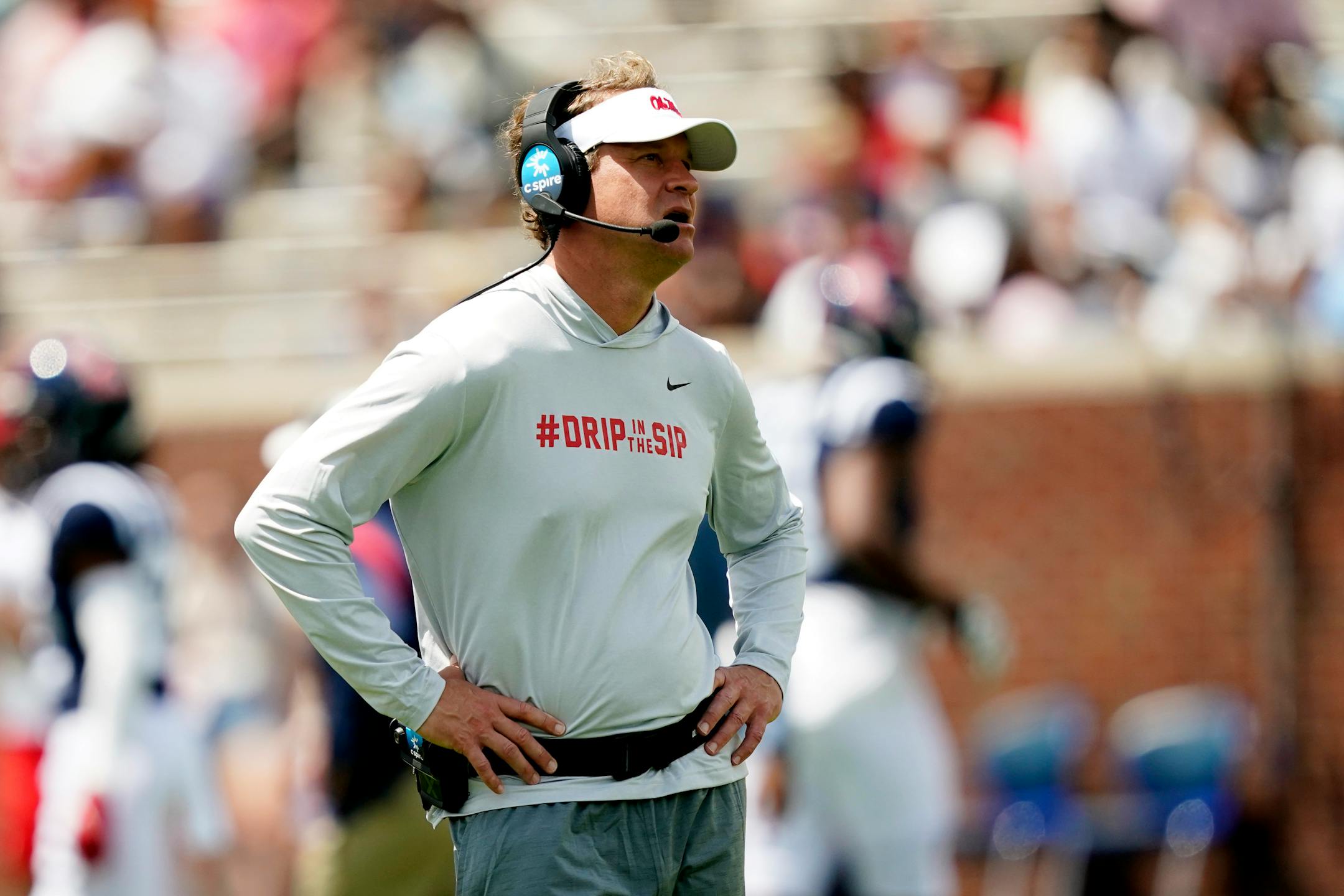
Leave it to Lane Kiffin to spell out what it means for college football in candid fashion.
"We're a professional sport," the Mississippi coach said in recent comments published by Sports Illustrated, "and they are professional players."
Over a number of eye-opening remarks in a lengthy Q&A with the website, Kiffin struck the pragmatic tone of someone well aware that the college football landscape has been dramatically transformed, and that coaches and players alike would be well-advised to make the most of it.
"It's totally changed recruiting," he said. "I joke all the time about it. Facilities and all that. Go ahead and build facilities and these great weight rooms and training rooms, but you ain't gonna have any good players in them if you don't have NIL money. I don't care who the coach is or how hard you recruit, that is not going to win over money."
In addition to delivering blunt takes on the impact of NIL and donor collectives on recruiting and coaching decisions, the 47-year-old Kiffin offered analyses of SEC rival Alabama that should both comfort and alarm Crimson Tide Coach Nick Saban.
According to SI, the interview with Kiffin took place two days before Saban and Texas A&M Coach Jimbo Fisher got into a very public spat over the former's accusation that the Aggies "bought every player" in their top-rated recruiting class with NIL deals. Fisher, a former Saban staffer, responded by denying his program "bought anybody" and blasting the Alabama coach as a "narcissist" who had grown too accustomed to dominating the recruiting ranks.
Saban subsequently backtracked and asserted that his issue was not with Fisher or the original concept of NIL, but rather with how donors have been using the new rules to organize into collectives. The aim of these collectives, which are not officially affiliated with the programs they support, is to create pools of NIL money to incentivize prized prospects to choose their preferred school.


