

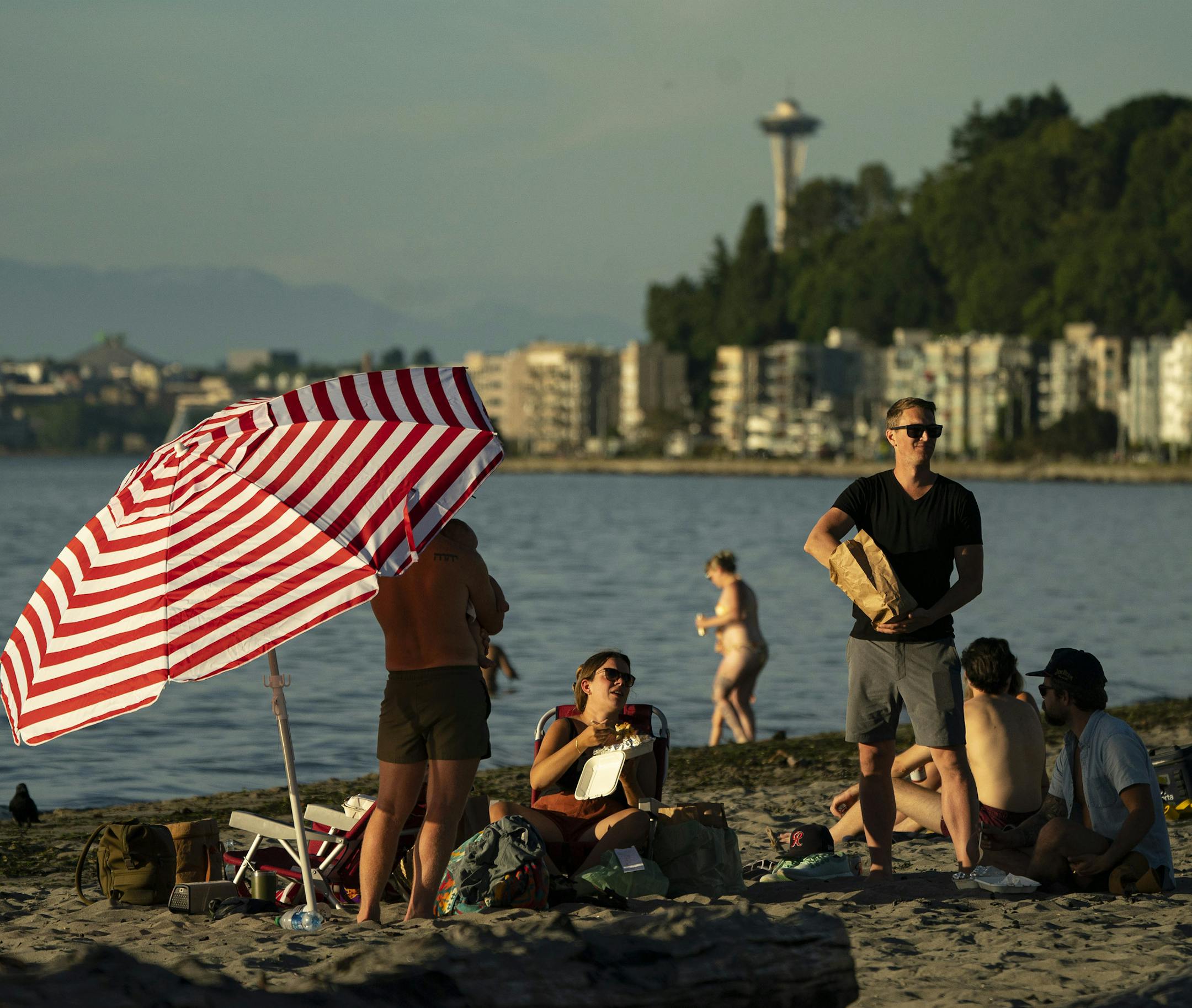
This summer was unusually hot, especially at night. Minimum temperatures were the hottest on record for every state on the West Coast and parts of the Northeast. Most other states neared record highs for overnight temperatures this meteorological summer (June through August).
This is part of a trend that aligns with the predictions of climate models: Across the U.S., nights are warming faster than days. This effect is amplified in cities, which are typically warmer than their surroundings.
"At nighttime, the deserts cool off really, really fast, but our city [Phoenix] does not," said Jennifer Vanos, a professor in the School of Sustainability at Arizona State. "Not having that break from the heat is really hard on the human body — it builds up. And knowing the temperatures in Phoenix, we're going to be in the 90s overnight and we're going to be up to 110 sometimes in the day. None of those are safe for a person who doesn't have access to air-conditioning."
While average nighttime temperatures are on the rise, it's the extremes — that is, the number of abnormally hot nights — that are rising the fastest.
A small shift in the average can mean a large change in the frequency of extreme events, with big consequences for climate change.
June's record-breaking heat wave in the Pacific Northwest would have been "virtually impossible without climate change," according to an analysis by an international team of climate researchers. The study found that such an extreme heat wave is at least 150 times more likely because of human-caused global warming (which has raised global average temperatures by about 2 degrees Fahrenheit).
And if the world warms by another 1.4 degrees Fahrenheit — which could happen this century without a drastic drop in greenhouse gas emissions — the study concluded that such extreme heat waves "would occur roughly every 5 to 10 years."
Over several decades, most large U.S. cities have warmed "at more than twice the rate of the planet as a whole," according to research co-authored by Brian Stone, a professor of environmental planning at Georgia Tech.


