HONOLULU – Amid growing public opposition, the Honolulu City Council recently dropped a proposal to rename a popular beach in honor of President Obama. Last year, Hawaii's Legislature adjourned without acting on a bill that would designate the president's birthday as a state holiday. To this day, would-be landmarks such as the apartments where Obama lived are without tangible tributes to the man many here once knew simply as Barry.
Despite the immense pride Hawaiians profess about Obama's historic rise to the presidency, there are few, if any, markers to call attention to his roots.
"It's not like you're going to Mount Vernon," quipped Democratic Sen. Brian Schatz, contrasting the plantation home of the nation's first president with a high-rise former residence of its current one.
But what would seem like indifference toward marking Obama's time here is instead the apparent result of a combination of the state's humble character and the respect locals say they have for Obama. What they await is a sign of whether Obama returns the affection.
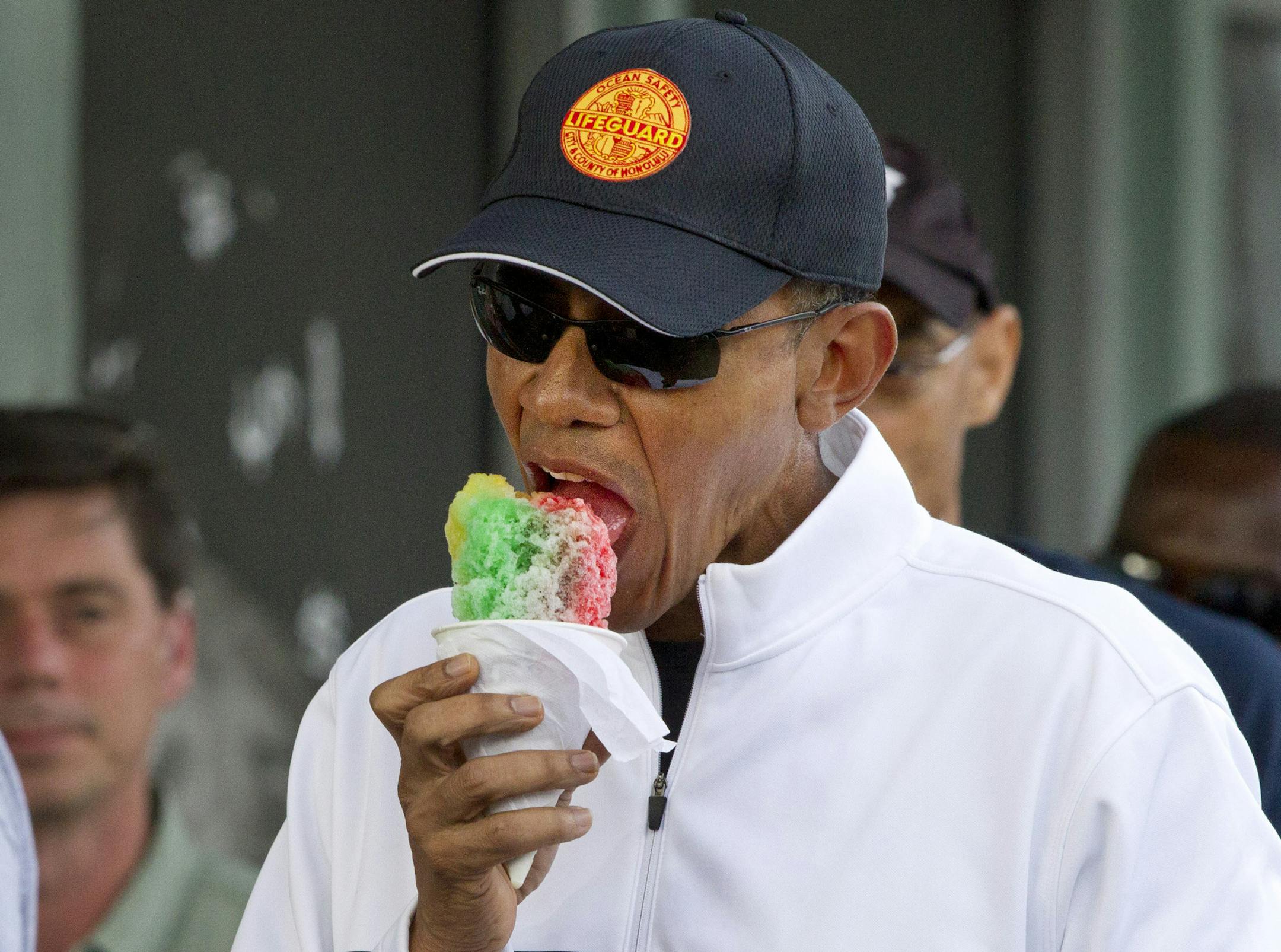
Though Obama just concluded two weeks of what has become the first family's traditional vacation here, such trips increasingly appear less like homecomings. Obama attends luaus and plays golf with old friends, but he and his family stay at a rented home. He hasn't lived here since he left for college, and few expect him to return full time when he leaves the White House. He only occasionally interacts with the public, and doesn't return to the sites of childhood exploits.
Residents mostly leave him alone, yet see him as one of their own.
"It doesn't matter where you live. It's where your heart is," said Mira Secretaria, who was buying a birthday cake recently at the Baskin-Robbins where Obama worked as a teenager, just blocks from the hospital where he was born and two of the apartments he spent time in as a child. "I never thought of him as from the mainland."
The debate about Hawaii's place in Obama's story is part of a larger one that's playing out as Obama stares down what he calls the "fourth quarter" of his time in office.