

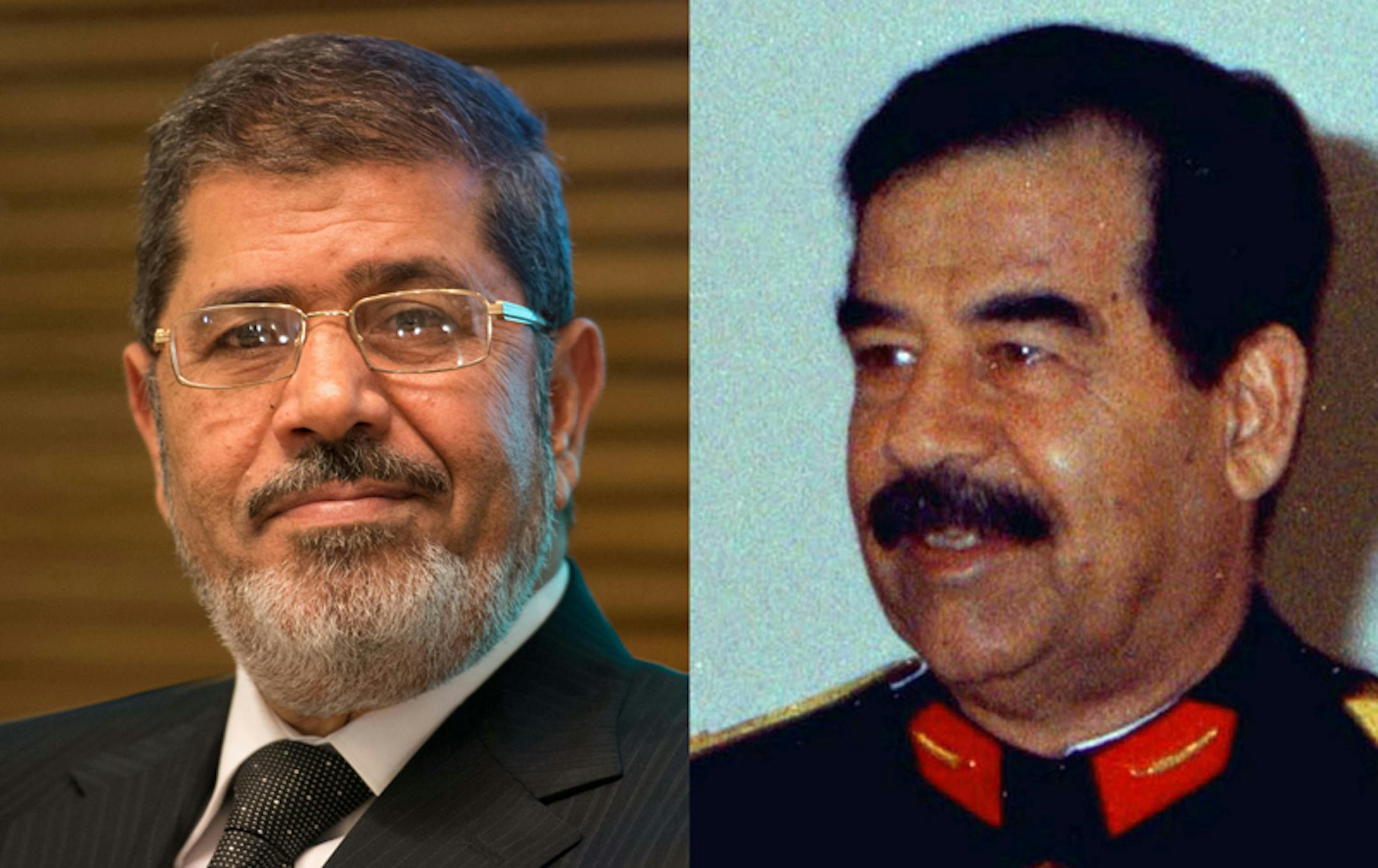
The election of President Mohamed Morsi in Egypt and the Muslim Brotherhood's success in securing political power in the Arab Spring have brought a new brand of Muslim leader to the public arena -- men with beards.
Arab dictators didn't have beards. Some wore mustaches as a sign of vitality and masculinity. The look was popularized by Saddam Hussein of Iraq, where almost every man has a mustache.
To be sure, the Saudi kings came up with their own goatee beards. And Yasser Arafat, of course, had a small beard, but to most Westerners he simply seemed unshaven.
Beards come in different shapes and forms. They not only signify different religious identities but have also socioeconomic implications that may be confusing for untrained Western eyes that have only been exposed to terrorists with beards. Yet many terrorists don't have beards. None of the 19 hijackers of 9/11 had a beard.
During Hosni Mubarak's Islamophobic tenure in Egypt, my only bearded brother was randomly snatched out of his home early one morning, put in jail and tortured for 13 months. He was released after it was concluded that his beard was not good evidence of terrorist activities.
Western media have focused on the attire of Muslim women, such as the hijab, but not enough on Arab men's facial fashions. I know it is a risky business, but I will try to navigate through the different beard styles and their socioeconomic meanings.
When I visit Egypt, the thing that strikes me is seeing my (now) five bearded brothers waiting for me at the airport. It is scary even for a family member.
Growing a beard under Islam is mandatory for some men; for others, it is a matter of identity and a choice, just like the hijab for women. According to brother Burhan from Islamhelpline.com, during the prophet's time growing a beard was considered normal and natural for a man. The prophet asked Muslims only to trim the mustache (as the Amish do) to distinguish themselves from the pagans.


