

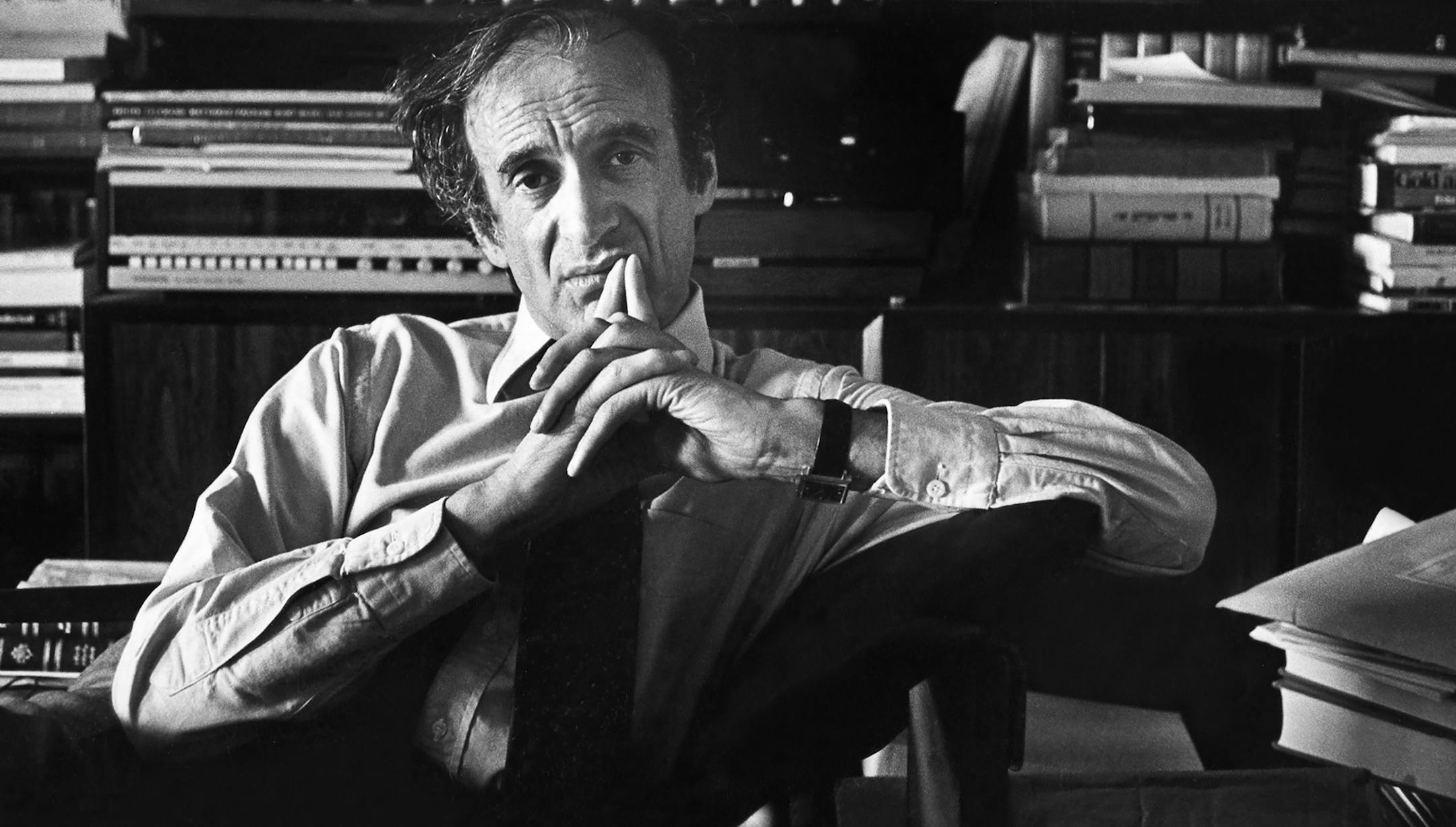
With the passing of author, Nobel laureate and Holocaust survivor Elie Wiesel, genocide education has lost its most important advocate. I write "genocide education" and not "Holocaust education" in order to make a point.
There are many who contend today that the Holocaust's global presence and iconic status obscures other forms of mass violence, and even the acknowledgment of other genocides. Wiesel's seminal role in Holocaust memorialization worldwide demonstrates exactly the opposite. The proliferation of Holocaust remembrance, education and research efforts has been extraordinarily influential in the moral and political debates about atrocities and in raising the level of attention to past violence and responsiveness to present genocide and other forms of gross human-rights violations.
Wiesel was more than a tireless activist. In his books and brilliant speeches, he provided a language for the event, and he was able to speak to everyone. Wiesel gave the Jewish mass murder a new linguistic identity: the "Holocaust." He looked at the events not only as a survivor and an eloquent writer, but as a Jew in the midst of a Jewish catastrophe. "Not all victims were Jews, but all Jews were victims," he wrote. Wiesel offered a fascinating and intriguing theological argument in which the biblical figure of Isaac embodies the archetype of the chosen victim, representing Jewish history from biblical times until its modern culmination during Nazism. In Wiesel's literature, interviews, documentary films and lectures, the Jewish mass murder became a unique, transcendent and even an irrepresentable event.
Wiesel has been critiqued on the grounds that the uniqueness discourse works against historization and against universality. Such objections do not only fail to acknowledge the epistemological gain in literary and poetic accounts of the Holocaust but also miss the sociological effect of the world of symbols and words that Wiesel significantly shaped. The Holocaust has become an emblem of both a unique and an archetypical tragedy. As Jeffrey Alexander has aptly put it, its uniqueness — the fact that this event became singular and different from all others — turned it into a powerful "bridging metaphor" that universalized moral and political responsibility for atrocities worldwide. It is thus its singularity that confers universality to the Holocaust.
At the University of Minnesota's Center for Holocaust and Genocide Studies, we frequently receive the question: "Why not just Center for Genocide Studies? Isn't the Holocaust also a genocide?" I often reply by quoting Wiesel: "The Holocaust was a unique event, albeit with universal implications." The Holocaust speaks to universal concerns and raises fundamental political, sociological, metaphysical and theological issues. At the heart of Wiesel's thought is also the argument that the Holocaust needs to be seen as pivotal to our understanding of and also our response to genocide and mass atrocities.
The centrality of the Holocaust for those of us involved in genocide research and education cannot be sufficiently emphasized. Wiesel's death leaves us all a bit orphaned but even more inspired by his legacy.
Alejandro Baer is an associate professor of sociology at the University of Minnesota and is the Stephen C. Feinstein Chair and director of the university's Center for Holocaust and Genocide Studies.


