

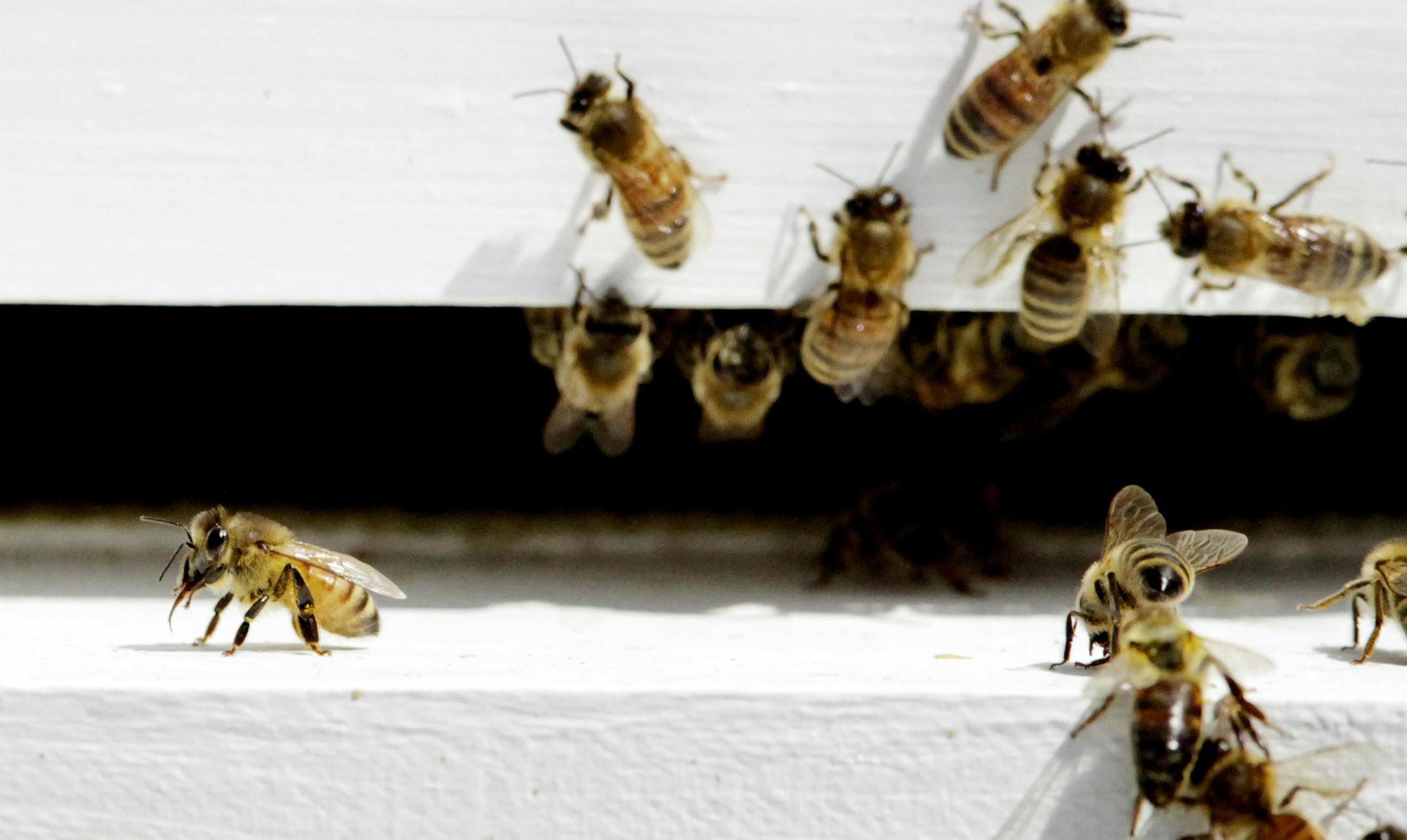
In early November, a beloved Italian Honeybee Queen and approximately 30,000 of her daughters and sons mysteriously abandoned their abundantly honeyed rooftop hive in south Minneapolis near Lake Hiawatha to rejoin the Creator.
The cause of the colony collapse is unknown, but clues point to fungicide poisoning. At least 137 cells were contaminated with fungicide. Although they numbered in the thousands, the bees acted as a unified organization of egg layer, nursemaids, guards, builders, field workers and studs. They left behind stunned and saddened humans who took joy in their daily presence.
The bees worked the flower gardens of south Minneapolis in 2014 and contributed to the city's commonwealth. They were known for their docile nature and their unique cream soda coloring. Special thanks to the University of Minnesota Bee Squad for their excellent care of the colony last summer.
It was a hard winter for honeybees in the Twin Cities. In addition to my colony's collapse in November, I learned from the Bee Squad recently that 50 percent of the colonies they managed died over the winter. Fifty percent. Sound the alarm.
While the exact cause of colony collapse disorder remains unknown, evidence points to the cumulative effect of these assaults on pollinators: Lack of quality habitat; pervasive exposure to "sub-toxic" levels of neonicotinoids in pollen and nectar; increasingly treatment-resistant Varroa mites; and exposure to the plethora of pesticides, herbicides and fungicides that are abundantly used outdoors.
It is easy to fall into despair about the multilayered global environmental crisis unfolding before us, pollinator mortality being one manifestation. But there is good news: You can make a difference for pollinators in our city by your actions this very growing season.
Here are some ways to help bee populations survive:
1. Purchase neonicotinoid-free seeds and plants.
In Minneapolis, your best bets for purchasing neonic-free plants and seeds are at the co-ops, Mother Earth Gardens and Bachman's. Pretty much assume that all commercial seeds and starter plants are treated with neonicotinoids unless labeled as organic.


