

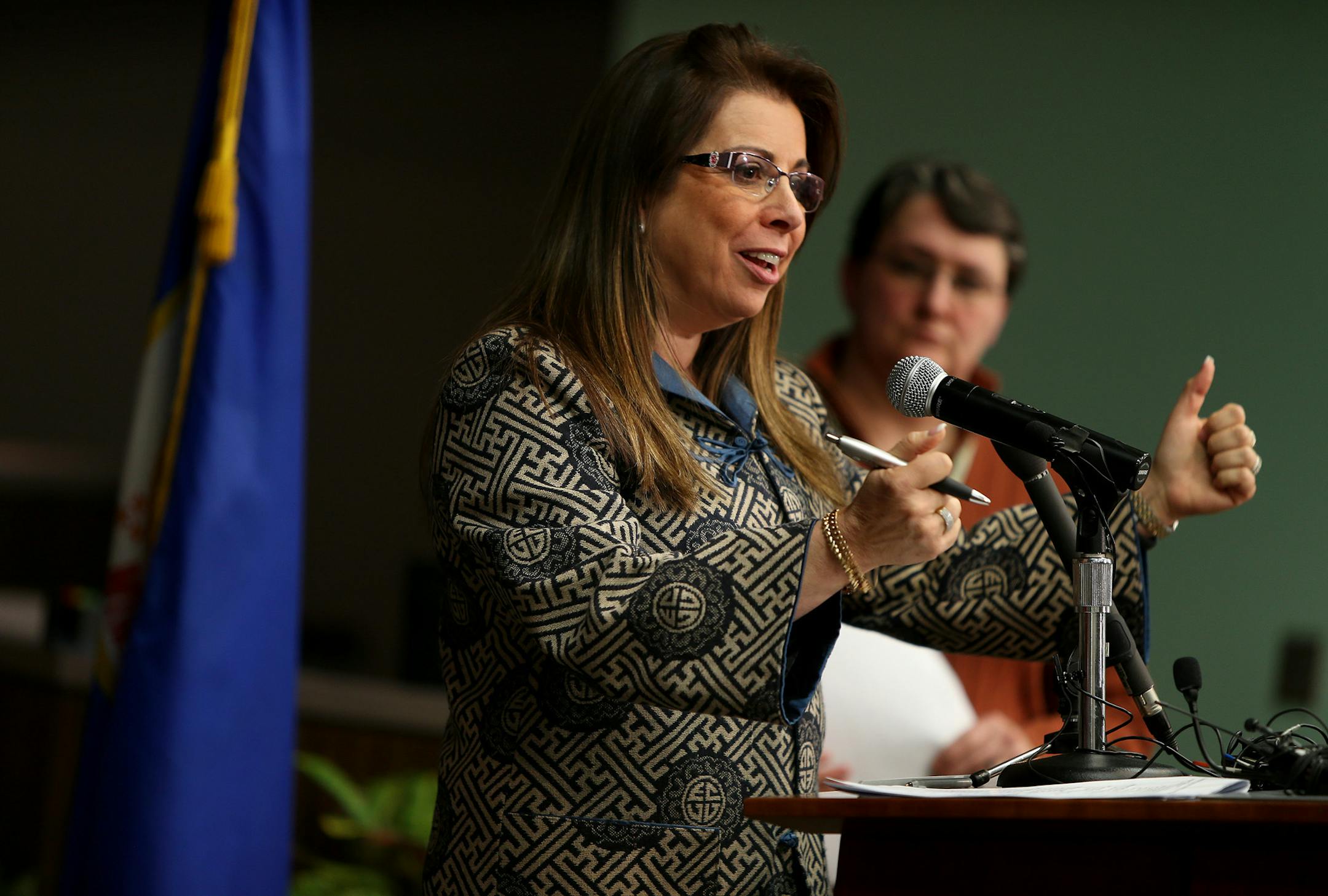
A firming up of class size limits as well as an 8.6 percent wage-and-benefit increase over two years for St. Paul's teachers were among the highlights of a tentative agreement outlined by district and union leaders Monday.
The total cost of the contract is $33 million — one-third of which the district would fund by reallocating existing resources, including a redeployment of current staff members, district officials said.
The two sides reached the tentative deal last week during a marathon bargaining session that lasted nearly 24 hours. They offered up the details on a day that union leaders initially set aside for a strike-authorization vote.
Of that last day and night — and day again — of mediation, Superintendent Valeria Silva said: "It was definitely history in St. Paul."
The contract, which is expected to be voted upon by teachers on March 4 and by the school board on March 18, also calls for 42 new full-time positions, including additional media specialists, elementary school counselors, school social workers and nurses — the support staff members the union sought as part of an agreement it said would take the district-teacher labor relations into the 21st century.
The two sides also committed to dedicating at least $6 million per year to open more preschool slots for 4-year-olds — the union initially wanted every 4-year-old to have access to preschool — and to reduce the time spent preparing for state standardized tests. School assessments are to be reviewed, too, to ensure they are culturally relevant, union President Mary Cathryn Ricker said.
The proposed deal calls for teacher salary increases of 2.25 percent in the first year and 2 percent in the second year, slightly above the average 2 percent annual increases now being negotiated elsewhere in the state, said Chris Williams, a spokesman for Education Minnesota. Many of St. Paul's more experienced teachers — those in steps 15-19 and step 20 of the district's salary schedule — also would receive an additional 1 percent increase annually, under the contract.
A typical teachers contract also includes steps and lanes — increases based on years of experience and education levels attained — as well as benefits that include district contributions to pensions and health insurance. All of which, in St. Paul's case, adds up to a proposed 8.6 percent overall increase over two years.


