

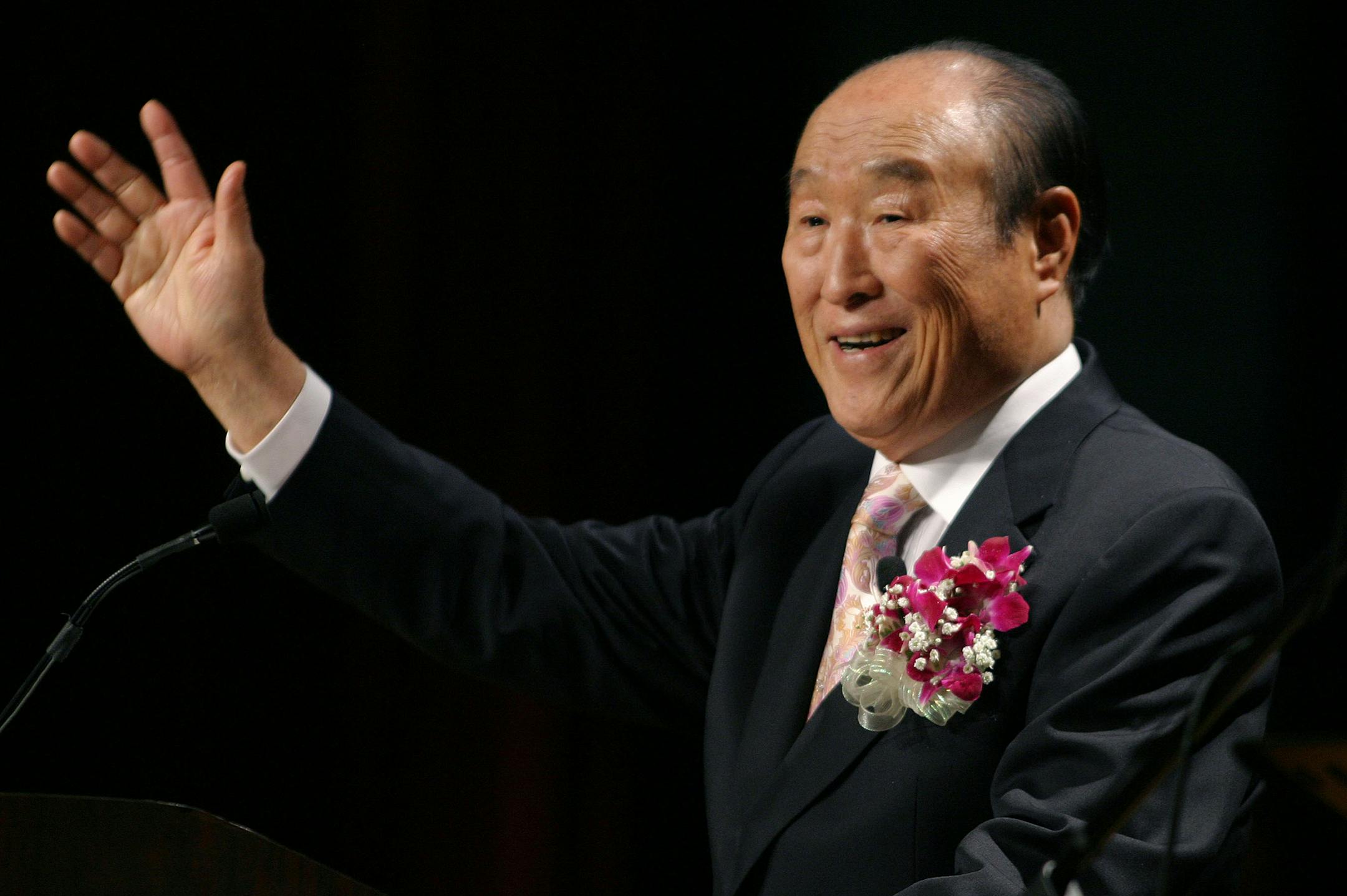
"Are you one of those Moon people?"
The question was a challenge, tinged with hostility. I sighed and thought to myself: "Here we go again." "Witnessing" for the Unification Church (Moonies) in the 1970s was not easy. In the beginning, we were able to pass ourselves off as just another Christian splinter sect, and people were mildly supportive. But the more they heard about us, the tougher it became. The press was mostly negative, with stories of mistreatment, brainwashing and "heretical" teachings. I experienced mockery, harassment, even physical blows. But such persecution only served to confirm our faith and the conviction that we were doing God's work. As true believers, we soldiered on.
But here's the thing: While the unkindness did sting, a lot of the opposition was justified. We were guilty of deception, manipulation and exploitation. We did have goals that were completely at odds with basic American values. Our leader was openly hostile to the U.S. Constitution, and we worked hard to ultimately replace it with an autocratic theocracy. We would bristle with sincere indignation if someone suggested we weren't being patriotic Americans. But in fact, we really weren't. We were doing "God's work" first, and the interests of the nation took a back seat to our mission. Such is the religious mind's infinite capacity for rationalization.
My experience 40 years ago seems relevant to current events. The words intolerance, bigotry and discrimination are in headlines daily. While tolerance and acceptance are generally good things, there are some reasonable caveats, and we need to parse out distinctions carefully. Discrimination based on race, ethnicity, gender or sexual orientation is one thing we can agree is not justified. After all, those are attributes we do not chose, have no power to change and say nothing about our character. None of that applies to religion. Religion can say a lot about our values, beliefs, and allegiances, and who we are. The more seriously one takes religion, the more likely this is true. Why is it unacceptable to have a negative opinion about such things? If a Scientologist, snake-handling fundamentalist or a suicide cult demanded that I respect that person's faith, would I be obliged? Would I be a bigot or a "cultiphobe" if I expressed opposition?
In the U.S., we have freedom of religion, and separation of church and state. These are possible only when elected officials keep their personal feelings and official duties in their proper spheres. They take an oath to the Constitution, and we expect that they make that their priority. But when former President George W. Bush said he answers to "a higher father" or presidential candidate Ted Cruz says he is "a Christian first, an American second," we see the fundamental conflict between allegiance to the state and personal faith. Considering the stakes, this is inevitable if you really believe.
U.S. Rep. Keith Ellison of Minnesota and President Obama have been on the stump lately, implying that there is something wrong with us if we aren't totally accepting of the Islamic faith. I'm pretty open-minded, and I have no problems with many forms of diversity. But I have serious concerns, and I think it unfair to be labeled a bigot for having them. I would love to think that Islam really is compatible with the basic democratic, constitutional values we take for granted in Western societies. I hope that Islamic teaching actually allows for free speech, equality for women and gays, and questioning of the faith. I hope violent jihad is an aberration. Yet I have a hard time seeing any evidence of this when I look at Islamic countries around the world or at Western societies experiencing influxes of Muslim immigrants. The evidence seems overwhelmingly in the other direction. I hope to be proven wrong.
Of course, there is real bigotry in the world. Of course, unkindness is never justified. But not all opposition is bigotry, and not all beliefs deserve our acceptance.
Todd Harvey lives in Northfield.


