

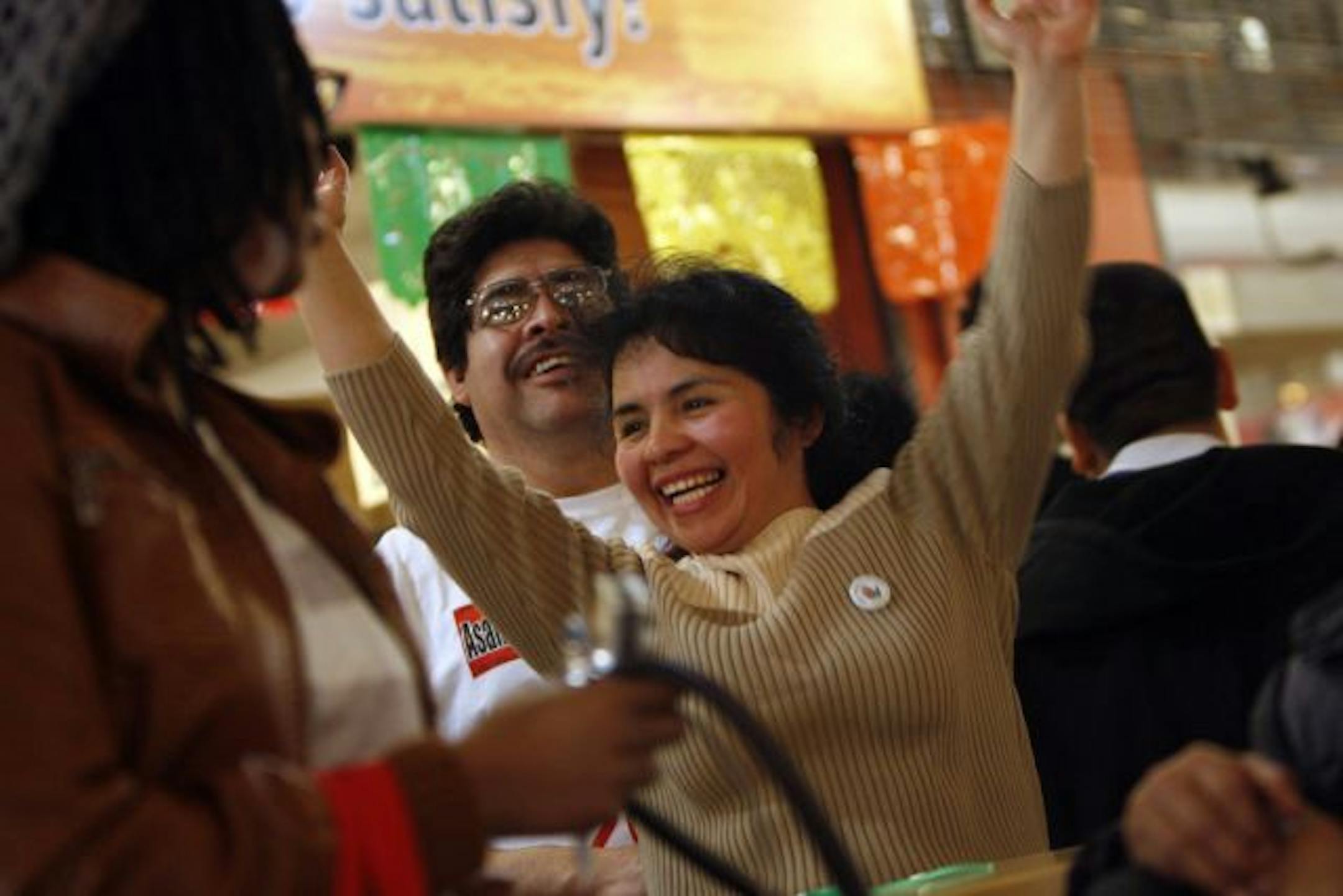
Antonia Alvarez made it clear this week that when it comes to the 2010 U.S. Census, Minnesota's Latinos are going to be heard.
Alvarez, co-founder of the statewide La Asamblea De Derechos Civiles (the Assembly of Civil Rights), followed Minneapolis Mayor R.T. Rybak to the stage during a census informational program Thursday night at the Midtown Global Market in Minneapolis. Noticing the mayor in conversation at the side of the stage, Alvarez paused, and through an interpreter said that she would not continue until she had the mayor's full attention.
With the mayor on board, Alvarez said, "With or without documentation, [the Latino community] will participate in the census if we hear from you that the census is safe and that our information will not be turned over to immigration."
Such concerns are the impetus for the federal government's $340 million informational campaign, now in full force, designed to erase people's fears -- among minorities in particular -- that information gathered in the census could be used against them.
Barbara Ronningen, a state demographer, estimated that Minnesota has 75,000 to 100,000 illegal immigrants. The federal government wants them to know that for census purposes, they count. The outreach effort is about convincing more than illegal immigrants; other minority groups have a historical distrust of government or aren't familiar enough with the U.S. system to know what the census is about.
The government's message to all of them is simple: No one, not immigration, not your landlord, not the president, not the CIA, is going to have access to the information.
"We're reaching out to local community groups, which is something we haven't done in the past," U.S. Census Bureau Director Robert Groves said. "We have tried to reflect the diversity of America in the diversity of tools we are using." Those tools include advertising in multiple languages.
At stake is $400 billion in government funding determined by the census. Minnesota also is close to losing one of its eight congressional seats, which are based on population.


