Business review from the Economist
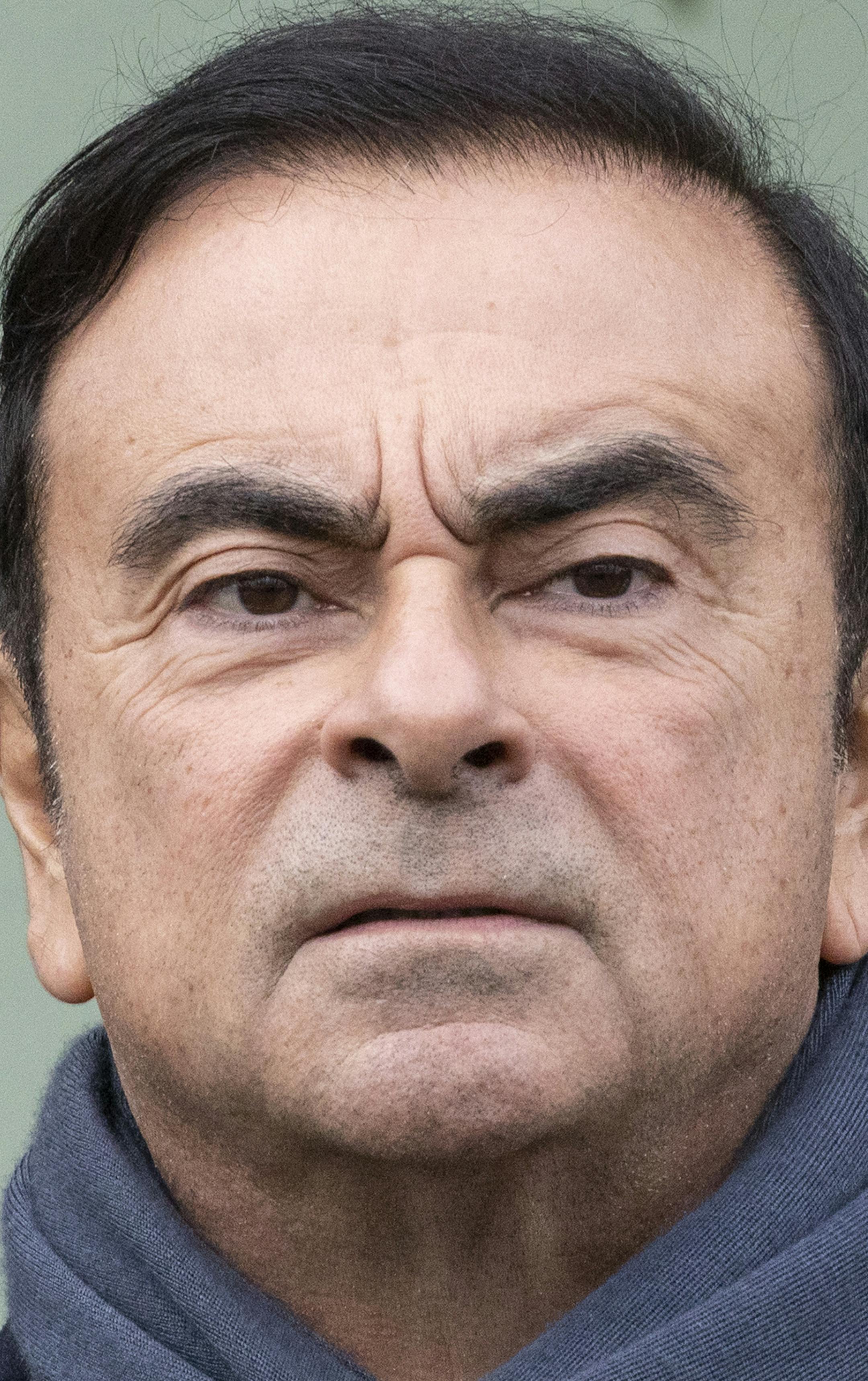
Ghosn quits Renault as he fights Nissan
The French finance minister said that Carlos Ghosn had resigned as chief executive and chairman of Renault, a day before the carmaker's board was set to meet to discuss replacing him. The French government owns a stake in Renault and had pressed the company to remove Ghosn following alleged financial wrongdoing at Nissan, Renault's global partner. Ghosn was sacked as Nissan's chairman when the scandal broke last November. He has again been denied bail in Tokyo and remains in custody. He denies wrongdoing.
Ford's net profit fell by half last year, to $3.7 billion, and it reported a fourth-quarter loss, as it continued to perform poorly in regions outside North America. The carmaker said it was facing many difficulties, including the absorption of tariff-related costs. It promised weary investors that it would soon give details of its crucial restructuring.
Tesla's share price took a hammering after Elon Musk said he would cut full-time jobs by 7 percent. The electric-car maker's workforce grew by 30 percent last year, which its boss said was "more than we can support." Production of the Model 3 has ramped up, but Musk wants to offer the mass-market sedan to customers at $35,000; the cheapest versions start around $44,000.
The French data-protection office fined Google €50 million ($57 million) for the cursory manner in which it gained users' consent. It was the first penalty levied against a big tech firm for breaching the European Union's General Data Protection Regulation, which asserts that firms must be explicit when seeking such consent. Complaints had been lodged by data-privacy groups, including Vienna-based None of Your Business.
The E.U.'s antitrust commissioner fined Mastercard €571 million ($650 million) for obstructing merchants' access to cross-border card-payment services. The credit-card network cooperated with the investigation and said it stopped the practice years ago.
The International Monetary Fund warned that "the global expansion is weakening and at a rate that is somewhat faster than expected." The fund lowered its forecasts, particularly for advanced economies. The world's economy is forecast to grow by 3.6 percent in 2020. Although that is stronger than in some previous years, the IMF thinks "the risks to more significant downward corrections are rising," in part because of tensions over trade and uncertainty about Brexit.
The IMF also cautioned that the slowdown in China could be deeper than expected, especially if the trade spat with the United States is unresolved. Its economy grew by 6.6 percent last year, the slowest annual pace since 1990, when sanctions were imposed following the Tiananmen Square massacre.
UBS said clients pulled a net $7.9 billion from its wealth-management business in the last three months of 2018 amid a market sell-off. The Swiss bank's pretax profit rose by 2 percent year over year to $862 million.