

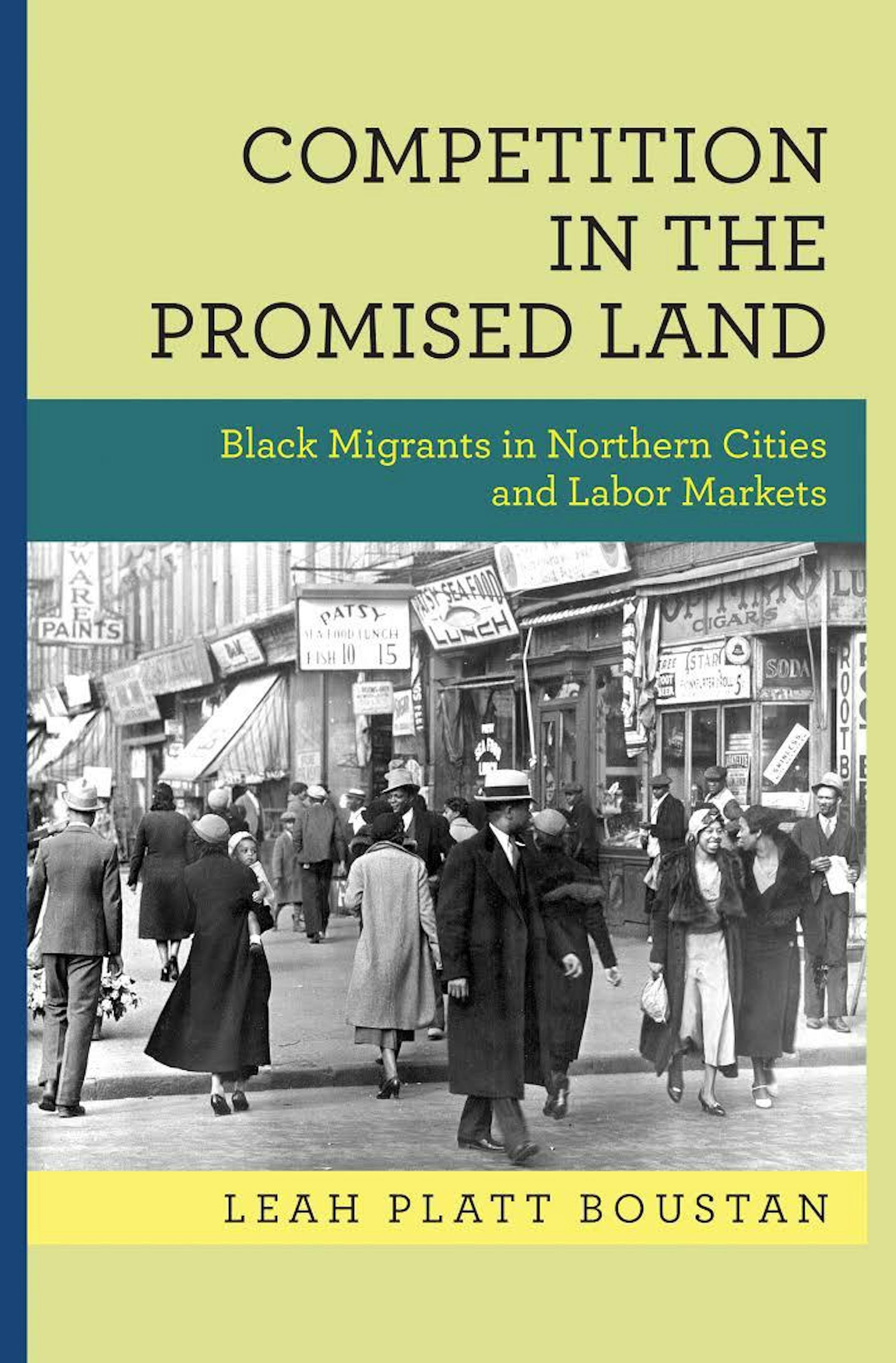
Competition in the Promised Land
Leah Platt Boustan, Princeton University, 211 pages, $29.95.
A century ago, almost all black Americans lived in the South, largely in rural areas. By 1970, most lived outside the South, a great many in Northern and Western industrial cities. Black workers in the North and West, in addition to experiencing greater social and political freedoms, made much more money than their counterparts in the South. Yet black migration to industrial cities was not met with steadily growing economic equality between black and white workers. As migration increased, so did black residential isolation — exacerbated by "white flight" to the suburbs — and eventually, economic stagnation. Scholars in the early part of the 20th century had predicted migration would do more for black Americans than it did. What happened? In her rich and technical account, economist Leah Platt Boustan employs the tools of her trade — resourceful matching of data sets, rigorous modeling of labor phenomena, and sweeping use of census figures — to analyze the demographics and economics of the Great Migration. More traditional historians, often focusing on a single area, have not typically done this. Boustan does not aim to overturn the conventional explanation for sluggish black economic growth in the North: namely, the decline of American manufacturing and the persistence of racism in labor and housing markets. But here, as with many other aspects of the migration story, her investigation both deepens our understanding of what we think we know and adds new complexities and wrinkles.


