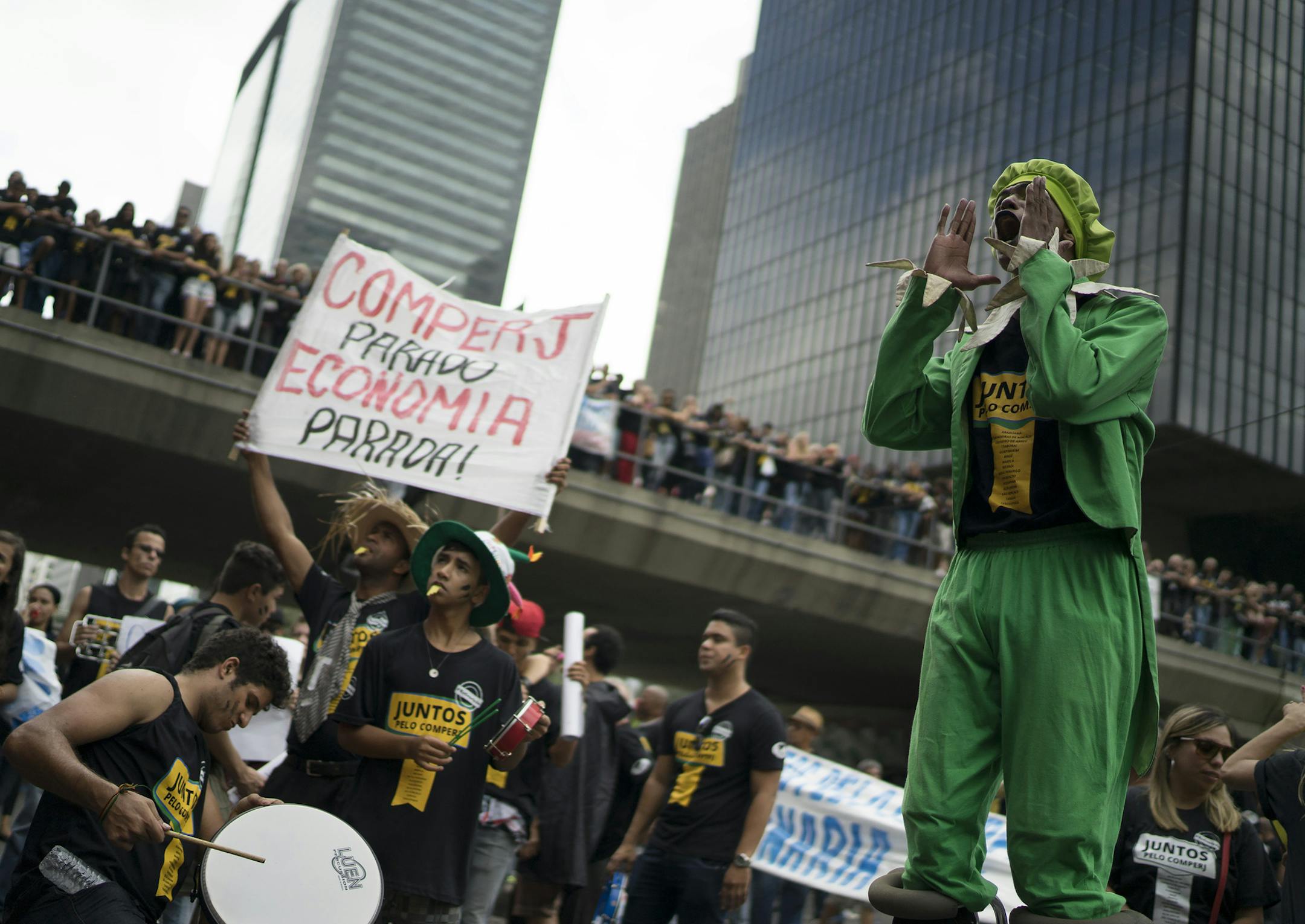
Job centers are rarely upbeat places. In Brazil, where they are often a last resort for those who lack the personal connections that lubricate much of life in the country, they can be particularly bleak. Francisco, a 54-year-old driver in line at one in downtown São Paulo, has had no work for over two years. The lines have never been longer, he sighs. "It's the crisis."
Brazil's growth has been anemic for years. It averaged 2 percent a year during President Dilma Rousseff's first term in office from 2011 to 2014 — despite booming global demand for the country's soybeans, iron ore and oil.
Government meddling with the private sector, combined with excessively loose monetary and fiscal policy, sapped confidence; investment dried up and inflation soared. Without the crutch of high commodity prices, GDP has now collapsed (by 1.9 percent in the second quarter of 2015, compared with the first), pulling the hitherto resilient labor market with it.
Nearly 500,000 jobs have been cut since January. Researchers at Fundação Getulio Vargas, a business school, reckon another 2.5 million will be shed before the end of 2016. Unemployment rose to 7.5 percent in July, from 4.9 percent a year earlier — the fastest annual rise on record. It is expected to hit roughly 10 percent at the end of next year, and stay there for some time. Speak to Brazilians and it is hard to find anyone without a friend or family member on the dole.
From flophouses to boardrooms, moods darkened further in the wake of the decision this month by Standard & Poor's to demote Brazil's debt to junk status, following Rousseff's inept efforts to cast onto an uncooperative Congress the responsibility for balancing the budget.
The rating agency subsequently downgraded dozens of big Brazilian companies, including several large banks. Petrobras, the state-controlled energy firm that is also at the center of Brazil's biggest-ever corruption scandal, earned another dubious distinction as the world's largest company without an investment-grade credit rating. At the start of the year Petrobras accounted for about one-tenth of total Brazilian investment; now it may need to trim its capital expenditure by even more than the 40 percent it announced in June.
S&P's decision mainly reflected pre-existing worries about the Brazilian economy. Neither the stock market nor the real — down by 30 percent against the dollar since January — nose-dived in the days after the announcement; this suggested that a return to junk status had largely been priced in.
But the news has certainly added to the gloom. Already-high borrowing costs for both the public and private sector will rise, and with them the risk of further downgrades. Pension and mutual funds that can only hold investment-grade assets will offload Brazilian bonds at a brisker pace, in anticipation of similar moves by Moody's and Fitch. Typically, two of the big three rating agencies need to slap a "junk" label on a country's bonds before such funds are obliged to divest.