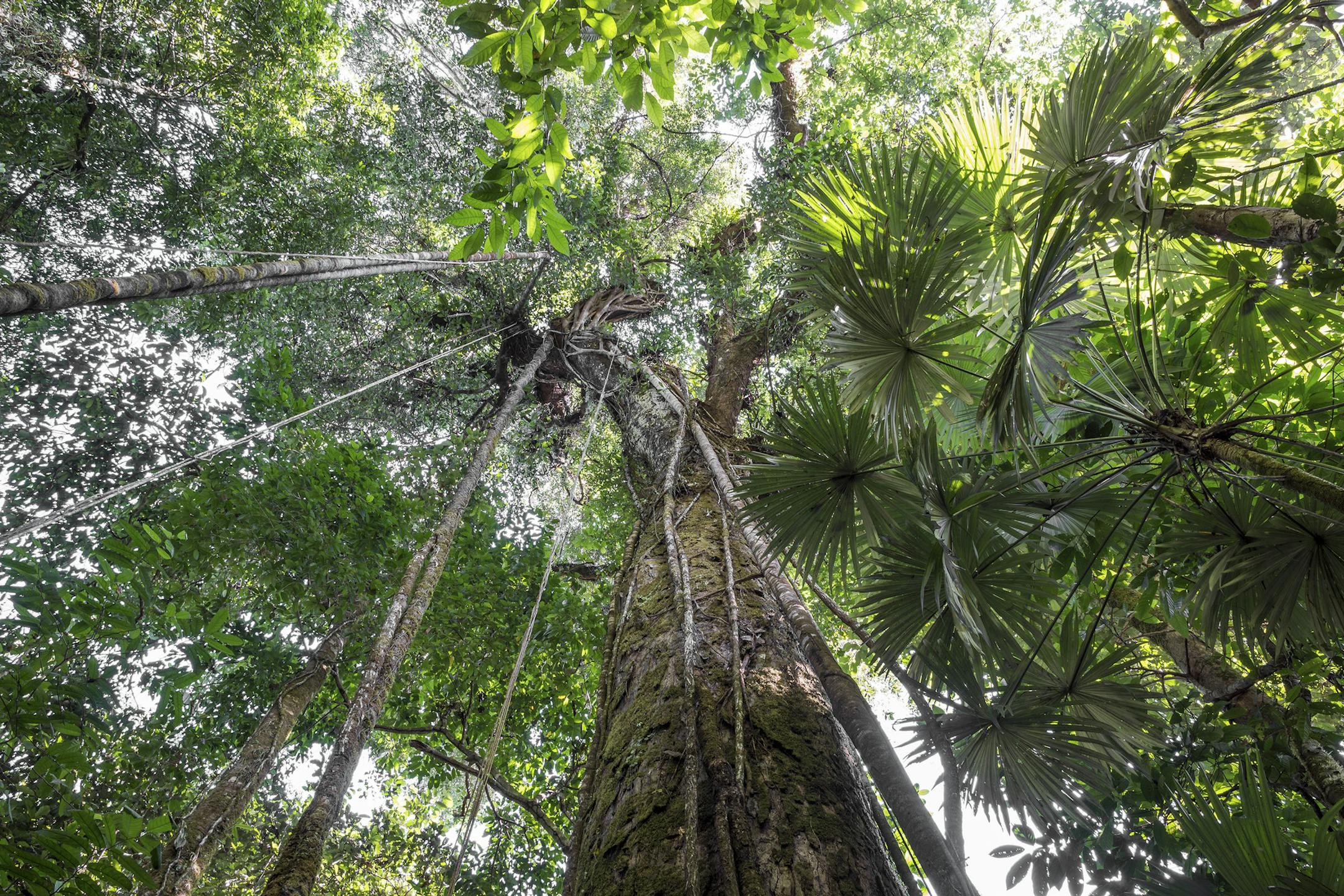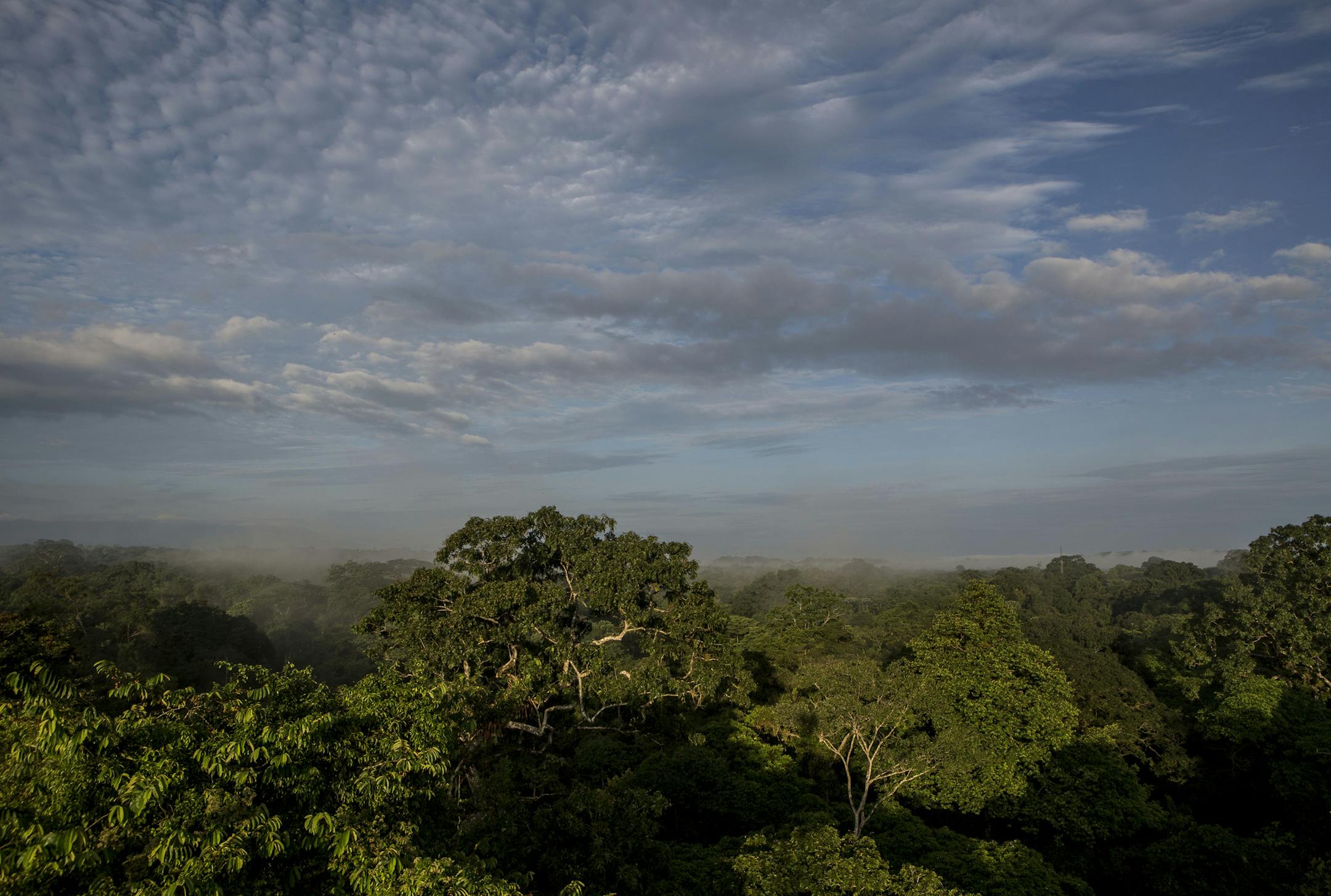
Humans appear to be delivering one-two punches to tropical rain forests, with new research projecting that climate change will reshape how the ecosystems recover following logging.
Scientists simulated how different trees in tropical rain forests will respond to prolonged droughts triggered by climate change, based on 14 years of data from Costa Rica study plots. Their findings suggest that profound changes lay ahead for these important ecosystems around the world, and that the changes may accelerate global warming.
Although numerous studies have already investigated how tropical forests will be affected by global warming, most of them have involved mature stands of trees. "Yet the majority of tropical forests in the world are secondary forests — forests that are recovering from some kind of disturbance," said María Uriarte, a Columbia University ecology professor who led the study published in Functional Ecology.
The findings show that tropical rain forest tree species that have harder wood and tougher leaves will better withstand droughts triggered by global warming than others, which may wither around them.
That could lead to more open rain forests that capture and store less carbon pollution than before — a feedback that would exacerbate the problem of global warming. The findings also indica te that the rain forests could also take longer to recover after being cut down.
"The species that tend to be resistant to drought grow more slowly than those that are sensitive to drought," Uriarte said.
Despite international efforts to curb tropical deforestation, countries such as Brazil, Indonesia and Congo continue to see their forests cut down at worrying rates to produce wood, paper and charcoal and to clear space for farming. The research "doesn't tell us about the vulnerability of the entire forest" as it regrows following logging, said William Anderegg, an ecologist at the University of Utah. "But it does give us a clearer picture of which trees might be the winners and the losers, and that's very useful."