

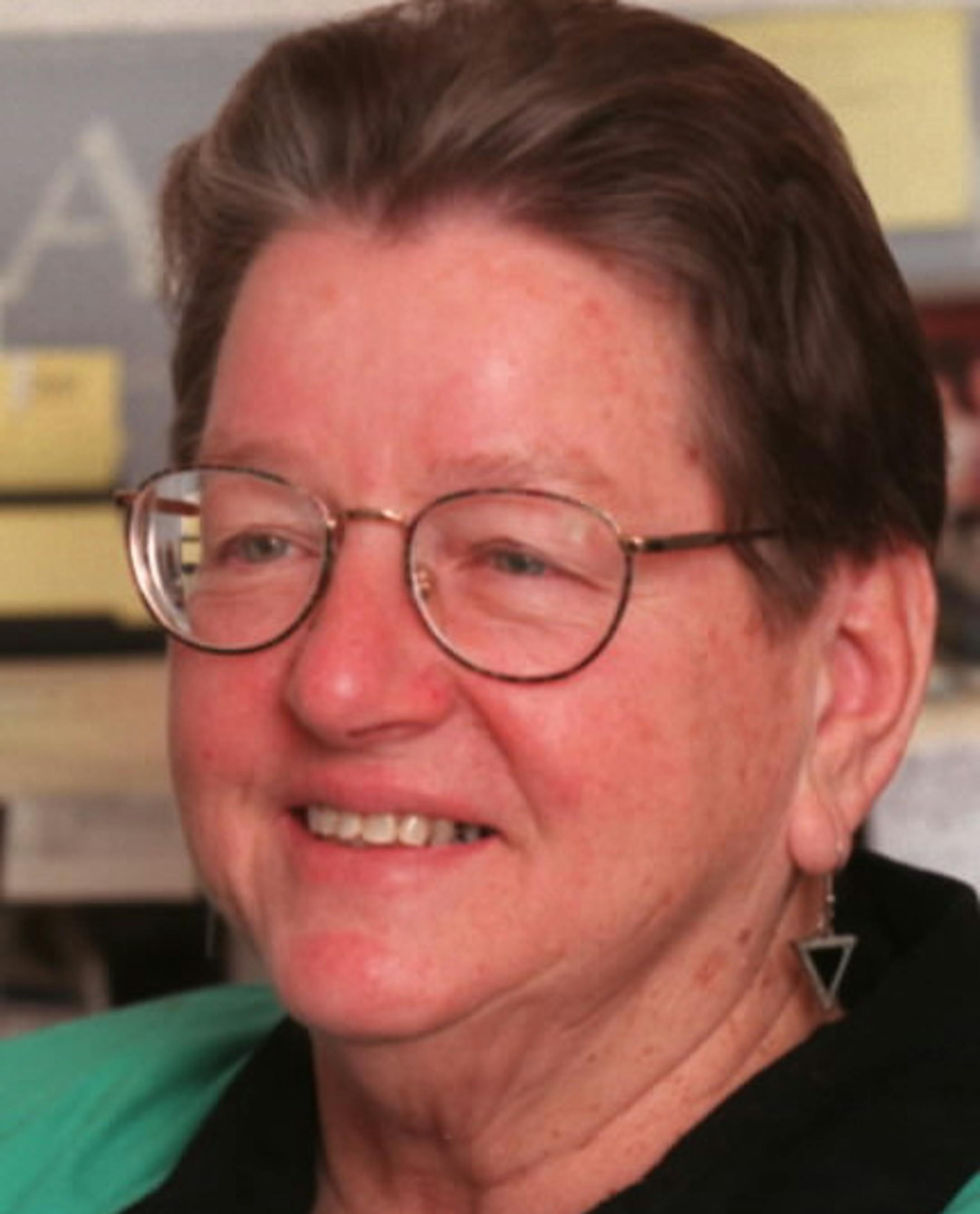
Annalee Stewart was an outspoken activist for peace and against racism, but for years she remained silent about one issue close to home: gay rights.
The University of Minnesota social work professor and her partner each adopted sons from Korea as single women — a groundbreaking move in 1970s Minnesota. For 20 years, to Stewart's family and friends, the two women were roommates. But when Stewart came out in her 50s, she gradually staked out a public role as a Twin Cities gay rights advocate. At a time when many in her social circle still balked at identifying as lesbian in the media and other public forums, she spoke openly about aging in the gay community and became an early proponent of gay marriage.
Stewart died this month of complications from Alzheimer's disease. She was 89.
"My mom lived an interesting life, and it was always about helping your neighbor," said her son, Steven. Stewart is also survived by a granddaughter.
Stewart grew up in the Boston area in a family of two Methodist ministers. She moved to Minnesota in the 1950s, where she worked in juvenile probation with Hennepin County and later with the state. She got a master's degree from the University of Minnesota School of Social Work and went on to teach there for the rest of her career.
During her time in graduate school, she met her first partner. They eventually became the first in Minnesota to adopt internationally as single women. Her son said Stewart's experience working with young offenders had inspired her to change the life of a child. He was 10 when he arrived in Minnesota.
Stewart had joined demonstrations to integrate a playground in 1950s Washington, D.C., protested the Vietnam War and gotten arrested several times during protests against defense contractor Honeywell.
In her classes at the U, she guided students as they explored differences in American society, recalls Megan Morrissey, the School of Social Work's associate director who took Stewart's Ethno Cultural Concepts class in the 1980s. She brought in guest speakers from marginalized communities and dispatched students to events — from powwows to community meetings where they might be the only whites in attendance — that would open a window into communities different from their own.


