

When the skies opened Tuesday night and Wednesday, dumping as much as 10 inches of rain on parts of Duluth, and drenching the North Shore, more was threatened -- and lost -- than roads, homes, vehicles and zoo animals.
It's possible, even likely, that an entire year class, and possibly two, of steelhead also vanished.
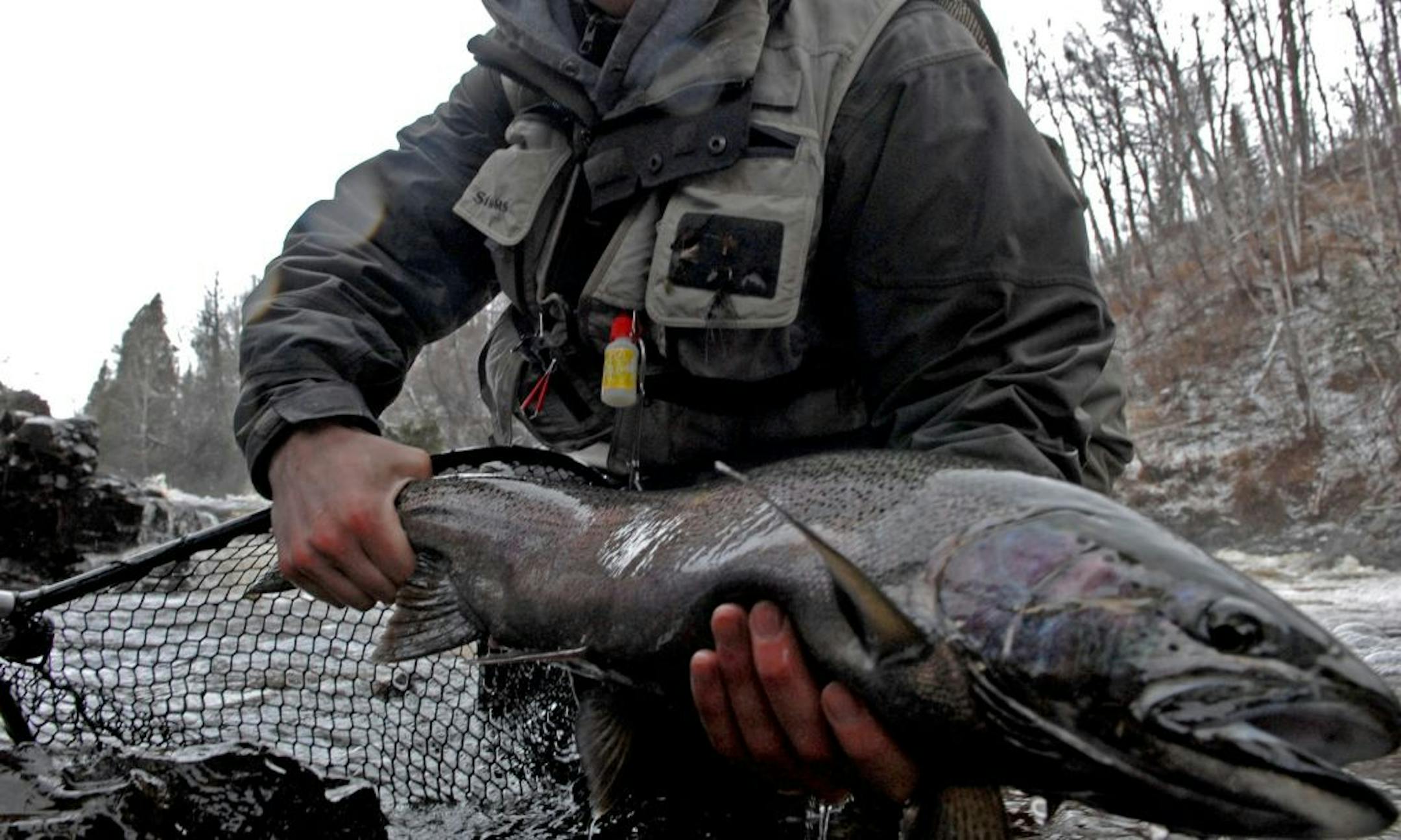
Migratory rainbow trout, or steelhead, were introduced into North Shore streams in the late 1800s. River-bound for their first two years, they subsequently spend most of their adult lives in Lake Superior, before re-entering their birth streams to spawn beginning at about age 4.
A complex, delicate species, it is highly prized by specialist anglers who in early spring often brave sleet, snow and high winds for a chance to hook even a single fish.
Complicating matters for steelhead and also for brook trout that inhabit North Shore streams, downpours like the one this week aren't well-absorbed by the region's clay soils, which encourage fast runoffs.
This differs from the boggier, sandier soils that make up the watershed of Wisconsin's Brule River, lying just across Lake Superior from Minnesota's North Shore. Rainfall there is much more likely to be absorbed than cascade quickly into Lake Superior.
Additionally, lands surrounding northern Wisconsin rivers lack the North Shore's steep gradient -- which combined with its sandier landscape allows Wisconsin rivers to better protect their fish even during monumental rain events.
Return now to the North Shore.


