

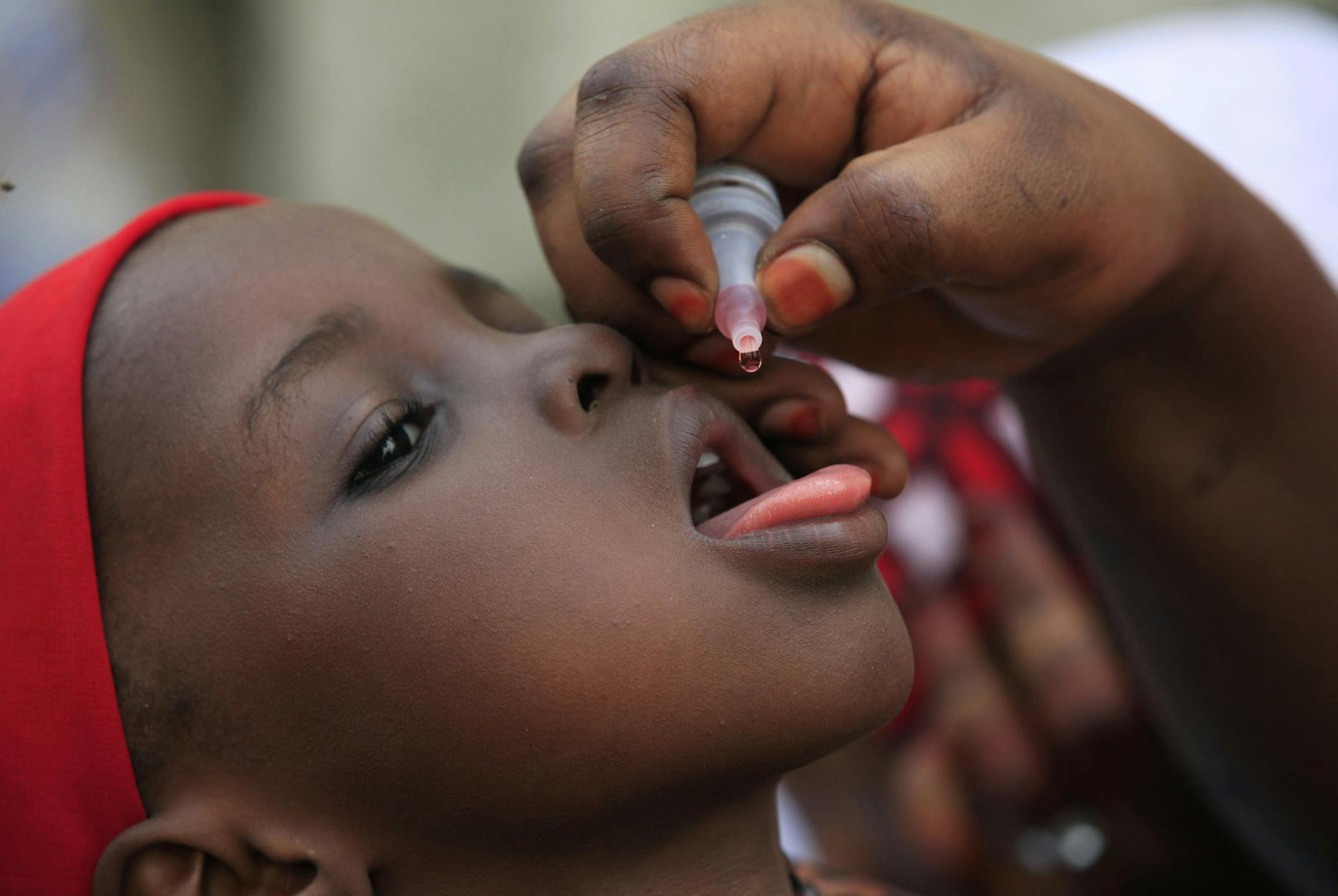
While the United States struggles to contain the growing measles outbreak, the whole continent of Africa is on the verge of eradicating another infectious disease, the crippling polio virus. Over the last 30 years, Rotary and its partners in the Global Polio Eradication Initiative (GPEI) have made remarkable progress toward a polio-free world, reducing global polio cases by 99 percent.
Only three countries remain polio endemic: Pakistan, Afghanistan and Nigeria. Stern challenges remain. Pakistan is a reservoir for the virus, with more than 300 cases of wild poliovirus last year; most of Afghanistan's 28 polio cases in 2014 were imported from its neighbor. Insecurity in Pakistan and in Nigeria, in particular, have made it challenging for health workers to access all children with the polio vaccine. Despite this, Nigeria reduced its polio caseload by almost 90 percent in 2014, and the entire continent of Africa has not seen a case since August 2014.
Some of the drivers of this progress in Nigeria include creative solutions, such as the installation of vaccination posts on the perimeter of destabilized areas to target transient populations. Rotary leaders on the ground have advocated tirelessly for the polio vaccine, educating religious and community leaders about its benefits.
Polio vaccination also has been combined with other badly needed health care interventions in the country, such as measles vaccination and distribution of malaria nets. Health clinics have been set up so that children brought in for polio vaccinations can also receive other necessary medical care, making the trip more worthwhile for mothers.
When Rotary, one of the founding partners of the GPEI, first launched its PolioPlus program in 1985, the idea was that by fighting to eradicate polio, the global infrastructures to fight other diseases also would be strengthened. In Nigeria, personnel trained and equipped to monitor the spread of polio were able to support the efforts of the Nigerian government to track possible carriers of the Ebola virus last year. This facilitated swift and effective quarantine procedures and blood sample analysis to contain the virus.
Rotary also has focused on setting up viable "cold chains," from refrigeration units in major cities to kerosene refrigerators in areas without electricity to special carrying cases that allow the polio vaccine to be kept cold during vaccination campaigns in rural areas. All of these materials become the property of the national health services and can then be used for other purposes.
Similar methods were vital in making India — long considered the toughest place to eradicate polio — free of the virus. The country marked four years since its last case in January.
All of Nigeria's gains have been achieved amid ongoing instability in the north of the country. However, this progress is fragile. Polio eradication must remain a top priority at all levels of government in Nigeria, and the country must continue to work to achieve higher levels of immunity in vulnerable areas, particularly in the north.


