
A lead in D.B. Cooper case pops up 40 years later

New evidence points to a possible suspect, a man who died about 10 years ago, in the never-solved 1971 skyjacking.

August 2, 2011 at 5:20AM
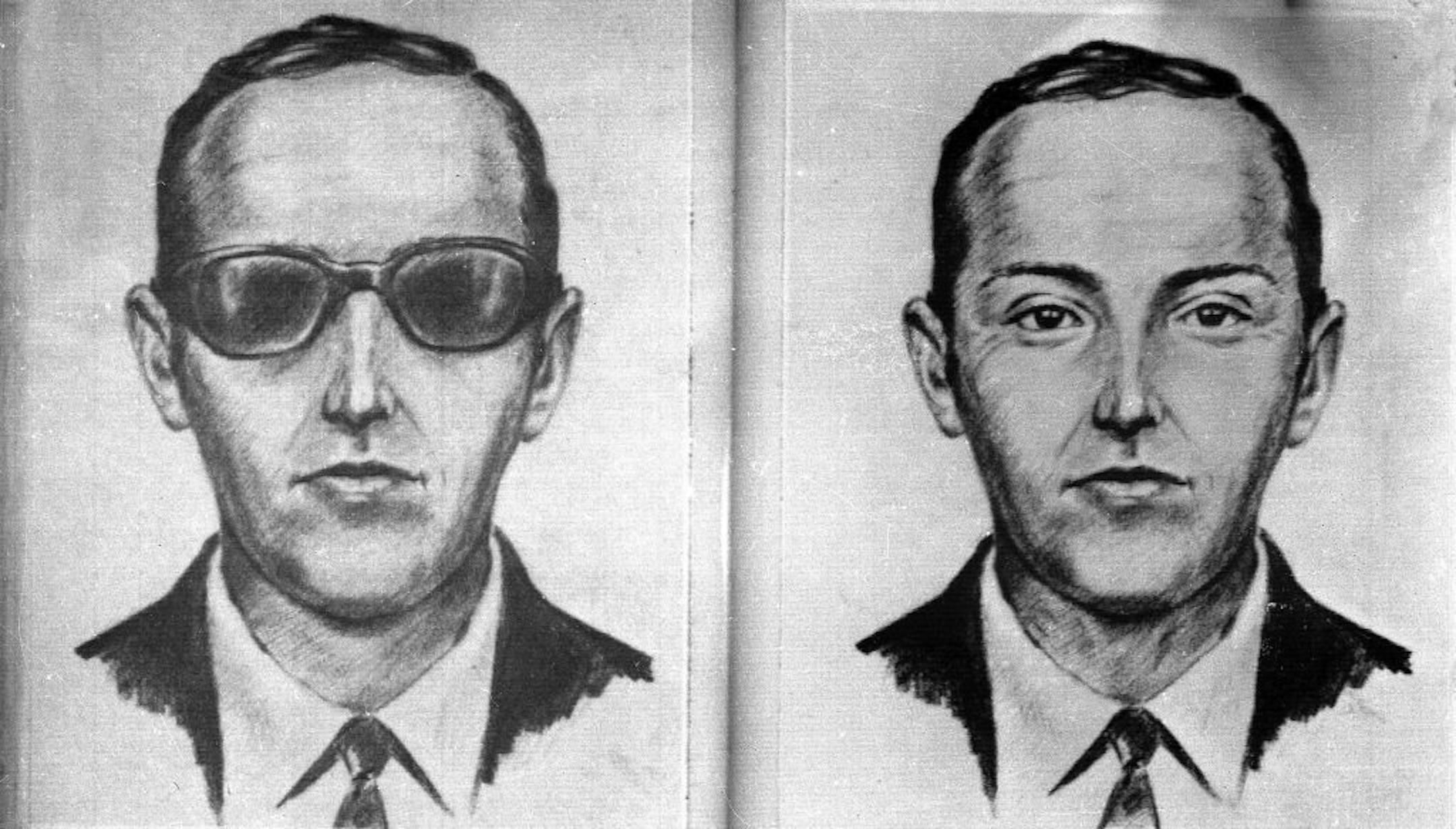
A 1971 artist's sketch released by the FBI shows the skyjacker known as 'Dan Cooper' and 'D.B. Cooper', was made from the recollections of passengers and crew of a Northwest Orient Airlines jet he hijacked between Portland and Seattle, Nov. 24, 1971, Thanksgiving eve. FBI spokeswoman Ayn Sandalo Dietrich tells the Seattle Times that a law enforcement member directed investigators to a person who might have helpful information on Cooper.
A 1971 artist's sketch released by the FBI shows the skyjacker known as 'Dan Cooper' and 'D.B. Cooper', was made from the recollections of passengers and crew of a Northwest Orient Airlines jet he hijacked between Portland and Seattle, Nov. 24, 1971, Thanksgiving eve. FBI spokeswoman Ayn Sandalo Dietrich tells the Seattle Times that a law enforcement member directed investigators to a person who might have helpful information on Cooper. (Associated Press/The Minnesota Star Tribune)

SEATTLE - A "promising lead" in the 40-year-old D.B. Cooper skyjacking case has led the FBI to a man who died about 10 years ago, an FBI spokesman said Monday.

Special agent Fred Gutt said the bureau's Seattle office has been investigating for more than a year a lead that has "more credibility and detail" than other tips regarding the unsolved skyjacking of a Seattle-bound flight on Thanksgiving Eve 1971. Gutt declined to identify the man, who died of natural causes.

"There is a basic story that seems logical," Gutt said.

If the man is identified as the legendary hijacker in America's only unsolved skyjacking, it would mean he lived about 30 years after parachuting from the Northwest Orient Airlines plane with $200,000 in cash, defying those who concluded he couldn't have survived the leap.

Gutt said further investigation is warranted, noting little contradictory information has emerged that would rule out the possible suspect. But he said that doesn't mean the case is about to be solved.

Quest for fingerprints

The FBI laboratory has determined that a guitar strap that belonged to the man is not suitable for the lifting of fingerprints to compare to partial prints found in the plane, Gutt said.

"It doesn't mean it's a dead end," Gutt said, adding that the case agent is working with the man's family to obtain other items with better surfaces from which to lift fingerprints.

The FBI has learned that the man reported an auto injury in 1971, perhaps to explain injuries suffered in the parachute jump, KING-TV in Seattle reported.

Gutt said the FBI is still actively pursuing a number of leads in the fabled skyjacking, in which the hijacker jumped from the rear of a Boeing 727.

FBI spokeswoman Ayn Sandalo Dietrich said on Sunday that agents were investigating the "promising lead," a day after a British newspaper reported the development in a lengthy feature story on the notorious case.

Dietrich said the FBI received a tip from a member of law enforcement about a credible person with information on the case.

The passenger who jumped from the Northwest Orient jet on Nov. 24, 1971, identified himself as "Dan Cooper." A day after the skyjacking, FBI agents checked out a Portland man with the name "D.B. Cooper." Although that man was quickly cleared, the name forever stuck in news-media accounts. The tall, dark-complexioned man paid $20 cash for a one-way flight from Portland to Seattle. The jet was barely in the air before he told a flight attendant he had a bomb and showed her a briefcase holding several red cylinders and a nest of wires.

When the plane landed in Seattle, passengers were exchanged for parachutes and ransom money supplied by the airline. The plane took off and headed south toward Mexico with the hijacker and the flight crew. About 30 minutes later, a cockpit warning light showed the rear stairway was fully extended. The hijacker bailed out into freezing darkness.

It wasn't until the plane landed for more fuel in Reno, Nev., that the crew knew for sure he was gone.

The man was never found, and only a small portion of the ransom money was ever recovered -- along the Columbia River in 1980.

about the writer

about the writer

STEVE MILETICH, Seattle Times

More from No Section

See More
FILE -- A rent deposit slot at an apartment complex in Tucker, Ga., on July 21, 2020. As an eviction crisis has seemed increasingly likely this summer, everyone in the housing market has made the same plea to Washington: Send money — lots of it — that would keep renters in their homes and landlords afloat. (Melissa Golden/The New York Times) ORG XMIT: XNYT58
Melissa Golden/The New York Times

It’s too soon to tell how much the immigration crackdown is to blame.