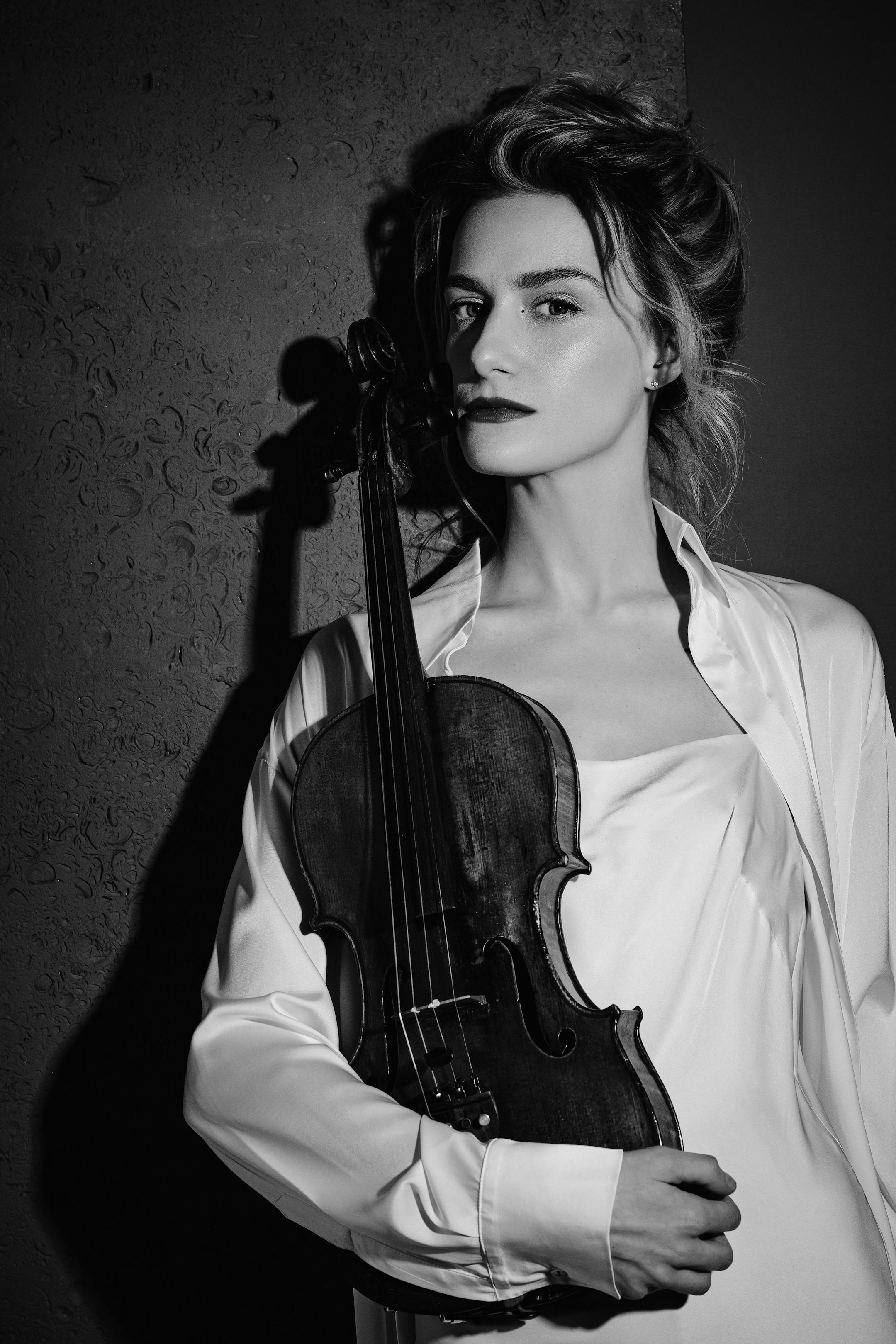
Early in the morning on Feb. 24, Ukrainian violist Kateryna Suprun and her 2-year-old daughter were startled awake in their beds by a massive explosion. Sirens started to wail in the streets as Russian missiles rained on downtown Kyiv.
Like many of her friends and neighbors, Suprun never believed this could actually happen; but within hours, she was among tens of thousands of Kyiv residents grabbing what they could and evacuating the city. Suprun, her daughter and their two cats navigated traffic jams and panicked crowds during a harrowing four-day drive to the Polish border, where locals supplied them with food and water.
"I will remember for the rest of my life the moment when we crossed the border," Suprun, 31, said in an email (translated from Ukrainian), "because I didn't know if I would ever return, [if] I would see my family, and whether my beautiful country would exist."
Suprun is among an estimated 5 million Ukrainian refugees who have fled their home country; another 7 million remain in Ukraine, but displaced from their homes. Now, nearly six months after the first strike on Kyiv, Suprun is one of 74 musicians banded together and touring the world as the Ukrainian Freedom Orchestra.
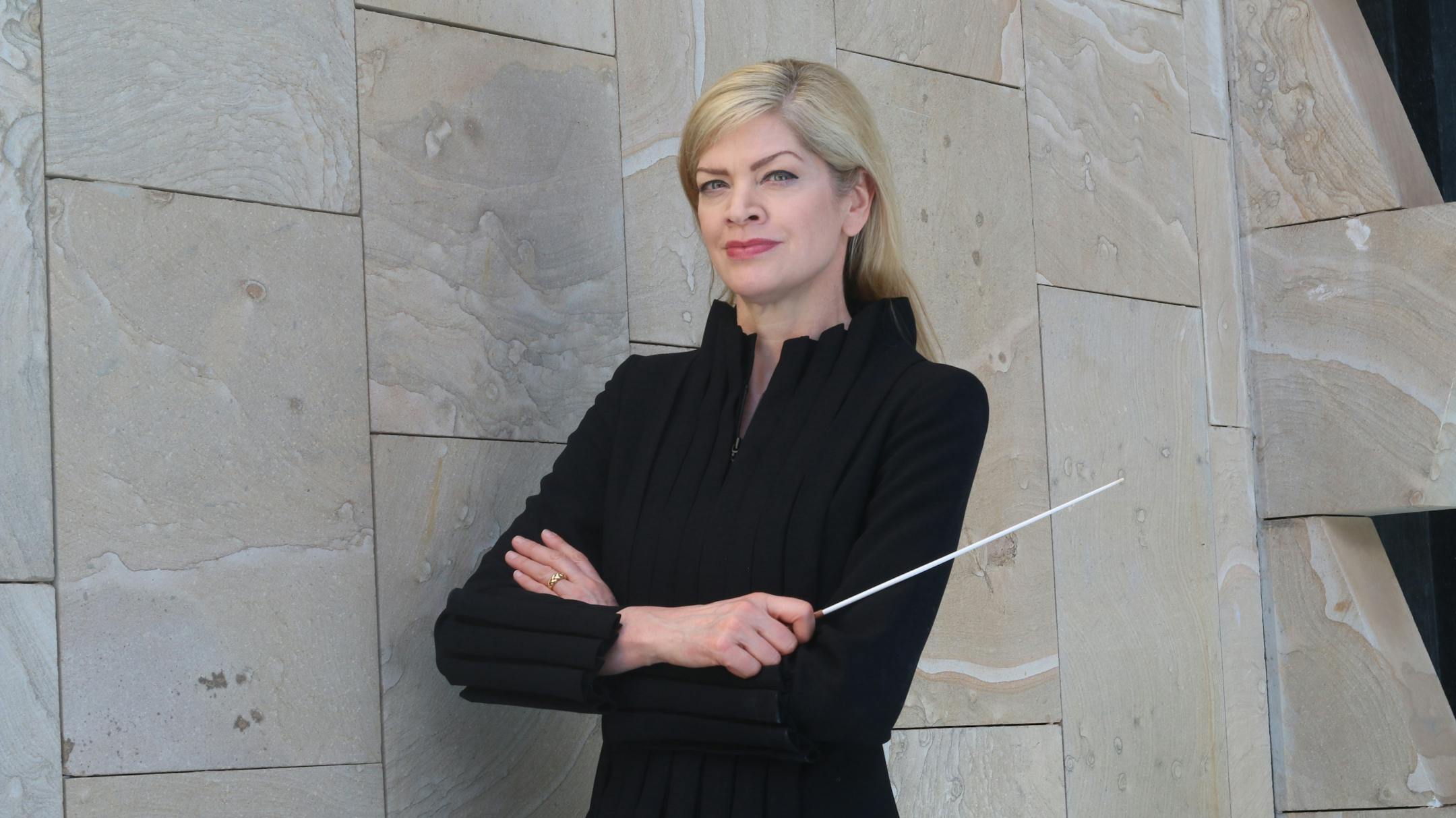
The orchestra, conceived and led by the Canadian Ukrainian conductor Keri-Lynn Wilson, is made up entirely of Ukrainian refugees, Ukrainian members of European orchestras and musicians representing the Kyiv National Opera, the National Symphony Orchestra of Ukraine, the Lviv National Philharmonic Orchestra, Kharkiv Opera and other Ukrainian ensembles.
Formed through a collaboration between the Metropolitan Opera (Wilson's husband is Met General Manager Peter Gelb) and the Polish National Opera, the orchestra coalesced quickly around a mission to stage, as the Met news release put it, "artistic defense" of its homeland. Its debut concerts across Western Europe and Britain have been met with rave reviews and long ovations. (The BBC recently released a stream of the orchestra's Proms performance at Royal Albert Hall.)
For Wilson, 55, the project is deeply personal. One of her cousins, originally from the southwestern Ukraine city of Chernivtsi, went to the front lines in Donbas at the start of the invasion and is still there. His sister is a volunteer, driving trucks with medical supplies, and Wilson sometimes sends her supplies she can't find — goggles, camo gloves, protective vests.
Wilson's great-grandparents emigrated from Chernivtsi to Winnipeg, part of a massive diaspora of Ukrainians to Canada through the first few decades of the early 20th century. But when she refers to Ukraine as a "second home," she clarifies that "home" includes Russia.