THE STATE OF SOCIETY
Racism feeds violence, and violence feeds racism
How, when, and why did our nation become hopelessly racist (if that is indeed what happened)? Racism was not readily apparent in 2008, as a black candidate for president won decisively. It was not apparent in 2009, when a black president's black nominee as attorney general was overwhelmingly approved by the Senate. But in 2010, Cesar Chelala wrote an article titled "Is Racism Still Alive in America?" In it, Chelala said, in part, "After the initial high of Obama's election, there is now a changed atmosphere in the country. Violence is an inescapable companion to racism. And violence, or violent outbursts racially motivated, are certainly on the increase in the U.S."
Chelala's words are clearly more appropriate today than they were in 2010. The message couldn't be more clear than on the front page of the Star Tribune for July 8, where the first headline read, "Snipers ambush Dallas police, killing four." (By the time this page went to press, the toll had risen to five.) The rest of the page concerned the killing of a black man by local police.
By now, three points should be clear to all. First, for some reason, our system isn't working. Second, as Chelala told us, the subjects of racism and violence cannot be considered separately, but only together. Racism feeds violence, and violence feeds racism. Third, any solution must begin with our black president. This is not to put the blame at the president's feet; Chelala's article goes on to say, "Threats against President Obama have increased by 400% since President George W. Bush left office, the highest numbers on record." This suggests that more fault may lie with the president's most militant opponents than with the president. Nevertheless, only he is in a position to formulate the necessary response.
I would suggest that the president direct the Department of Justice to convene an ad hoc congress consisting of invitees from the fields of sociology, education, criminology, law enforcement, churches and social-service groups, special-interest groups (especially the NAACP, Black Lives Matter and affiliated groups), the gun lobby, urban renewal, and others. Each should be invited to speak and even express their anger one time — but only after agreeing to listen respectfully as all others speak. After that, a representative of the Justice Department should act as moderator of a forum on how to end both racism and violence. The end result should be a report to be reviewed by the attorney general then released to the president and the public.
If this proposal is less than perfect, I submit that it is at least more promising than anything that is happening today.
Robert W. Thurston, Plymouth
Again, we are spiraling down a hole of racism supported by the narratives of police brutality and a genocide on people of color. In this crazy age of video access, it is almost impossible to not have a visual recording of these events, and they are chilling. Racism exists. Police brutality exists. And too many black lives are lost.
Yet, these narratives always exist within a binary as if we can only choose one of two sides. Black lives or police. The outrage of the last three days has now been punctuated by the slaughter of Dallas police officers. What do we do? Is it black lives or police lives?
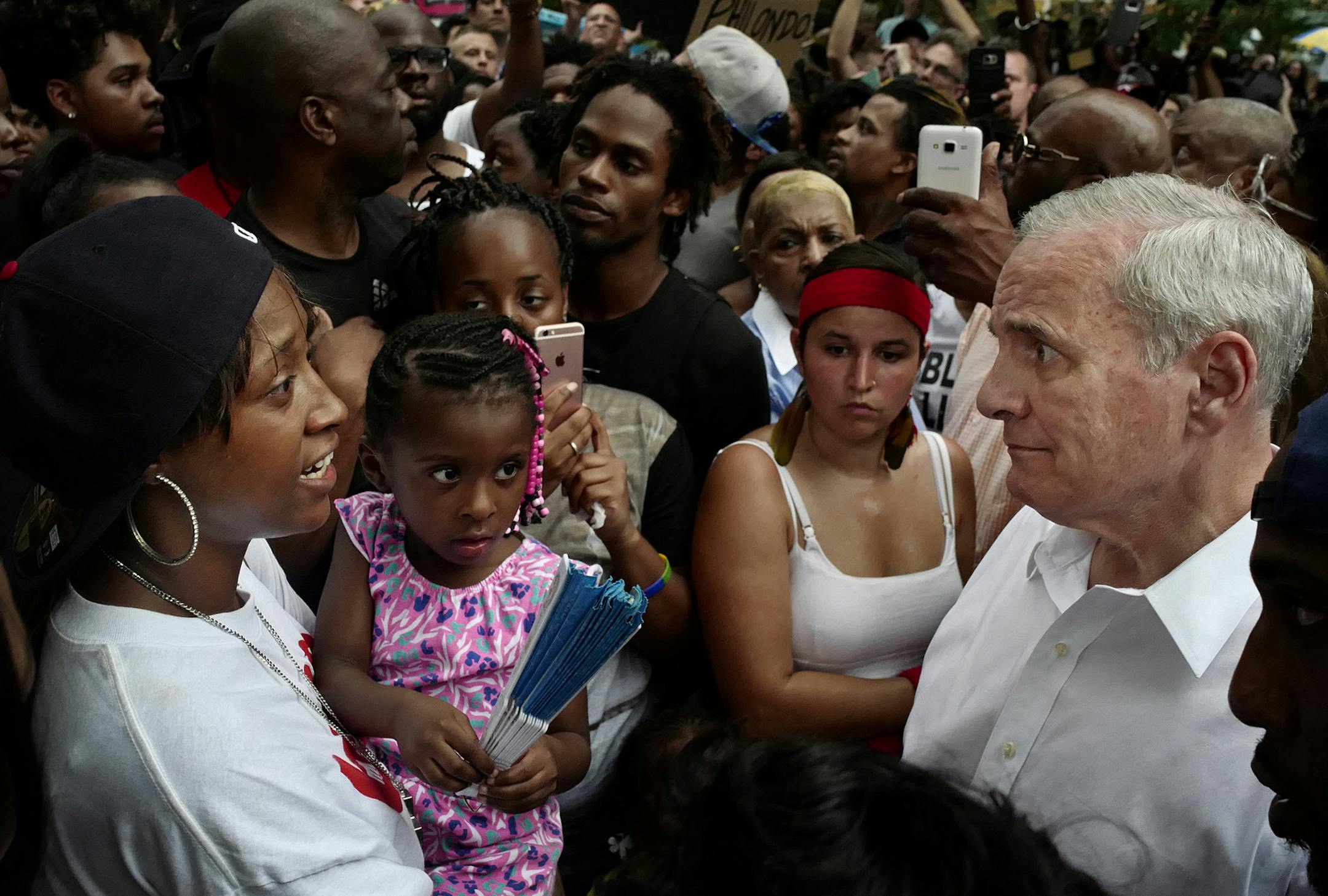
The heartbreaking footage in the aftermath of Philando Castile's shooting is chilling and surreal. Neither girlfriend (who is not allowed) nor police officer touch the man dying between them. She bravely and respectfully engages the officer in a debate about what happened. He is paralyzed.