
Roll up a sleeve, Minnesota — we know how to stop measles

May 11, 2019 at 9:02PM
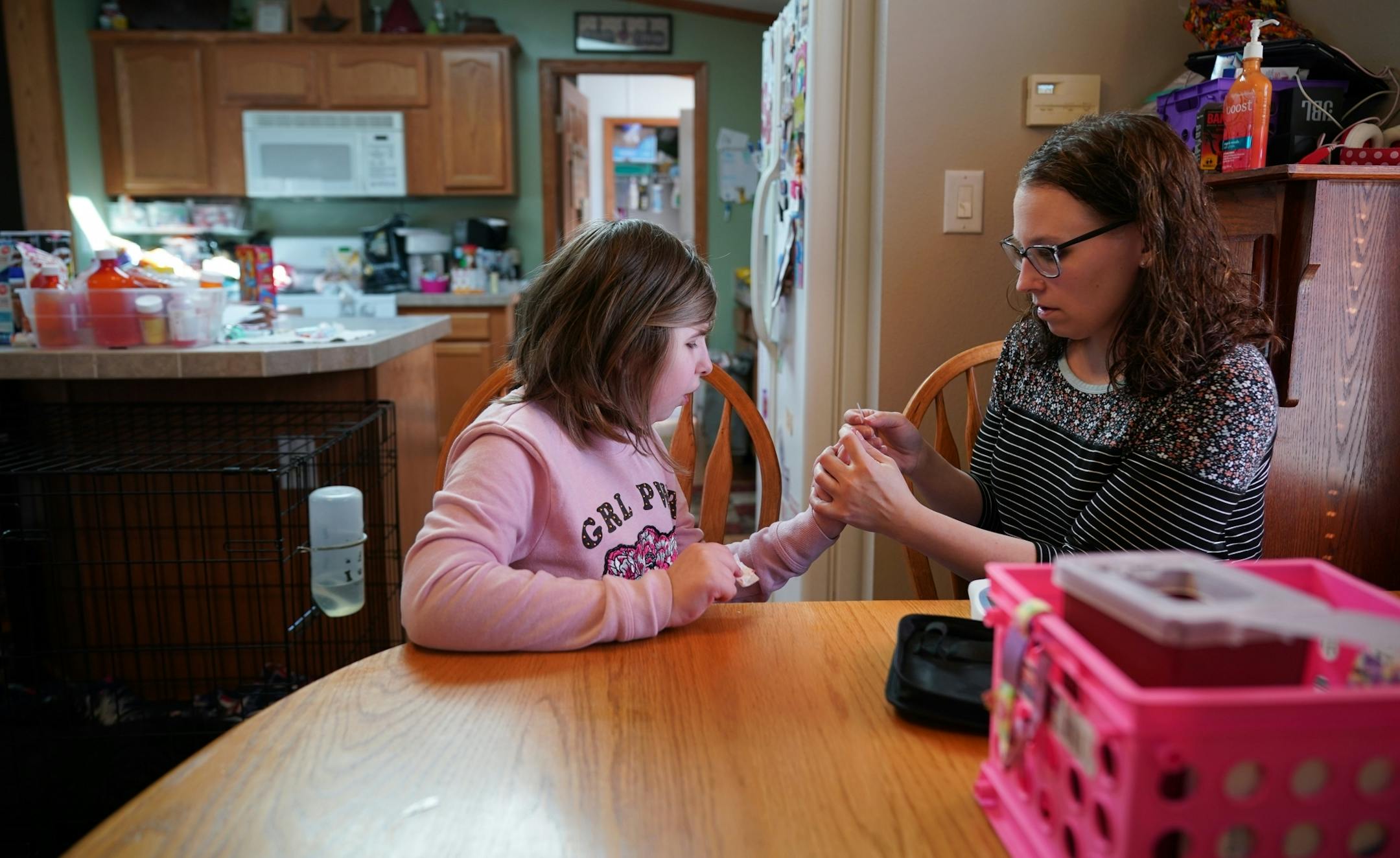
Linsey Rippy tested Madi's blood with a small stick and a blood test. She then called the results into her doctor at the Mayo Clinic. The INR test measures the thinness of Madi's blood, necessary after her heart transplant. Madi is 12.
Linsey Rippy conducted a home blood test on her daughter Madi, who has a transplanted heart and a weakened immune system and needs others to be vaccinated in order to be protected. (Star Tribune/The Minnesota Star Tribune)

There have been zero cases of measles in Minnesota this year, no thanks to me.

Measles is back in a big, dumb way. We've seen more than 760 cases across 23 states this year. It's in Iowa and it's on airplanes and it's on that cruise ship full of Scientologists down in the Caribbean.

Minnesota is surrounded. And our defenses are spread thin.

A third of Minnesota schools have kindergarten vaccination rates so low they've lost the herd immunity that protects the unvaccinated along with the vaccinated.

The same herd immunity, it turns out, that was protecting me.

Don't ask me how I ended up with no immunity to measles. I've had my shots. But my doctor did a blood test to see if I'd ever had chickenpox. The results came back: immune to mumps, immune to German measles, not immune to chickenpox, not immune to measles.

Herd immunity protected me. It was my turn to protect the herd.

I scheduled a quick appointment and a nurse gave me a fresh hit of the MMR vaccine while she was immunizing me against chickenpox. She assured me I was at least as brave about it as the babies she usually vaccinates.

"We really rely on each other to vaccinate," said Lynn Bahta, the Minnesota Department of Health's immunization clinical consultant, and one of the medical experts working to convince parents not to walk away from a safe, effective cure to a virulent and potentially lethal disease. "We can keep a wall of protection up for those who can't take the vaccine or are too young to get it."

There are cracks in that protective wall, spreading from junk science and garbage social media posts that try to tell you the disease is somehow safer than the cure.

Millions of Americans used to come down with measles every year. The disease was so contagious, kids were almost guaranteed to catch it before their 15th birthday.

Every year, tens of thousands of American children were hospitalized with measles. Every year, measles killed 450 to 500 of them.

Then, a miracle. A scientist named John Enders developed a vaccine to fend off the measles virus. By the year 2000, the United States had eradicated measles. New millennium, no reported cases on our shores.

We banished a deadly disease. And then we just let it back in.

Antivaxxers may approach you at this point, muttering about vaccine injury and posting links to Facebook videos in the online comments.

Avoid them as you might avoid someone who stands on solid ground while arguing that gravity is just a theory.

We don't have time to argue with people who've made up their minds.

Measles is spreading. Measles is killing.

It killed 110,000 people worldwide — most of them children younger than 5 — in 2017, according to the World Health Organization. It's killed five people in vaccination-shy Europe this year.

The measles vaccine is safe and effective. But not everyone can get vaccinated. Tiny babies, people with weakened immune systems, people who are allergic to the vaccine ingredients, kids whose parents watched a scary Facebook video; none of them is safe.

The Rippy family isn't safe.

At the start of every school year, Linsey Rippy sends a note about vaccinations to other parents in her daughters' classes. Both her young daughters have undergone heart transplants and are on medication that suppresses their immune systems and leaves them vulnerable to disease.

"The people that are around my kids have to be vaccinated, so we know that we are giving them as much of a safety net as possible," she said earlier this year, when Star Tribune reporters Glenn Howatt and MaryJo Webster analyzed the gaps in Minnesota's vaccine safety net.

It's been two years since Minnesota's last big measles outbreak. Seventy-five people got sick, and a quarter of them ended up in the hospital.

And still, Minnesota is one of those states that allows parents to opt out of vaccinating their children for no medical reason beyond "personal belief." Since that looks unlikely to change in the final weeks of this legislative session, we're going to have to protect the Rippy kids ourselves.

The only way to protect them is to roll up our sleeves, and our kids' sleeves, and measle-proof this herd.

If measles wants to hurt any of us, it's going to have to come through all of us.

jennifer.brooks@startribune.com 612-673-4008 • Twitter: @stribrooks

After both girls get home from school, Linsey Rippy has her daughters Madi, 12, and Sydney, 9, play with a sensory box to de-stress after their day at school. She can more easily talk to them about their day. After that they watch a little TV while Linsey gets dinner ready. ] GLEN STUBBE • glen.stubbe@startribune.com Thursday, March 21, 2019 More Minnesota schools are in danger of losing herd immunity for the measles and other infectious diseases, a Star Tribune analysis shows. This comes
Linsey Rippy’s daughters have had heart transplants and rely on others getting vaccinated. (The Minnesota Star Tribune)
about the writer

about the writer

Jennifer Brooks

Columnist

Jennifer Brooks is a local columnist for the Minnesota Star Tribune. She travels across Minnesota, writing thoughtful and surprising stories about residents and issues.

See Moreicon

More from No Section

See More
FILE -- A rent deposit slot at an apartment complex in Tucker, Ga., on July 21, 2020. As an eviction crisis has seemed increasingly likely this summer, everyone in the housing market has made the same plea to Washington: Send money — lots of it — that would keep renters in their homes and landlords afloat. (Melissa Golden/The New York Times) ORG XMIT: XNYT58
Melissa Golden/The New York Times

It’s too soon to tell how much the immigration crackdown is to blame.