

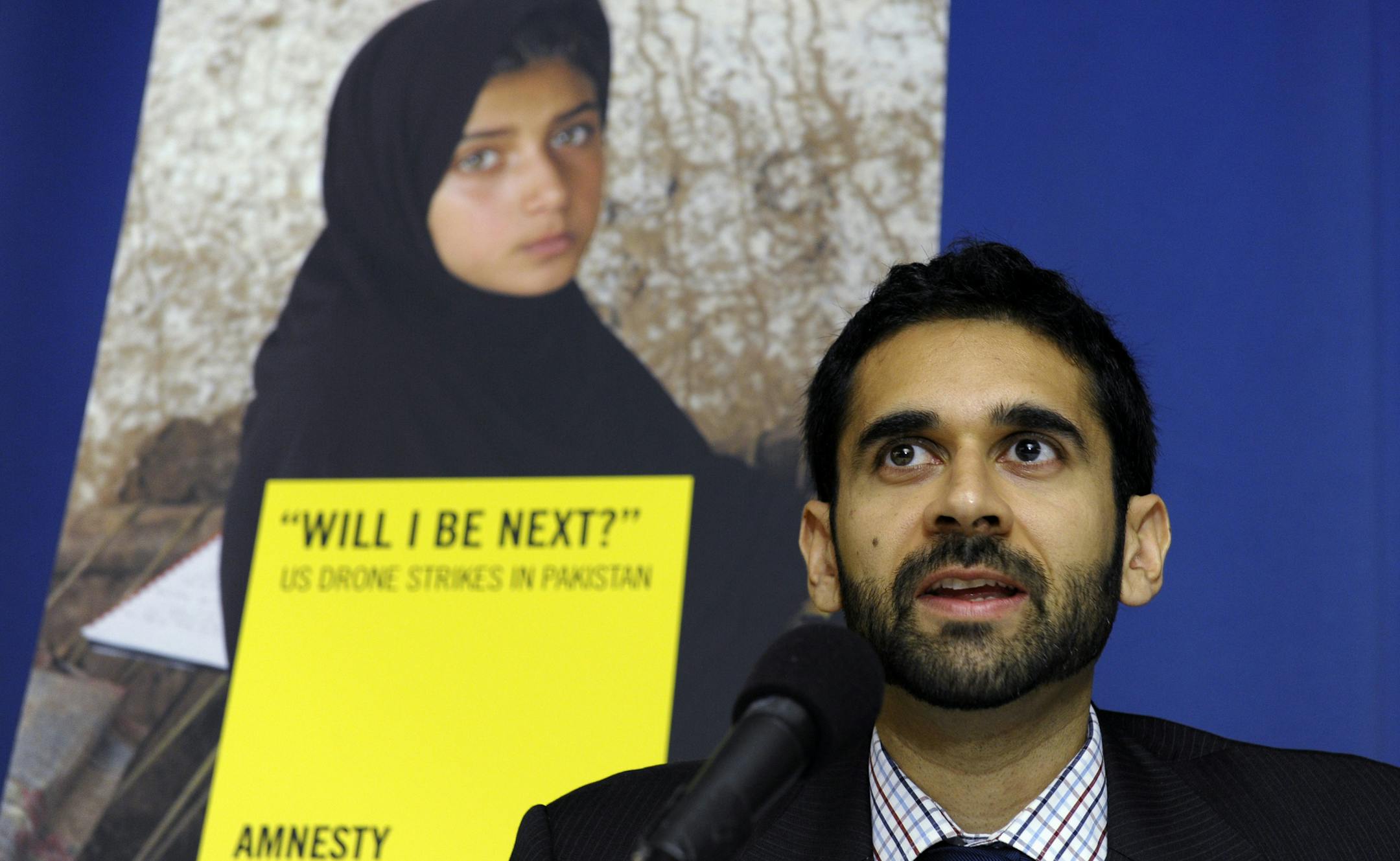
WASHINGTON – U.S. airstrikes in Yemen and Pakistan have killed far more civilians than American officials acknowledge, and many of the attacks appear to have been illegal under international law, according to a pair of reports by human rights organizations based on interviews with survivors and witnesses.
The reports by Amnesty International, which looked into nine strikes in Pakistan, and Human Rights Watch, which examined six attacks in Yemen, also assert that the United States has killed militants when capturing them was a feasible option. In Pakistan, Amnesty found that U.S. missiles have targeted rescuers and other groups of people in an indiscriminate manner that increased the likelihood of civilian deaths.
The reports were released at a news conference Tuesday in Washington.
The CIA had no comment, and the White House declined to respond in detail, but it pointed out that President Obama in May announced tighter rules of engagement that he said would make it less likely civilians would be killed or injured in targeted strikes. Most of the attacks detailed in the two reports took place before Obama's speech.
"U.S. counterterrorism operations are precise, they are lawful and they are effective," White House spokesman Jay Carney said, adding that before drone strikes are used, there must be "near-certainty" no civilians will be killed. In addition, there's a wide gap between the U.S. assessment of civilian casualties and what groups such as Amnesty have determined, Carney said.
Amnesty International said 29 noncombatants died in the Pakistan attacks it investigated, and Human Rights Watch counted 57 civilians dead in six incidents in Yemen, including 41 in a December 2009 cruise missile strike based on bad intelligence from the Yemeni government. Most of the strikes involved missiles fired from remotely piloted drone aircraft.
The authors of the reports acknowledged that in many cases it was difficult to say with certainty whether men killed in a particular strike were members of Al-Qaida or associated forces who had participated in or were planning attacks on U.S. interests.
Relatives of the dead often insist that their loved ones had no connection to extremism. American intelligence officials and their congressional overseers say that in almost all cases, the strikes have hit legitimate targets.


