

When I was in college, another student sexually assaulted me after an off-campus party that took place just two blocks from the nearest dorm.
Yet if the assault had occurred under a draft proposal from the Education Department, as reported by the New York Times on Aug. 29, my university wouldn't have been required to investigate and hold my assailant accountable — because the assault didn't happen on campus property.
That I was sexually assaulted off campus didn't make me any less traumatized. And it didn't make my assault any less of a roadblock to my equal access to education. This leaked rule is as dangerous as it is cruel, as are many aspects of the draft proposal.
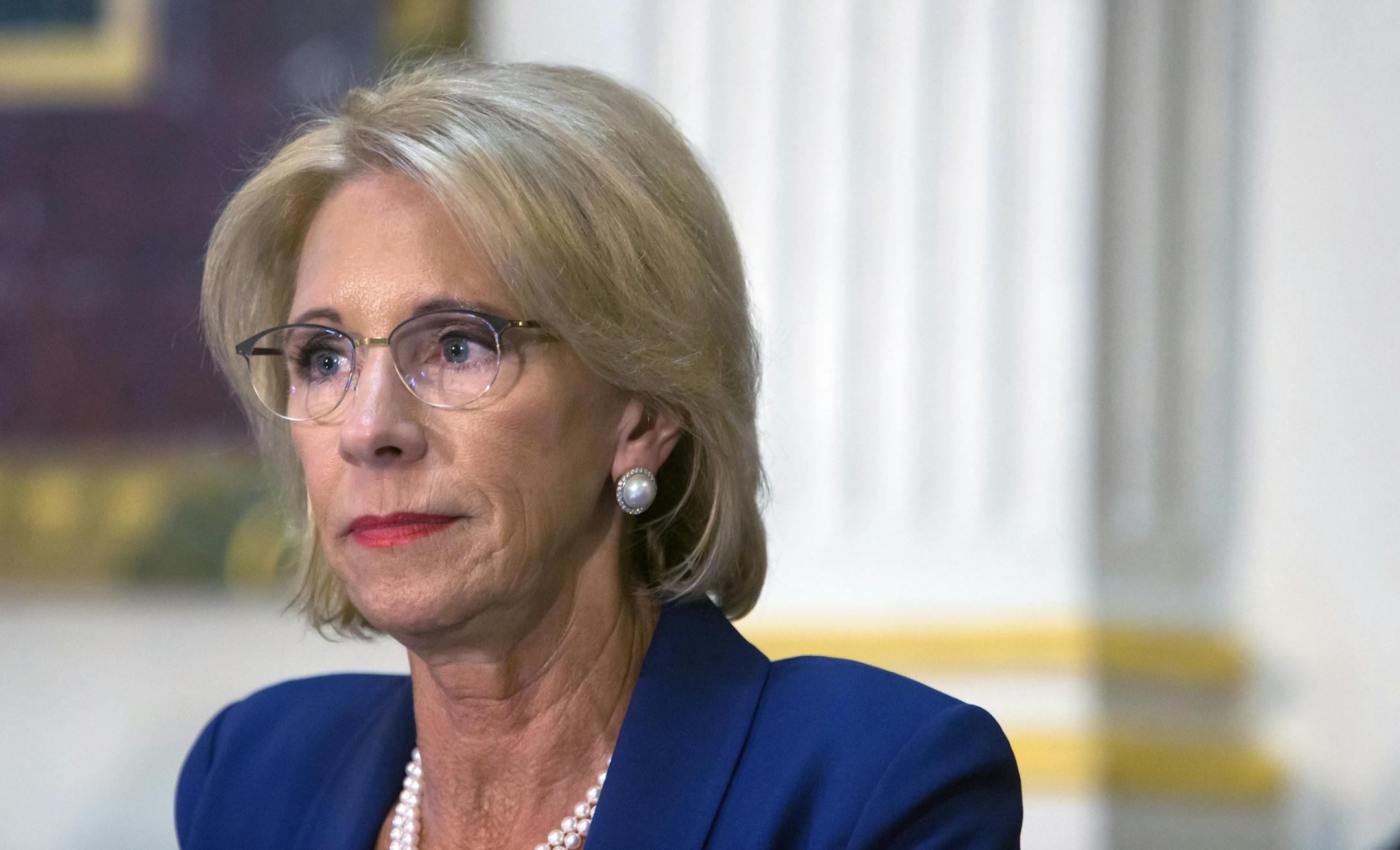
If implemented, Education Secretary Betsy DeVos' draft rule would deprive the thousands of survivors of sexual assault like me of the right to use the Title IX process to seek justice and healing. At best, DeVos' drafted rule would discourage students from reporting sexual violence; at worst, it would deny student survivors their civil rights. This would be especially harmful to survivors from currently and historically underserved communities, making the Title IX process even more inaccessible to marginalized students.
Among the changes included in the proposal is a narrower definition of sexual harassment: "unwelcome conduct on the basis of sex that is so severe, pervasive and objectively offensive that it denies a person access to the school's education program or activity." In other words, survivors may have to endure repeated and escalating harassment before they can file a Title IX complaint obliging their school to act, since their trauma would have to be so severe that they no longer have access to their education.
The draft rule would also require that Title IX complaints be filed with individuals who have the "authority to institute corrective measures." Many students have trusted relationships with teachers, coaches and resident advisers, from whom they may seek institutional support. Under the new rule, colleges may have no obligation to investigate complaints brought to people in those roles. Michigan State University would have had no responsibility to stop gymnastics physician Larry Nassar because reports of his committing sexual abuse were made to coaches and athletic trainers.
In the midst of the MeToo era, this measure would return campuses to a time when rape, assault and harassment were swept under the rug.
Title IX was instituted to protect equal access to education. Many courts have recognized that a single instance of rape in an education setting is enough to prevent students from having equal access to education. We know this is true: 34 percent of students who have experienced sexual assault drop out of college, higher than the overall dropout rate.


