

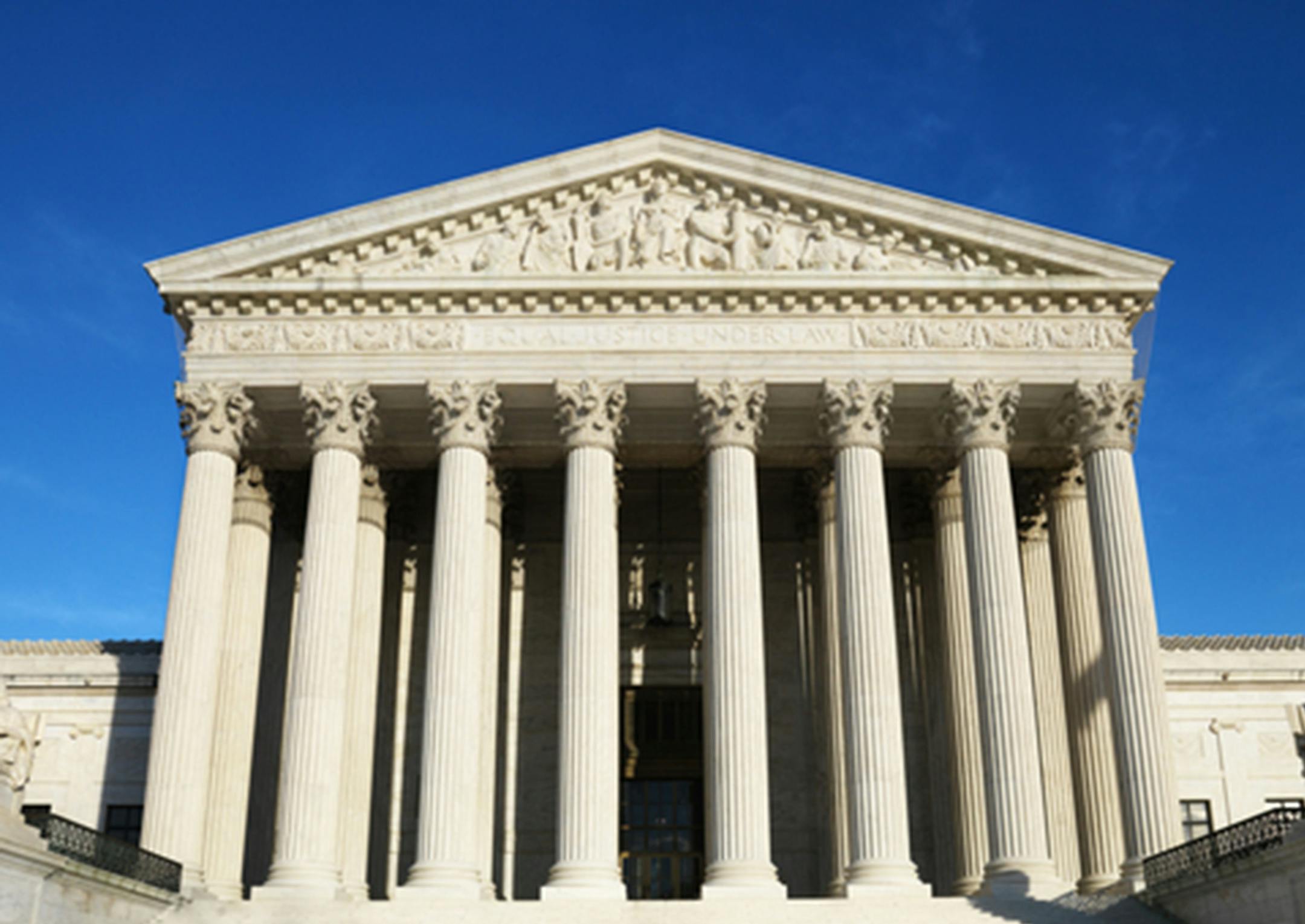
This is what we've come to: On Monday afternoon, as those who enthuse about such things awaited news of President Donald Trump's nominee for the Supreme Court, a cable television network cut to cameras outside the home of Judge Amy Coney Barrett to show us that she was busily collecting towels from the porch and carrying them inside — and therefore wasn't in Washington and couldn't be the nominee. Breaking news!
That's who we've become, a nation for whom even selecting Supreme Court justices is part of our political game show. We listen eagerly for the call of "come on down" that identifies the next Running Man so that we can follow every minute as he (sometimes she) races through the gantlet of fearsome interest groups across the spectrum, finally arriving on the set, the hearing room of the Senate Judiciary Committee, where the questioning is half "Who Wants to Be a Millionaire?" ("Now, the next round is harder ...") and half "Family Feud" ("Sorry, judge, but the survey said ...").
The Constitution's rules for selecting a justice contemplate a calm and somber debate. But nowadays that's fantasy. Nothing in contemporary politics is accomplished calmly or somberly; that was true even before the incumbent carried his wild roadshow into the Oval Office.
Matters were once otherwise. An 1888 magazine article about the Supreme Court lauded the sobriety of the justices: "The robe adds to their dignity, and one feels impressed with the notion that beneath its folds can lurk nothing not in harmony with justice and law." Not so long ago, most Americans barely knew the names of the justices, never mind their faces. (Or their houses.) Half a century ago, when the journalist Anthony Lewis described the court's public image as "an extraordinarily powerful demigod sitting on a remote throne and letting loose constitutional thunderbolts whenever it sees a wrong crying for correction," he had in mind not only the court's mystery but also its majesty.
Alas, when it comes to the Supreme Court and its dignity, we're way past the point of lèse-majesté. Once reporters stake out the homes of potential nominees, we've leapt all the way to farce.
Want to blame Trump? That's fine. I've blamed him, too, warning at the time of his nomination of Neil Gorsuch that the president was turning the process into a sort of "Celebrity Apprentice." And, certainly, there was more of that this time around, as Trump seemed to revel in the news media's moment-by-moment reporting on his very public winnowing of candidates.
But Trump isn't uniquely at fault here. If he were, those cameras wouldn't have been staking out Barrett's house. News reports over the last week would not have been full of speculation about who's up, who's down, who's lobbying for whom. We've gone court-crazy. Put aside the unseemly deathwatch as the justices age. We plan campaigns before there's a nominee. Within minutes of the announcement of Brett Kavanaugh as Trump's choice, my e-mail inbox overflowed with fundraising missives setting forth the horrors to come, but the most cursory reading made clear that the text was finished before there was a nominee, awaiting only a name to be filled in. (By the way, what is it with that sky, the way it's constantly falling?)
Let's not pretend that matters have ever been such. My mentor Thurgood Marshall, one of the great justices in history, was by a good margin the most controversial nominee of the 1960s, but when President Lyndon Johnson announced Marshall's name, the Southern press essentially shrugged. A Greenville, S.C., paper fretted about the court's "ideological orientation," as well as Marshall's "ability to fairly construe the law as it affects civil rights cases," but did not call for the Senate to reject him and even lauded "his brilliance of mind."


